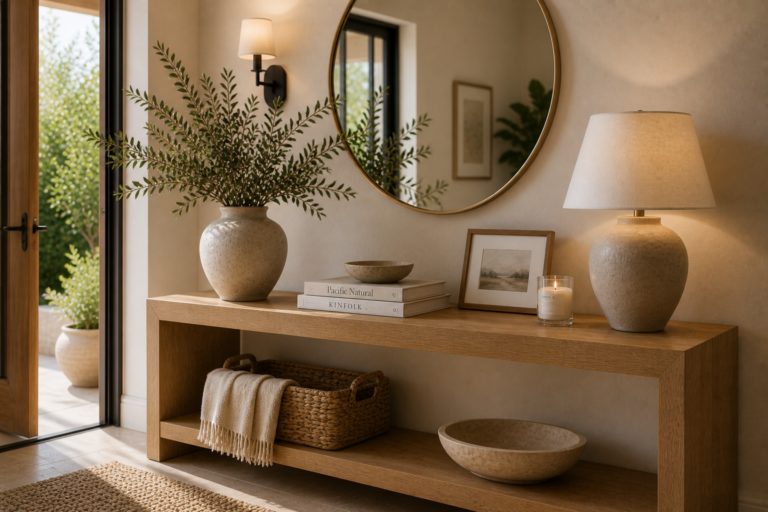
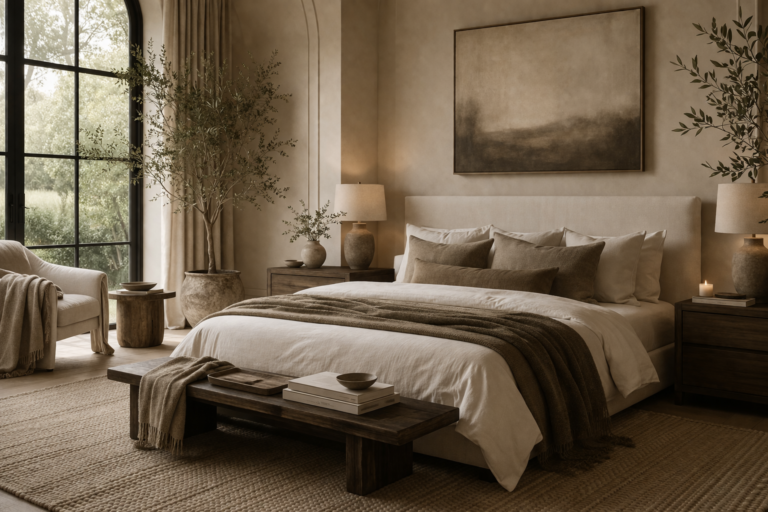
Simple Systems That Make Builder-Grade Homes Feel Intentional
Home & Organization: Simple Systems That Make Builder-Grade Homes Feel Intentional
When function becomes part of the design. The most expensive-looking homes aren’t perfectly styled—they’re calmly supported by systems that keep daily life from landing on every surface.
A home can have beautiful finishes and still feel builder-grade if it’s constantly fighting your habits. Custom homes feel elevated because the “messy parts of life” have a place to go—quietly. Organization isn’t separate from design. In high-end spaces, it is the design.
What you’ll learn
- The difference between “storage” and “systems” (and why systems look more expensive)
- The 4-zone method that makes a home feel intentional fast
- How to create drop zones that don’t look like drop zones
- Room-by-room systems designers rely on
Builder-Grade → Custom Series (Internal Links)
Keep this identical across all six posts for clean internal linking and SOE-friendly structure. (And yes—everything returns to the Design hub.)
| Article | Title | What you’ll learn |
|---|---|---|
| 1 | Design Essentials | Foundational decisions that elevate any space—no renovation required. |
| 2 | Form & Proportion | Scale, spacing, balance—how to fix the “something feels off” problem. |
| 3 | Material & Texture | Depth and warmth through finishes and textiles (without clutter). |
| 4 | Home & Organization | Systems that keep daily life from landing on every surface—so the home reads custom. |
| 5 | Organic Modern Valentine’s | Romantic without being themed: a soft, elevated seasonal approach. |
| 6 | Early Spring Refresh | Subtle shifts that make your home feel lighter, calmer, and renewed. |
Why Organization Reads as Luxury
The most “high-end” feeling homes usually share one trait: nothing looks accidental. That isn’t because the owners never live there. It’s because the home is designed to catch life before it spreads.
Clear surfaces are a design feature
When counters and consoles stay mostly clear, finishes look richer and styling looks more intentional—because it can be.
Drop zones are hidden in plain sight
Luxury homes have places for keys, bags, shoes, and mail—without looking like a utility closet exploded into the entry.
Zones prevent the “float” effect
When every item has a zone, rooms feel more composed (which reinforces proportion and balance from Article #2).
Editing becomes effortless
Good systems reduce decision fatigue. If you can reset a room in five minutes, it will stay beautiful more often.
The 4-Zone Method (The “Custom Feel” Shortcut)
Instead of trying to “get organized,” design four zones that quietly handle the predictable chaos of daily life. These zones work in any home—especially builder-grade layouts where storage is often generic and open sightlines reveal everything.
Zone 1: Landing (what enters the home)
Keys, bags, shoes, mail. The goal is containment—so the entry never becomes a surface pile.
Zone 2: Reset (what restores order daily)
A simple “reset” spot for quick returns—so the home recovers fast without marathon cleaning.
Zone 3: Work (where paper + devices live)
Paper management and charging, contained to one defined zone—so clutter doesn’t migrate across the house.
Zone 4: Backstage (the hidden overflow)
The behind-the-scenes zone: extras, refills, seasonal bins. High-end homes have a backstage—even if it’s small.
Editor’s rule
If a space repeatedly clutters, it’s not a “willpower problem.” It’s a zone problem. Create a container for the behavior, then make it easy to use.
Room-by-Room Systems That Look Like Design
The goal is not to label everything. The goal is to make the home look calm because it functions calmly. These are the systems that change the “feel” fastest.
Entry
- One landing surface (console or designated top) — keep it edited with a tray-like boundary.
- Shoe zone — contained, not scattered (the floor is not a system).
- Out-the-door kit — the few daily essentials that always leave with you.
Kitchen
- Counter rule: one “active” section, one “styled” section, the rest stays clear.
- Paper quarantine: mail should land in one spot, not the island.
- Daily reset: a 3-minute rule that keeps the kitchen reading clean most of the week.
Living Room
- Remote + cord home: keep tech friction invisible.
- Soft storage: a calm place for throws and “life items” so the room stays composed.
- One visual anchor (Article #1) + correct scale (Article #2) so the room feels finished even between resets.
Bedroom
- Nightstand editing: fewer items, better placed (luxury reads as restraint).
- Clothing flow: a defined “in between” zone for worn-once items.
- Morning reset: a 2-minute bed + surfaces rule that changes the entire feel.
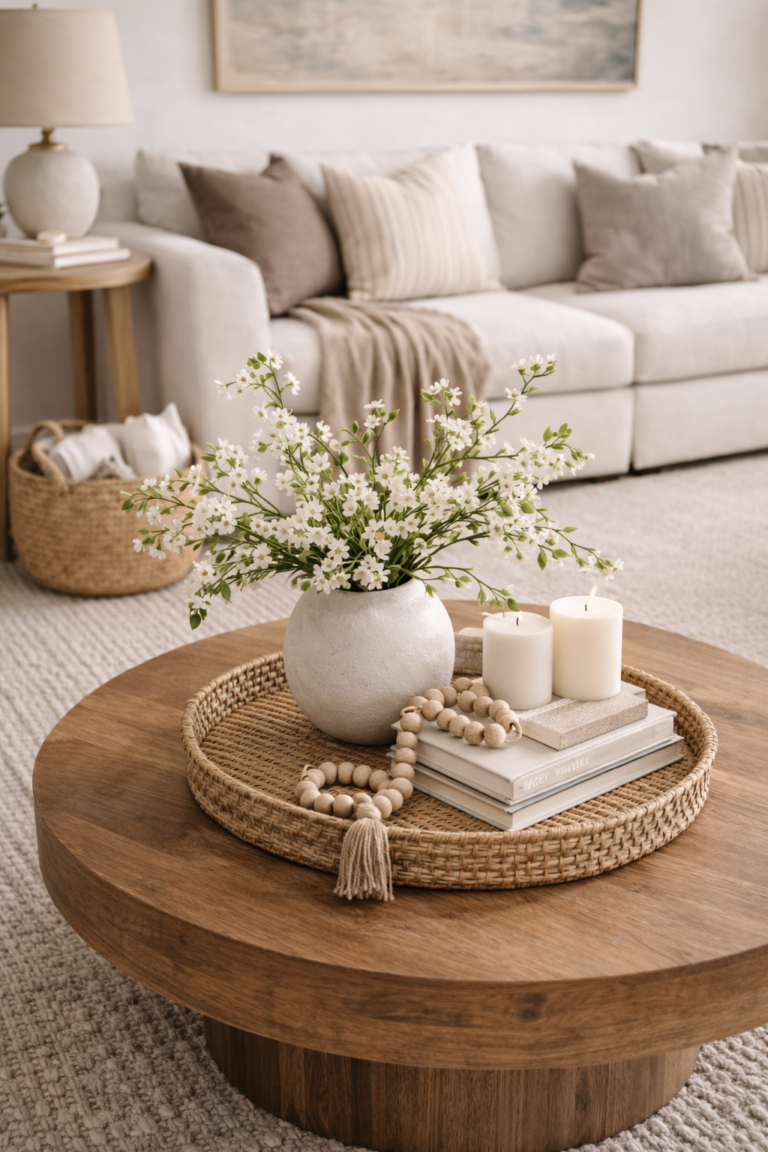
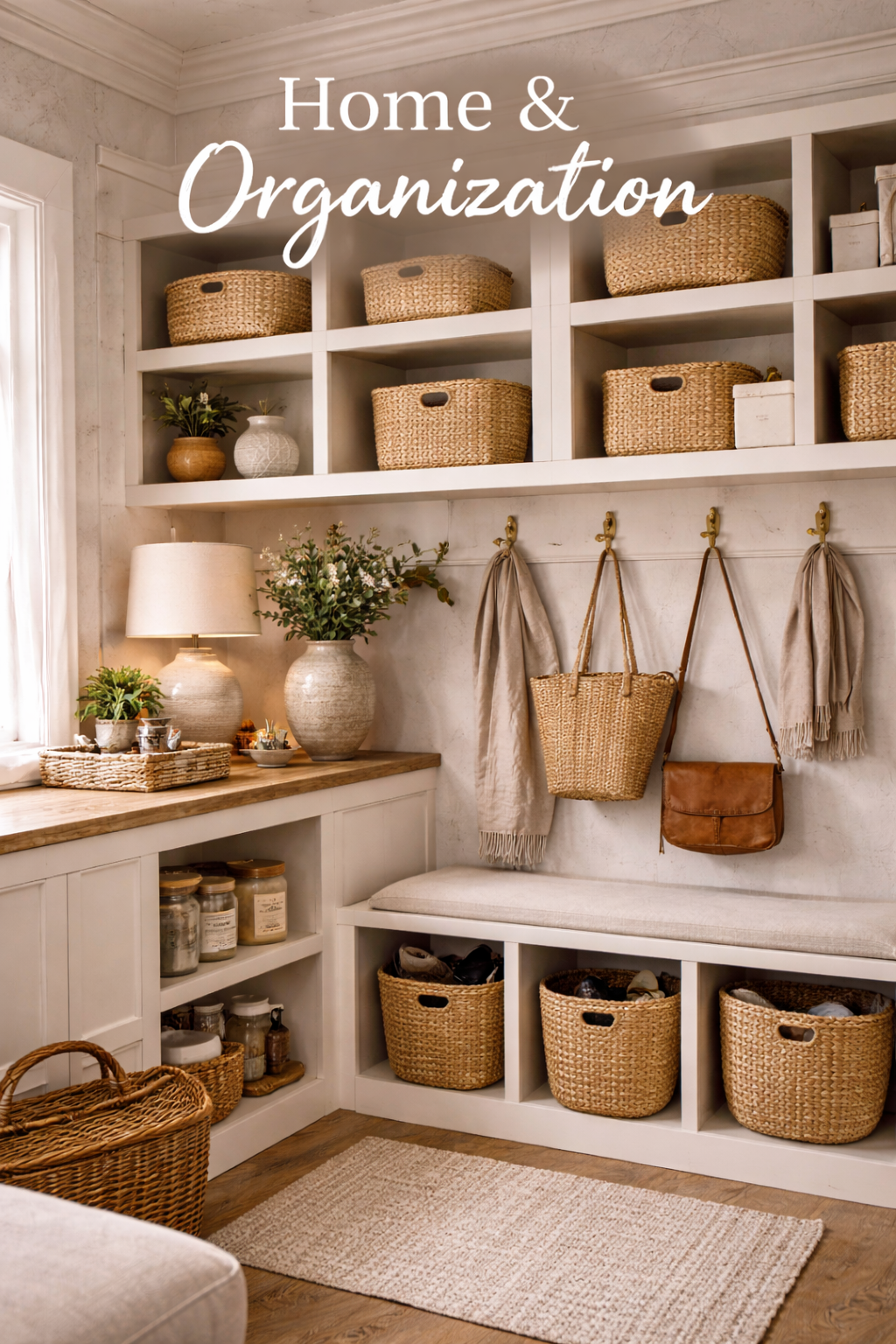
Visual example: when organization becomes part of the design
Notice how the space reads calm. The styling is minimal—but the function is handled. That’s the “custom” secret: systems that disappear.

FAQ: Home & Organization
Why does my home still feel messy even when I clean?
Cleaning removes mess. Systems prevent mess from forming in the first place. If items don’t have a clear zone, they’ll land on the nearest surface—every time.
What’s the fastest system to implement first?
The entry landing zone. When the first 90 seconds at home are contained, the rest of the house stays calmer automatically.
How do I keep open-concept spaces from collecting clutter?
Create an “active” zone and a “styled” zone, then enforce a simple reset rule. Open concept amplifies visual noise, so the home needs fewer drop points—done better.
Will organization make my home feel too minimal or sterile?
Not if you layer texture (Article #3). The goal is not emptiness—it’s intentionality. Calm surfaces let warmth and materials show up more beautifully.
Series navigation: #1 Essentials · #2 Proportion · #3 Texture · #4 Organization · #5 Valentine’s · #6 Early Spring