Early Spring Refresh: Lightening Your Home Without a Full Redecorate
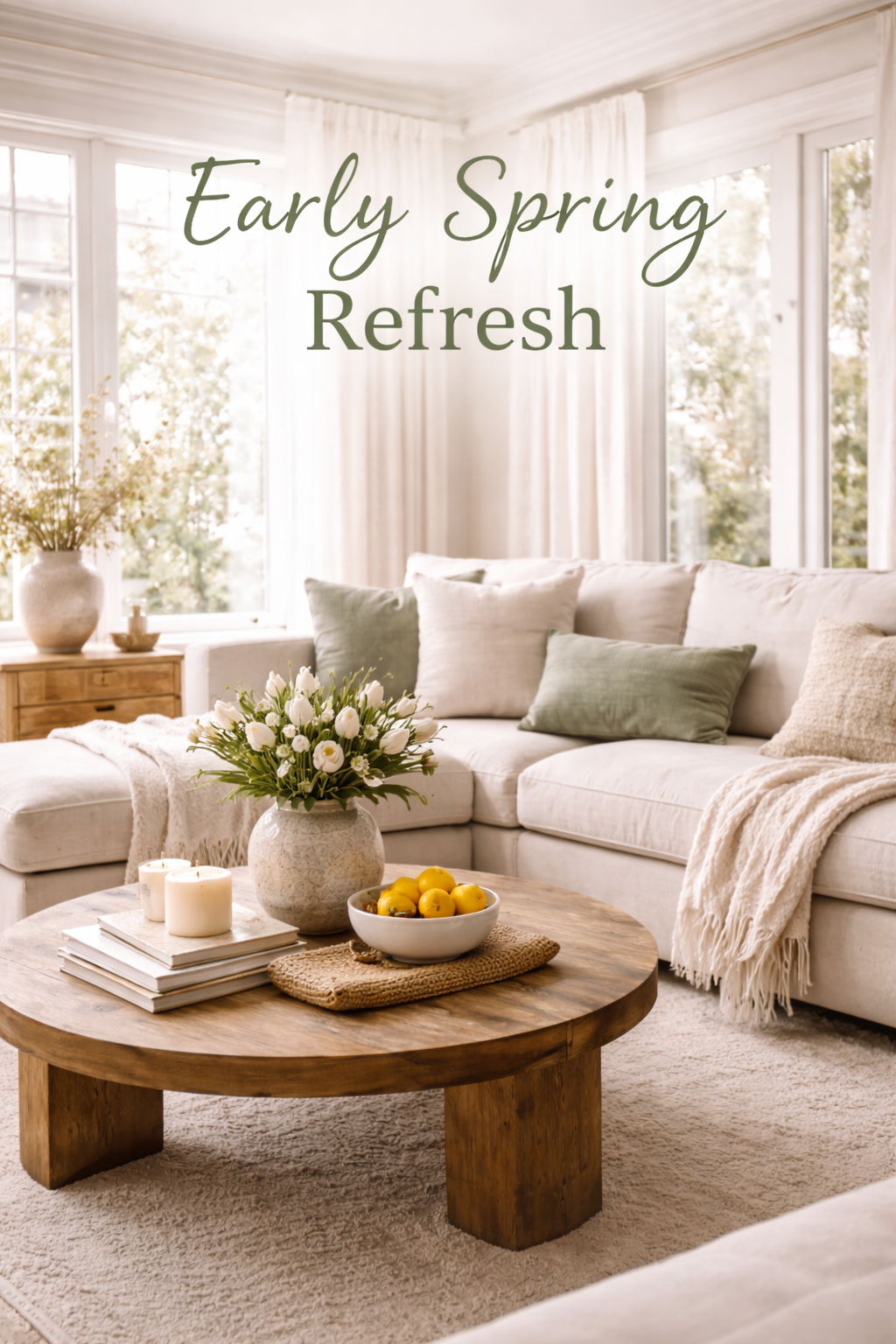
Early Spring Refresh: Lightening Your Home Without a Full Redecorate
Subtle shifts that make a home feel fresh, calm, and renewed—without a shopping spree or a dramatic style change. The goal is not “new.” It’s “lighter.”
The best spring refresh is not a redesign—it’s a recalibration. When a home feels heavy after winter, it’s usually because of density: too many layers, too much visual weight, and not enough breathing room. This guide is a designer’s approach to lightening a space while keeping it cohesive (and still feeling custom).
What you’ll learn
- The “lightening order” designers use (what to change first)
- How to keep a neutral home from feeling bland in spring
- Small edits that increase calm instantly (without looking empty)
- A room-by-room refresh plan you can do in a weekend
Builder-Grade → Custom Series (Internal Links)
Keep this identical across all six posts for strong internal linking and SOE-friendly structure. (Everything returns to the Design hub.)
| Article | Title | What you’ll learn |
|---|---|---|
| 1 | Design Essentials | Foundational decisions that elevate any space—no renovation required. |
| 2 | Form & Proportion | Scale, spacing, balance—how to fix the “something feels off” problem. |
| 3 | Material & Texture | Depth and warmth through finishes and textiles (without clutter). |
| 4 | Home & Organization | Systems that keep daily life from landing on every surface—so the home reads custom. |
| 5 | Organic Modern Valentine’s | Romantic without being themed: a soft, elevated seasonal approach. |
| 6 | Early Spring Refresh | Lighten the home with subtle shifts—no full redecorate required. |
The Lightening Order (Do This First)
If you try to refresh by swapping decor first, it often looks like “more stuff.” Designers lighten a home in this order because each step creates space for the next.
1) Clear the visual horizon
Remove anything that blocks clean sightlines: crowded surfaces, extra chairs, overstated décor clusters. Airiness begins with space.
2) Edit heaviness, not personality
Keep what defines your home. Remove what repeats without purpose. (Luxury reads as restraint.)
3) Lighten the soft layers
Switch to lighter textures and tones in the fabrics and “touch” surfaces first. This changes the mood faster than décor swaps.
4) Add one fresh note
Introduce a single spring note (tone or botanical energy) and repeat it twice. One note, repeated, looks designed.
Editor’s shortcut
If your home isn’t feeling airy, check two things: density (too many items) and scale (pieces too small). The proportion fix is in Article #2.
7 Subtle Moves That Make a Home Feel Fresh (Without Redecorating)
Think of these as adjustments to light, texture, and composition. They’re small, but they change the way a space breathes.
Move 1: Reduce “cluster count” on surfaces
Most spaces feel heavy because there are too many groupings. Keep one strong arrangement, then let the rest stay quiet. Airiness is often achieved by subtracting one cluster—not adding another.
Move 2: Replace hard contrast with soft contrast
Instead of stark black/white contrast everywhere, use softer steps: ivory → warm beige → light taupe → gentle gray. Soft contrast reads calmer and more expensive.
Move 3: Bring in “spring texture,” not spring color
Spring doesn’t have to mean bright hues. Use texture that feels lighter: crisp, breathable, matte, natural. (If your home feels flat, revisit Material & Texture.)
Move 4: Open negative space intentionally
Choose one “quiet” zone per main room: a surface that stays mostly clear, a wall moment with breathing room, or a simplified corner. Custom homes have room to rest.
Move 5: Shift lighting warmer and cleaner
A spring refresh should feel luminous, not harsh. A consistent warm glow makes a space feel softer and more welcoming. (If your home never stays reset, see Organization.)
Move 6: Repeat one “fresh note” twice
Choose one fresh note (a soft green, a pale blue, or a warm botanical tone) and repeat it in two places. One note, repeated, looks editorial. Many notes look accidental.
Move 7: Make one daily-life system invisible
Spring is a reset season. Hide one friction point: mail, cords, shoes, or charging. When function disappears, the design appears stronger.
If you want the refresh to feel truly “custom,” pair these moves with the foundations in Design Essentials.
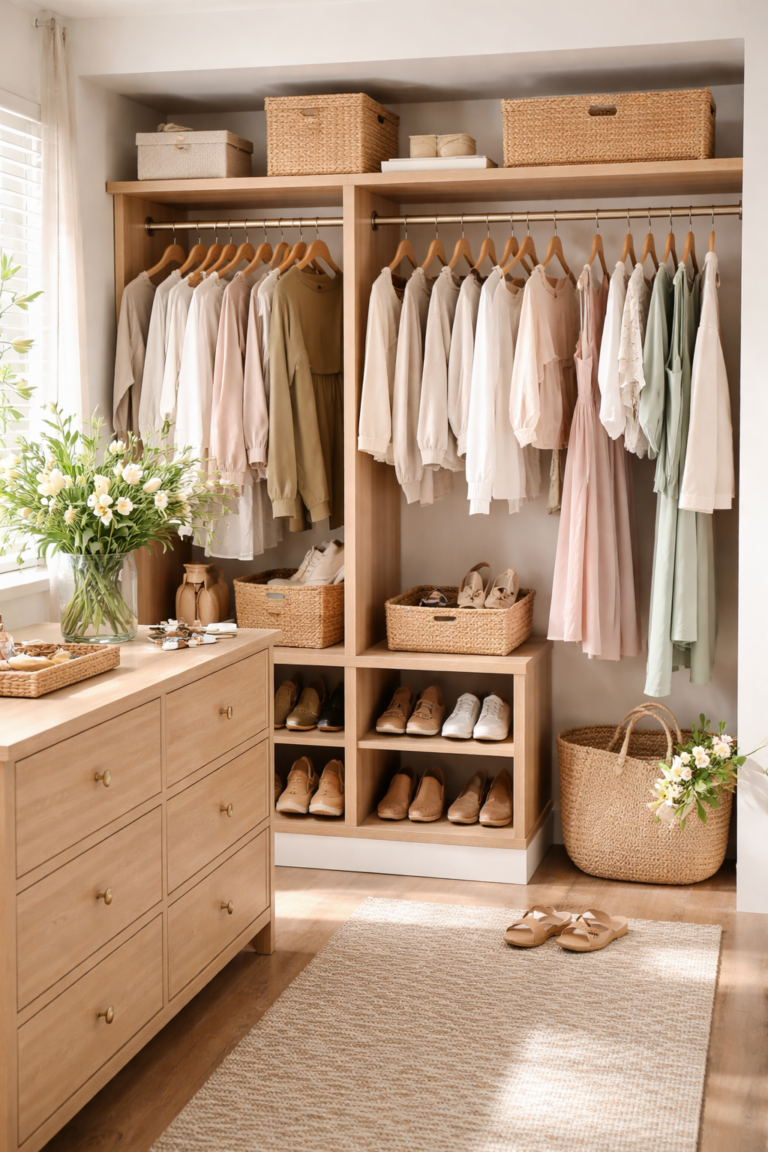
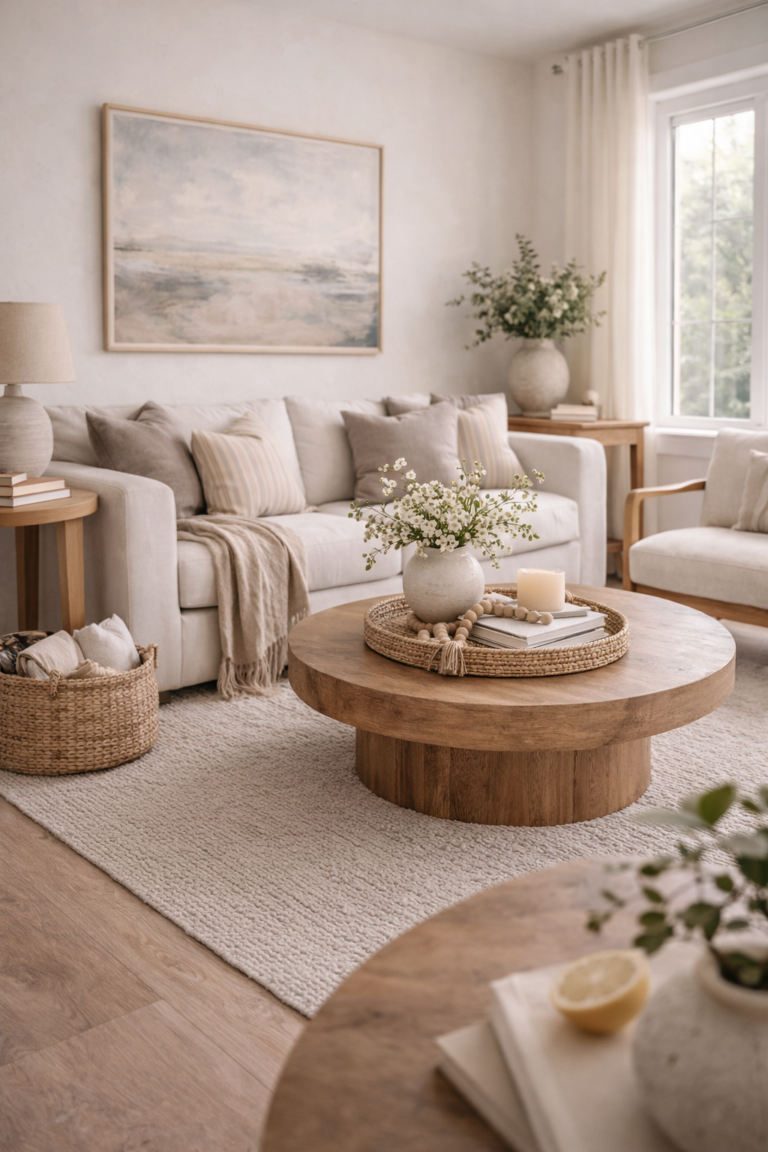
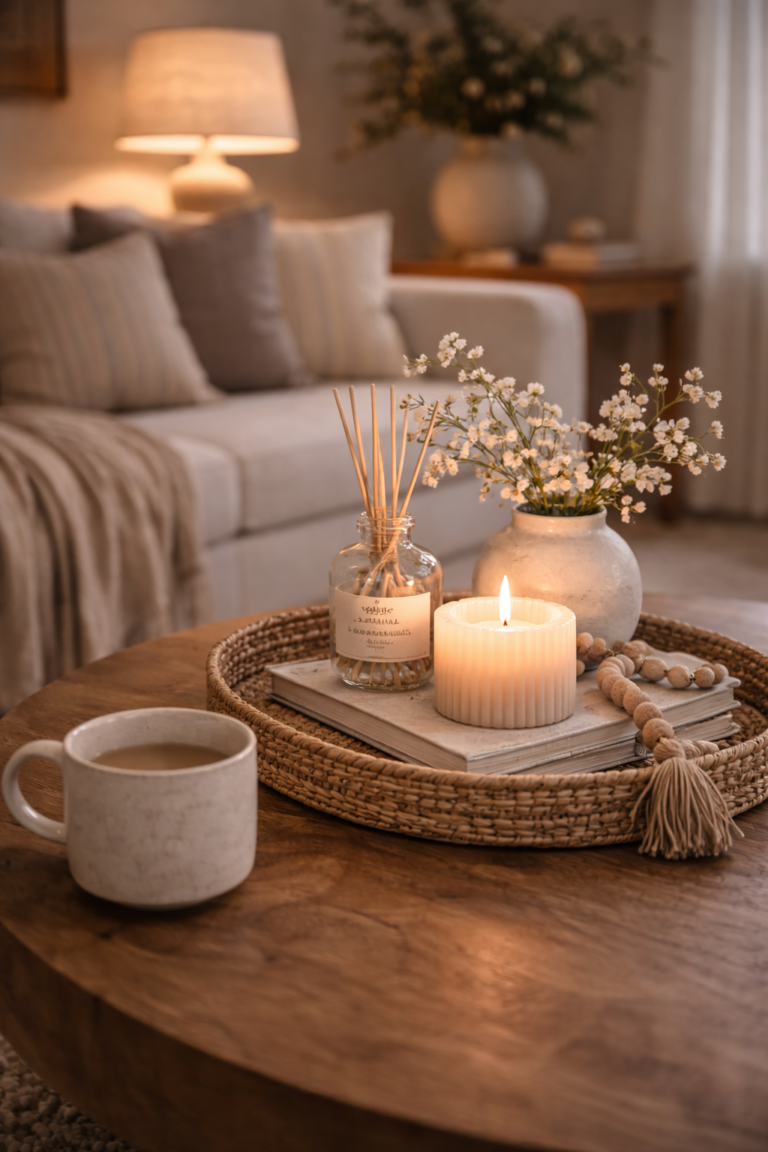
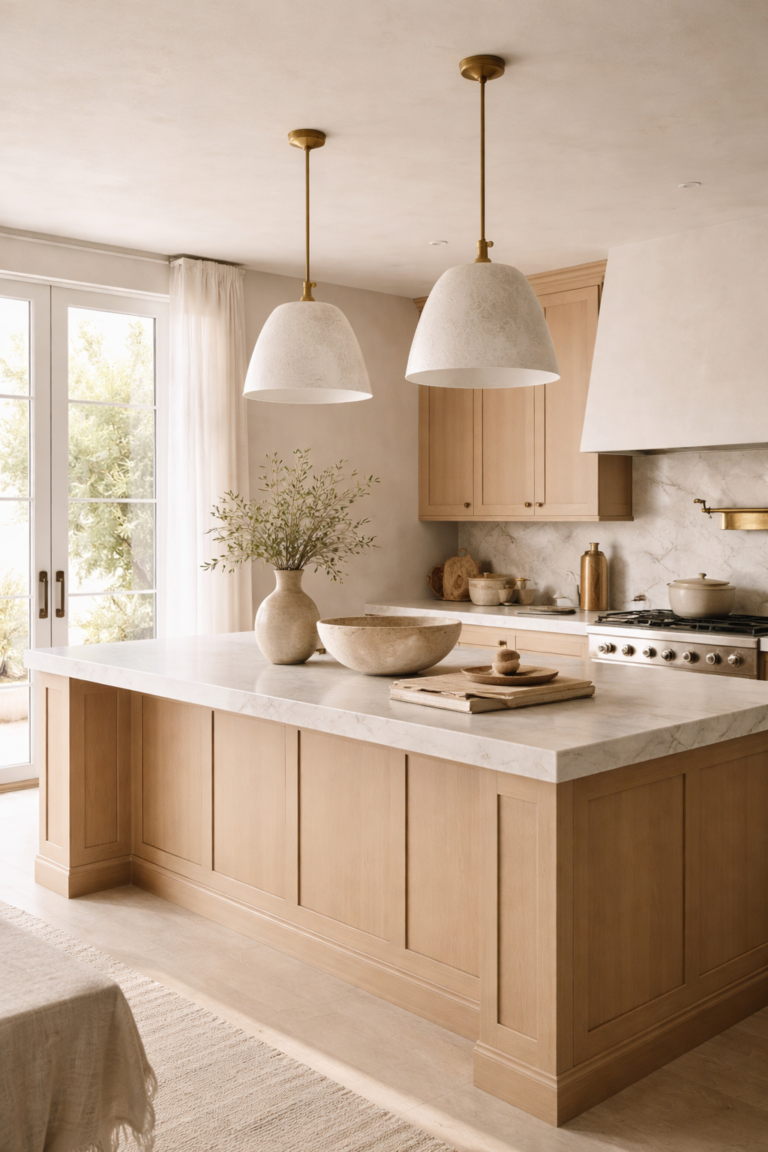
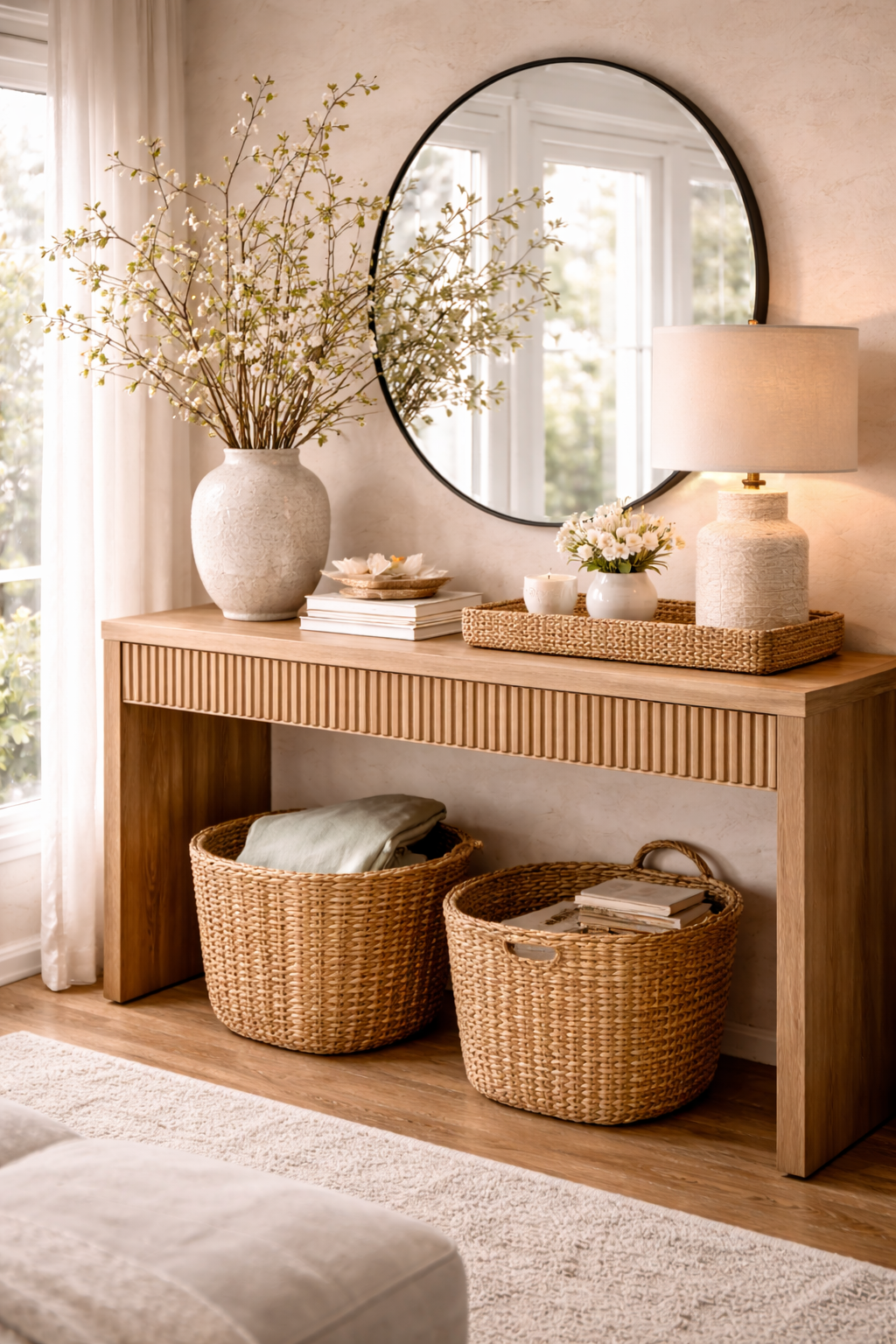
Visual example: light, calm, and renewed
Notice how the home feels brighter without needing a dramatic change. That’s the goal: edit density, lighten texture, and keep the palette cohesive so the home still reads custom.
FAQ: Early Spring Refresh
How do I make my home feel brighter without repainting?
Focus on density and texture: clear sightlines, reduce surface clusters, and lighten the soft layers. Brightness is often an outcome of space and sheen—not new paint.
What if my home already uses neutrals—how do I avoid “blah”?
Add texture and a single fresh note. Neutrals feel rich when the textures vary (matte vs soft sheen, nubby vs smooth). Start with Material & Texture.
How do I refresh quickly if I only have one weekend?
Do it in this order: clear surfaces + simplify clusters (Saturday morning), lighten soft layers (Saturday afternoon), add one fresh note (Sunday), then create one invisible system (Sunday afternoon).
Why does my spring refresh never “stay” refreshed?
Because systems are missing. If daily life lands everywhere, your refresh won’t hold. Build one or two zones from Home & Organization.
Series navigation: #1 Essentials · #2 Proportion · #3 Texture · #4 Organization · #5 Valentine’s · #6 Early Spring