Scale & Proportion Guide
Scale & Proportion: The Shortcut to a More Expensive-Looking Room
If your room feels “off,” it’s rarely the style. It’s usually the sizing. Here’s the calm, designer way to fix it.
Most rooms don’t look “cheap” because the furniture is inexpensive. They look unfinished because the sizing is uncertain: rugs that don’t anchor the seating, art that floats too high, lamps that are too small to carry the room. Scale is the silent difference between “nice” and truly designed.
The Shortcut (Designer Order of Operations)
Anchor the Floor
Get the rug right first—everything else becomes easier.
Right-Size the Big Pieces
Sofa, chairs, and coffee table should read as a “set,” not strangers.
Then Place Art + Lighting
Art and lamps finish the architecture. Size them confidently.
Finally: Styling
Pillows, objects, and decor only work once the bones are correct.
The Non-Negotiables (If You Fix Nothing Else)
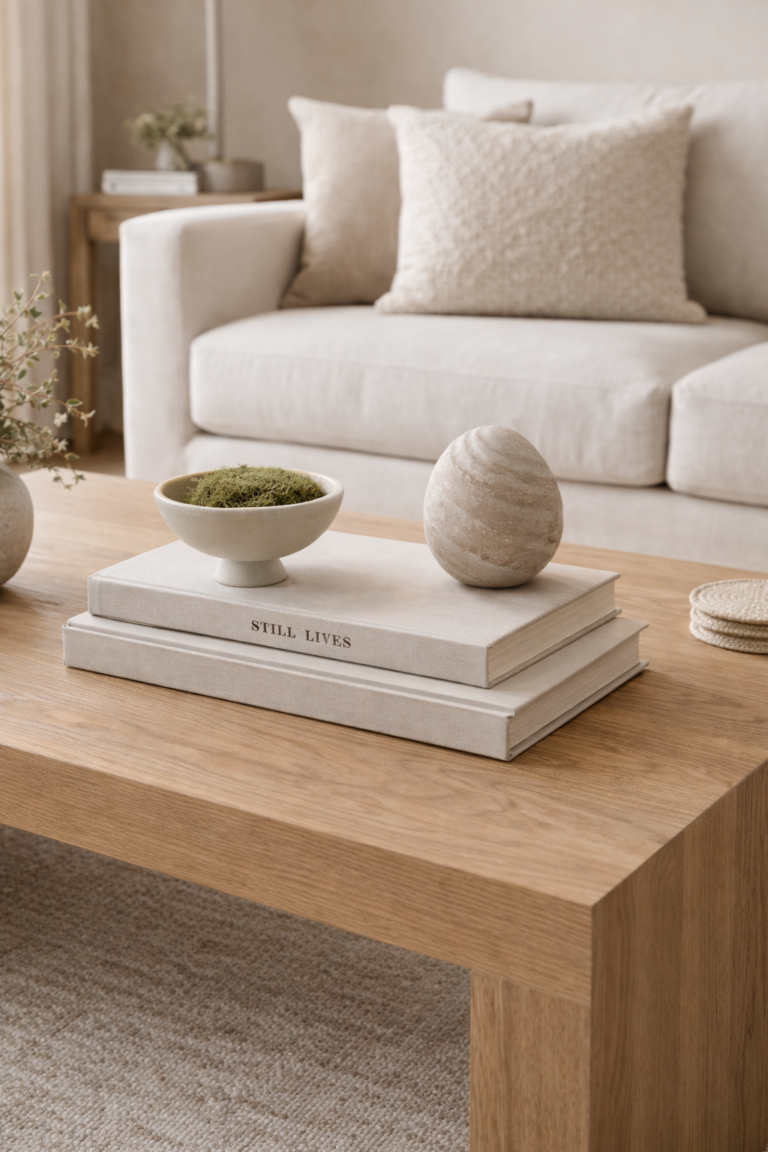
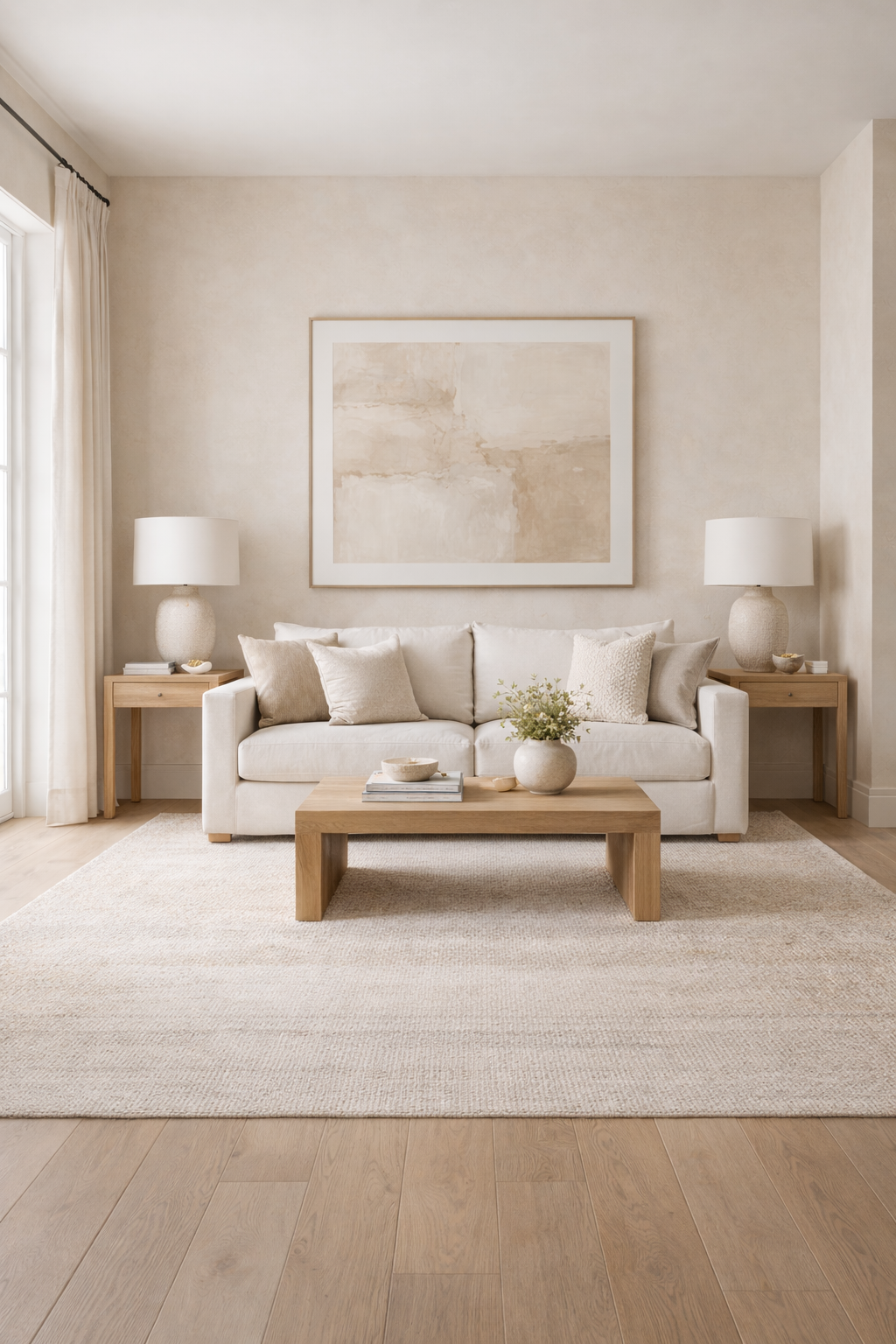
Scale is easiest when you think in anchors. The rug anchors the floor. The sofa anchors the seating. The art anchors the wall. The lamp anchors the vertical space. If any one of those is too small, the entire room reads as temporary.
Design isn’t more decor. It’s the right-size decisions, repeated.
Editor’s standardA Quick “Proportion Grid” You Can Use Anywhere
Use these as calm guidelines—not strict rules. The goal is to create a room that feels balanced from every angle.
Common Scale Mistakes That Make a Room Feel Cheaper
- A rug that floats in the center instead of anchoring the seating.
- Art that’s too small, too high, or centered to the wall instead of the furniture.
- Side tables that sit too low or too far from the sofa to be functional.
- Undersized lamps that don’t balance the height of the room.
How to Fix Scale Without Replacing Everything
Most rooms can be corrected with a few intentional changes. Start with what has the biggest visual impact: the rug, the art, and the lighting. Those three updates can make the same furniture look dramatically more elevated.
When scale is right, styling becomes effortless.
Design principleFrequently Asked Questions
Is it better to go bigger or smaller when I’m unsure?
Bigger—almost always. Slightly oversized rugs, art, and lamps read as intentional and tailored. Too small reads like a placeholder.
Why does my room feel “off” even with good furniture?
Because the visual anchors aren’t aligned. A too-small rug, undersized art, or tiny lamps can make even beautiful pieces feel disconnected.
Do I have to follow strict measurements?
No. Use guidelines and trust the “read” of the room. The goal is balance: each element should look like it belongs at the same level of intention.
If you want one design shortcut that changes everything, start with scale. When the anchors are correct, your room immediately reads as calmer, more confident, and more expensive—without adding a single extra object.