How to Make a Builder Grade Kitchen Look Custom
Builder Grade Kitchen · Kitchen Styling · Custom Look
How to Make a Builder Grade Kitchen Look Custom
A builder grade kitchen usually is not ugly. It is simply unfinished in feeling. The cabinetry is often generic, the lighting tends to be basic, the finishes can feel flat, and the room rarely has the layered warmth that makes a kitchen feel collected, expensive, and personal. The good news is that you do not need a full renovation to change that. With the right upgrades and styling decisions, a builder grade kitchen can look dramatically more custom, more elevated, and far more intentional.
This guide breaks down the exact changes that make the biggest visual difference, from hardware and lighting to styling, color palette, countertops, island decor, and subtle luxury details designers use to make ordinary kitchens feel high-end. The goal is not to make your kitchen look trendy for six months. It is to help it feel warmer, more architectural, and more custom for years.
Quick Answer
The fastest way to make a builder grade kitchen look custom is to improve the details people notice most: hardware, lighting, counter styling, backsplash presence, paint tone, and the visual quality of everyday objects. Custom-feeling kitchens are layered, not loud. They use better materials, fewer generic finishes, and more thoughtful styling.
In practical terms, that means replacing basic pulls, adding more elevated pendants, editing what sits on the counters, using a warmer palette, introducing wood and stone texture, and making the kitchen feel connected to the rest of the home rather than like a blank showroom box.
Key Takeaways
- Builder grade kitchens usually need warmth, texture, and visual hierarchy more than dramatic change.
- Lighting, hardware, backsplash, and styling often create the biggest transformation for the least structural work.
- Natural materials like wood, stone, linen, ceramic, and aged metal instantly make a kitchen feel more custom.
- A quiet, cohesive palette almost always looks more expensive than a busy mix of finishes and colors.
- Thoughtful counter and island styling can elevate even very standard cabinetry.
Quick Navigation
- What Makes a Kitchen Look Builder Grade
- The Best Builder Grade Kitchen Upgrades by Priority
- How to Make Builder Grade Cabinets Look Better
- The Finishes That Make a Kitchen Feel Custom
- Lighting Changes That Instantly Elevate a Kitchen
- How Styling Makes a Builder Grade Kitchen Look Expensive
- Budget-Friendly Ways to Upgrade a Builder Grade Kitchen
- Mistakes That Keep a Kitchen Looking Generic
- Designer Checklist
- Builder Grade Kitchen FAQs
What Makes a Kitchen Look Builder Grade in the First Place?
Most builder grade kitchens share a handful of visual characteristics. The cabinetry is often simple and mass-produced. The lighting may feel undersized or purely functional. Hardware is usually generic. Backsplashes can be short, basic, or disconnected from the rest of the room. The palette often lacks depth. And perhaps most importantly, the kitchen tends to have no real styling language of its own.
None of those elements are catastrophic individually. The issue is cumulative. When the cabinets are plain, the pendants are forgettable, the counters hold bright packaging, and the finishes do not relate to each other, the kitchen reads as temporary rather than intentional.
Custom kitchens, by contrast, feel considered. They repeat finishes softly, use scale well, incorporate more texture, and treat styling as part of the architecture. Even when the cabinetry profile is simple, the room feels more elevated because the supporting details are stronger.
That is why the most effective upgrades are not always the largest ones. Many of the biggest visual improvements come from the choices layered onto the kitchen after the original construction: paint color, pendants, hardware, counter styling, and the quality of the objects left visible every day.
The Best Builder Grade Kitchen Upgrades by Priority
If you want the biggest design impact, it helps to work in the order designers often think: first what you see from across the room, then what you notice up close, then the smaller styling details that pull everything together.
Highest Impact Upgrade Order
| Priority | Upgrade | Why It Matters |
|---|---|---|
| 1 | Lighting | Pendants, sconces, and warmer bulbs change the mood of the entire kitchen immediately. |
| 2 | Hardware | New pulls and knobs give cabinets more character and intention. |
| 3 | Paint and palette refinement | Warmer whites, greiges, taupes, and soft neutrals make kitchens feel more tailored. |
| 4 | Backsplash presence | Extending or upgrading the backsplash adds architecture and polish. |
| 5 | Counter and island styling | Styling gives the room soul and helps standard finishes feel more custom. |
| 6 | Open shelving or decorative layering | When used carefully, these add warmth and depth. |
This order works because it addresses the most visible signals first. Pendants and hardware are often small relative to a remodel budget, yet they create an outsized impression. If you upgrade those and do nothing else, the kitchen already starts to feel more intentional.
How to Make Builder Grade Cabinets Look Better
Cabinets are usually the largest visual mass in the kitchen, so even simple improvements can shift the whole room. If replacement is not in the plan, focus on making the existing cabinetry feel cleaner, warmer, and more architectural.
Upgrade the Hardware
Swapping standard builder pulls for warmer brass, aged bronze, matte black, or more refined nickel hardware is one of the fastest ways to change the cabinetry’s personality. Choose shapes that suit the kitchen’s style. More classic kitchens often look beautiful with simple round knobs and elongated pulls, while organic modern spaces tend to do well with slimmer, less fussy silhouettes.
Paint in a Better Tone
If the cabinetry is paintable, color matters enormously. Many builder kitchens use cold whites or flat grays that make the room feel sterile. Warmer whites, creamy putties, light taupes, mushroom tones, and soft greiges often look richer and more custom. They also pair better with wood accents and natural materials.
If you are refining the palette, it helps to study the most beautiful kitchen color palettes right now so the cabinetry feels connected to the kitchen’s overall mood rather than treated in isolation.
Add Visual Contrast Strategically
Sometimes a builder grade kitchen looks more custom when the island is painted or styled differently from the perimeter cabinets. Even when you are not repainting, you can create contrast through wood bar stools, a runner, pendants, or island styling that adds warmth and depth.
Refine the Crown and Surrounding Details
If your cabinets stop awkwardly below the ceiling or lack any finish detail, trim work and crown can make them read more custom. This is not necessary in every kitchen, but in many builder grade spaces it helps the cabinetry feel less like stock boxes and more like architecture.
Designer Note
Cabinets do not have to be ornate to look custom. In fact, simple cabinetry often looks more expensive when the color, hardware, and surrounding materials are handled beautifully. The luxury comes from cohesion and restraint, not complexity.
The Finishes That Make a Kitchen Feel More Custom
One of the most effective ways to fix a builder grade kitchen is to improve the finish story. Custom-feeling kitchens usually repeat a tighter range of better materials. They do not rely on five unrelated finishes trying to compete with one another.
Wood
Adds warmth instantly
Oak stools, cutting boards, trays, and warm shelving soften painted cabinetry and stone counters.
Stone
Creates quiet luxury
Stone trays, marble boards, or a stronger backsplash material help standard kitchens feel more architectural.
Ceramic + Linen
Bring softness
Matte ceramics and neutral textiles make the kitchen feel collected rather than builder-basic.
Builder grade kitchens often improve dramatically when the visible everyday objects get better. A ceramic crock instead of a cheap utensil holder, a glass soap bottle instead of bright plastic packaging, a stone tray near the sink, a wood board leaning beside the range — these are all small shifts, but together they change how the room reads.
This is also why kitchens start to feel more designer when they borrow cues from neutral kitchen decor ideas that feel luxurious. A quiet, warm palette allows better materials to take the lead.
Lighting Changes That Instantly Elevate a Builder Grade Kitchen
Lighting may be the single most transformative upgrade in a builder grade kitchen. Generic pendants or flush fixtures flatten the room and make everything else feel more ordinary. Better lighting gives the kitchen a point of view.
Replace Basic Pendants
If your island pendants feel undersized or forgettable, replacing them is one of the strongest design moves you can make. The best pendants for builder grade kitchens tend to have cleaner lines, richer materials, and a little presence without feeling heavy. Think linen shades, aged metal, soft glass, or warm plaster-like finishes depending on your style direction.
Use Warmer Bulbs
Cool bulbs can make even beautiful finishes feel harsh. Warmer light creates softness and makes whites, greiges, and natural materials read more luxuriously. This alone can change the entire emotional feel of the room.
Add Under-Cabinet Lighting
Under-cabinet lighting brings dimension to the backsplash and counters, making the kitchen feel more layered and expensive. It also improves function, which is part of what makes custom kitchens feel so good in everyday use.
Think Beyond the Ceiling
In some kitchens, a small lamp on the counter, open shelving, or a nearby console can add a softer, more collected glow. That kind of layered lighting makes the kitchen feel more like part of the home and less like a utilitarian workspace.
How Styling Makes a Builder Grade Kitchen Look Expensive
Styling is where a builder grade kitchen gets its personality. It is also where many kitchens either rise into that elevated editorial look or fall back into clutter. The secret is to style selectively, not everywhere at once.
Beautiful kitchens rarely have every surface decorated. Instead, they create small zones with enough scale and warmth to make the room feel lived in by someone with beautiful taste.
Style the Counters Intentionally
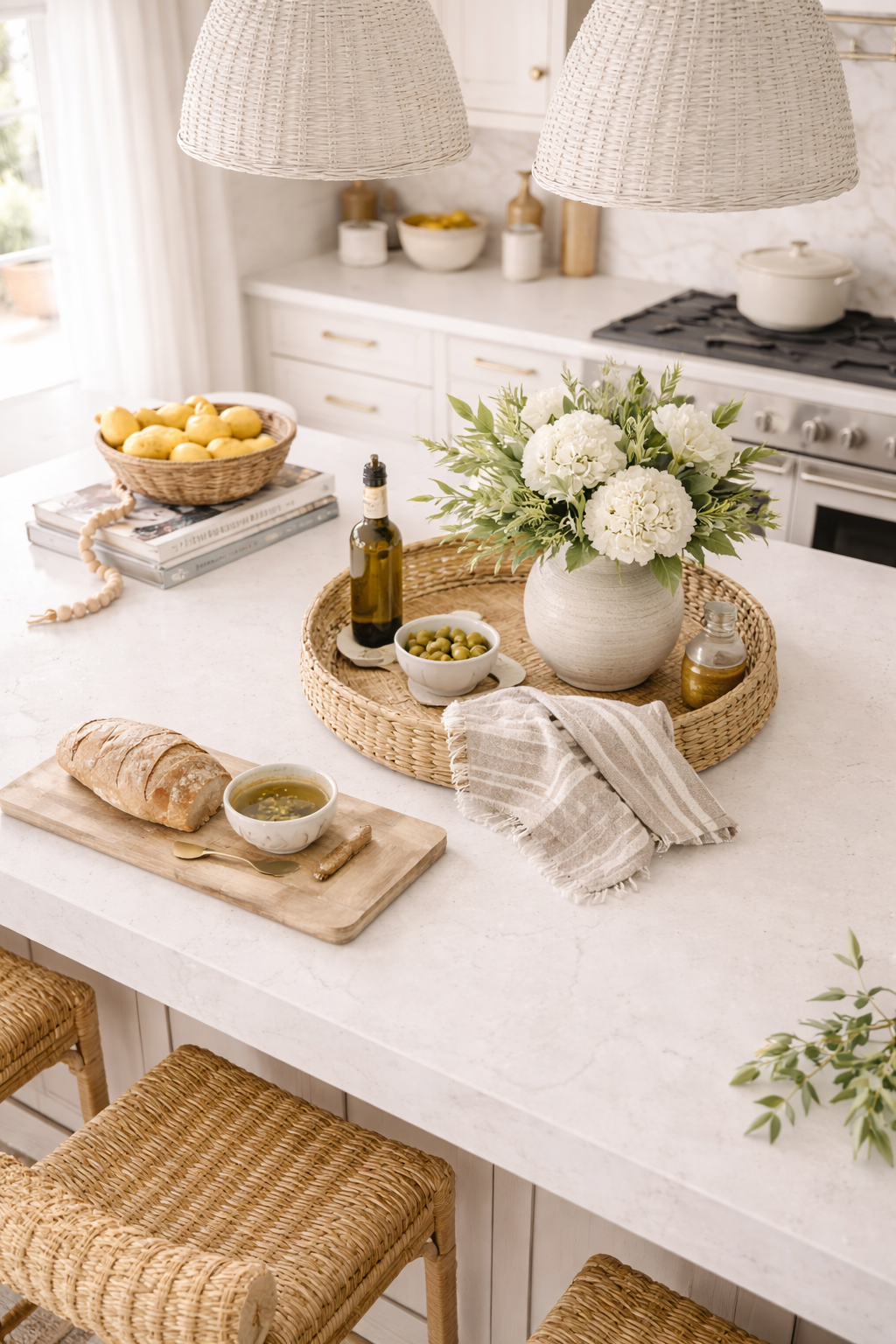
Counters should feel edited. Replace scattered small items with one or two composed zones. A wood board, ceramic bowl, olive oil bottle, and neutral towel beside the range can feel more expensive than six decorative accessories.
For a deeper framework, kitchen counter styling ideas that look designer breaks down how to create those vignettes without making the kitchen feel crowded.
Make the Island the Hero
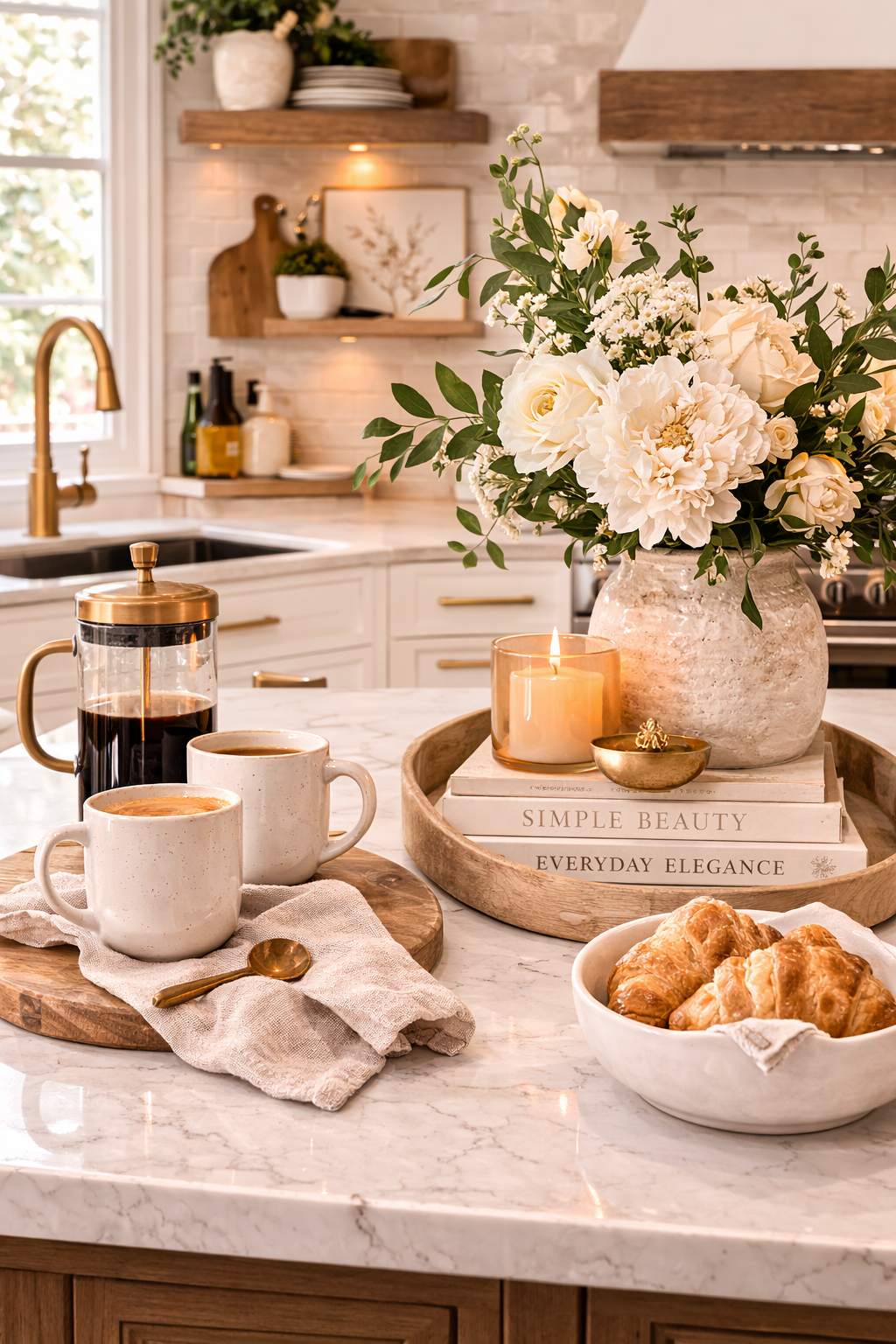
A builder grade island often becomes much more custom-feeling when it is styled as the focal point of the room. One sculptural bowl, a stack of books, and greenery can instantly bring warmth and depth to an otherwise standard island.
This is exactly why the kitchen island styling formula designers use is so effective. It adds presence and polish without reducing function.
Upgrade Everyday Utility
The practical items that stay visible every day should feel beautiful. Soap bottles, utensil crocks, canisters, cutting boards, and trays do more visual work than many homeowners realize. When these pieces are upgraded, the kitchen feels more intentional immediately.
Backsplash Ideas That Help a Builder Grade Kitchen Look More Custom
The backsplash is a major opportunity in kitchens that feel too flat or generic. Builder kitchens often use minimal backsplash coverage or safe, default materials that do not contribute much character. Extending the backsplash higher, choosing a more dimensional tile, or using stone with subtle movement can all make the room feel more finished.
A full-height backsplash behind the range or on the main wall is especially effective because it adds visual architecture and makes the space feel more deliberate. Even if the cabinetry is simple, a stronger backsplash can make the whole kitchen read as more custom.
The best backsplash upgrades are not necessarily the busiest. In fact, quiet stone, zellige-style texture, elongated tile, or tone-on-tone materials often feel more sophisticated than bold patterns. The goal is depth, not distraction.
Color Palette Shifts That Make a Builder Grade Kitchen Feel Softer and Richer
Palette is one of the most overlooked upgrades. Many builder kitchens feel generic because the colors are too cold, too stark, or too disconnected from the rest of the home. Warmer tones tend to make kitchens feel more custom because they introduce softness and visual depth.
Instead of a bright, flat white kitchen with cool lighting and gray flooring, imagine a kitchen with creamy white cabinetry, warm wood accents, a stone bowl, aged brass hardware, and soft linen tones. The architecture has not changed much, but the feeling has changed entirely.
This is where a broader design perspective helps. Looking at organic modern kitchen ideas that feel warm and elevated can make it easier to see how wood, stone, neutral color layering, and restrained styling work together to build a richer room.
Budget-Friendly Ways to Make a Builder Grade Kitchen Look More Expensive
Not every upgrade has to be major. In fact, some of the best builder grade kitchen ideas are relatively affordable because they focus on editing what is already there instead of replacing it.
Budget Upgrade Formula
- Swap hardware for something warmer and more refined.
- Change pendants or shades if the current lighting feels generic.
- Use warmer bulbs and add under-cabinet lighting if possible.
- Restyle the counters with better functional pieces and fewer accessories.
- Add a runner or stools in tones that soften the room.
- Replace bright packaging and cheap-looking containers with ceramic, glass, or wood.
- Bring in one or two stronger decorative moments instead of lots of small decor.
These upgrades work because builder grade kitchens often need refinement more than reconstruction. Better materials and better editing create the impression of a more custom room.
Builder Grade Kitchen Ideas for Organic Modern Style
If your goal is an organic modern kitchen, builder grade spaces can be transformed beautifully with the right balance of softness and restraint. Focus on warm woods, creamy neutrals, matte ceramics, simple linen textures, and sculptural styling. Let the kitchen feel quiet rather than heavily decorated.
In this style, even a standard white kitchen can look dramatically better when you add oak bar stools, a travertine bowl, a warm runner, a more refined pendant silhouette, and edited counter styling. The effect is soft, layered, and upscale without being flashy.
Mistakes That Keep a Builder Grade Kitchen Looking Generic
Mistakes to Avoid
- Keeping all the original builder lighting. It is often one of the strongest signals that the kitchen was never elevated beyond the default package.
- Using too many trendy fixes at once. One good palette and a few timeless upgrades usually look more custom than a mix of short-lived trends.
- Leaving counters visually chaotic. Bright packaging and scattered accessories instantly drag the kitchen back toward generic.
- Choosing finishes that do not relate to each other. The room should feel like one quiet story, not several competing ideas.
- Going too cold. Cool grays, stark whites, and harsh lighting can make builder kitchens feel flatter and cheaper.
- Ignoring scale. Tiny pendants, small decor, and undersized stools make standard kitchens feel even more builder-basic.
- Trying to fill every empty space. Negative space is part of what makes kitchens feel expensive and architectural.
Many of these issues overlap with the ideas in kitchen styling mistakes that make a kitchen look cheap. In both cases, visual clutter and disconnected choices tend to be the biggest offenders.
Designer Notes: Why Some Kitchens Feel Custom Even Without a Remodel
Designer Notes
Kitchens feel custom when the details look intentional. That is the common thread. It is not always the price of the cabinetry or whether the counters were replaced. It is whether the room has a strong material story, better scale, warmer lighting, edited surfaces, and enough texture to feel human.
In many homes, the jump from builder grade to custom-feeling happens when the kitchen stops looking like a set of defaults and starts reflecting a point of view. A softer palette, more architectural backsplash, refined pendants, better hardware, and elevated everyday objects can do exactly that.
Designer Checklist for Making a Builder Grade Kitchen Look Custom
Kitchen Upgrade Checklist
- Replace generic cabinet hardware with more elevated pulls or knobs.
- Assess whether the kitchen lighting needs warmer bulbs, better pendants, or added layers.
- Refine the paint palette toward warmer whites, creams, taupes, or greiges.
- Upgrade visible functional items like soap bottles, trays, canisters, and utensil holders.
- Create one or two well-styled counter zones instead of decorating every surface.
- Style the island as a focal point with one strong arrangement.
- Add wood, stone, linen, ceramic, or aged metal to soften the room.
- Consider a stronger backsplash treatment for more architecture.
- Check sightlines from the dining and living spaces so the kitchen feels cohesive with the rest of the home.
- Edit again. Removing the weakest extra item often makes the room feel instantly more custom.
Related Kitchen Reads
Builder Grade Kitchen FAQs
How can I make a builder grade kitchen look more custom?
Start with lighting, hardware, palette, backsplash presence, and better styling. These upgrades create the biggest visual difference and make the room feel more intentional without requiring a full renovation.
What is the cheapest way to upgrade a builder grade kitchen?
Swapping hardware, changing light fixtures or bulbs, restyling the counters, replacing bright packaging with better containers, and adding warm wood or stone accents are some of the most affordable high-impact changes.
Do builder grade cabinets have to be replaced?
No. Builder grade cabinets can often look much better with improved hardware, better paint color, trim refinements, and stronger surrounding finishes and styling.
What colors make a builder grade kitchen look more expensive?
Warmer whites, creamy neutrals, soft greiges, taupes, mushroom tones, and layered natural wood accents tend to make kitchens feel richer and more custom than stark whites or cold grays.
How do I make a white builder grade kitchen feel warmer?
Add warm wood, linen, stone, aged metal, warmer light bulbs, and edited styling. These elements balance the white surfaces and make the room feel more layered and inviting.
Can styling really make a builder grade kitchen look better?
Yes. Styling changes how the kitchen reads visually. Better trays, bowls, boards, greenery, and more intentional counter and island groupings can make standard finishes feel far more elevated.
What makes a kitchen look builder grade versus designer?
Builder grade kitchens usually feel generic because of default finishes, plain lighting, basic hardware, and little material layering. Designer kitchens feel more intentional because the palette, scale, lighting, and styling are handled more thoughtfully.
Final Thoughts
The secret to making a builder grade kitchen look custom is not one magic purchase. It is a series of edits that build a stronger overall impression: better lighting, more refined hardware, warmer colors, natural materials, and styling that feels elevated instead of cluttered. Those details work together to turn a generic kitchen into one that feels personal, polished, and genuinely beautiful to live in.
Start with the highest-impact upgrades you can make, then refine the smaller details that stay visible every day. When the lighting feels softer, the hardware feels better, the palette feels warmer, and the counters and island feel thoughtfully styled, the kitchen stops reading as builder grade. It starts feeling like a room with point of view.
For the strongest cluster flow, continue with The Kitchen Styling Formula That Makes Any Kitchen Look Expensive and Designer Kitchen Styling Tricks That Instantly Make a Kitchen Look Expensive.