Coffee Table Styling Rule
The Coffee Table Styling Rules Designers Actually Use
A quiet framework for making your living room feel finished—without clutter or overthinking.
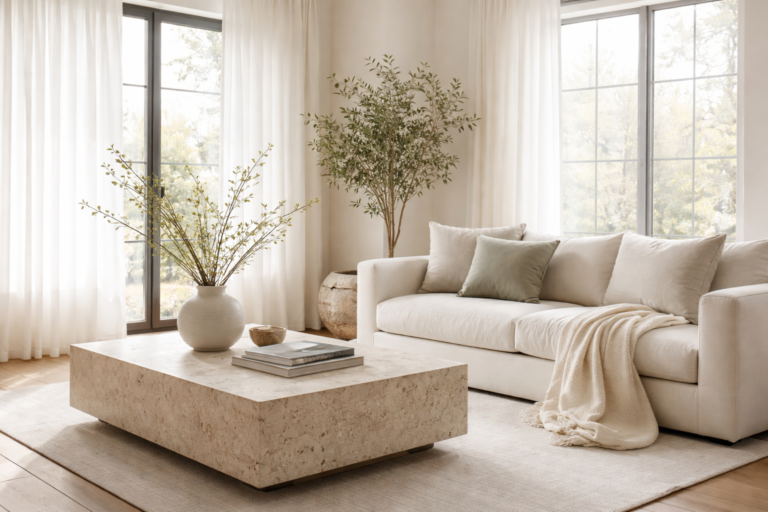
Coffee tables are deceptively difficult. Too empty and the room feels unfinished. Too styled and it feels precious. Designers solve this by following a few repeatable rules—focused on scale, restraint, and negative space.
The Styling Framework
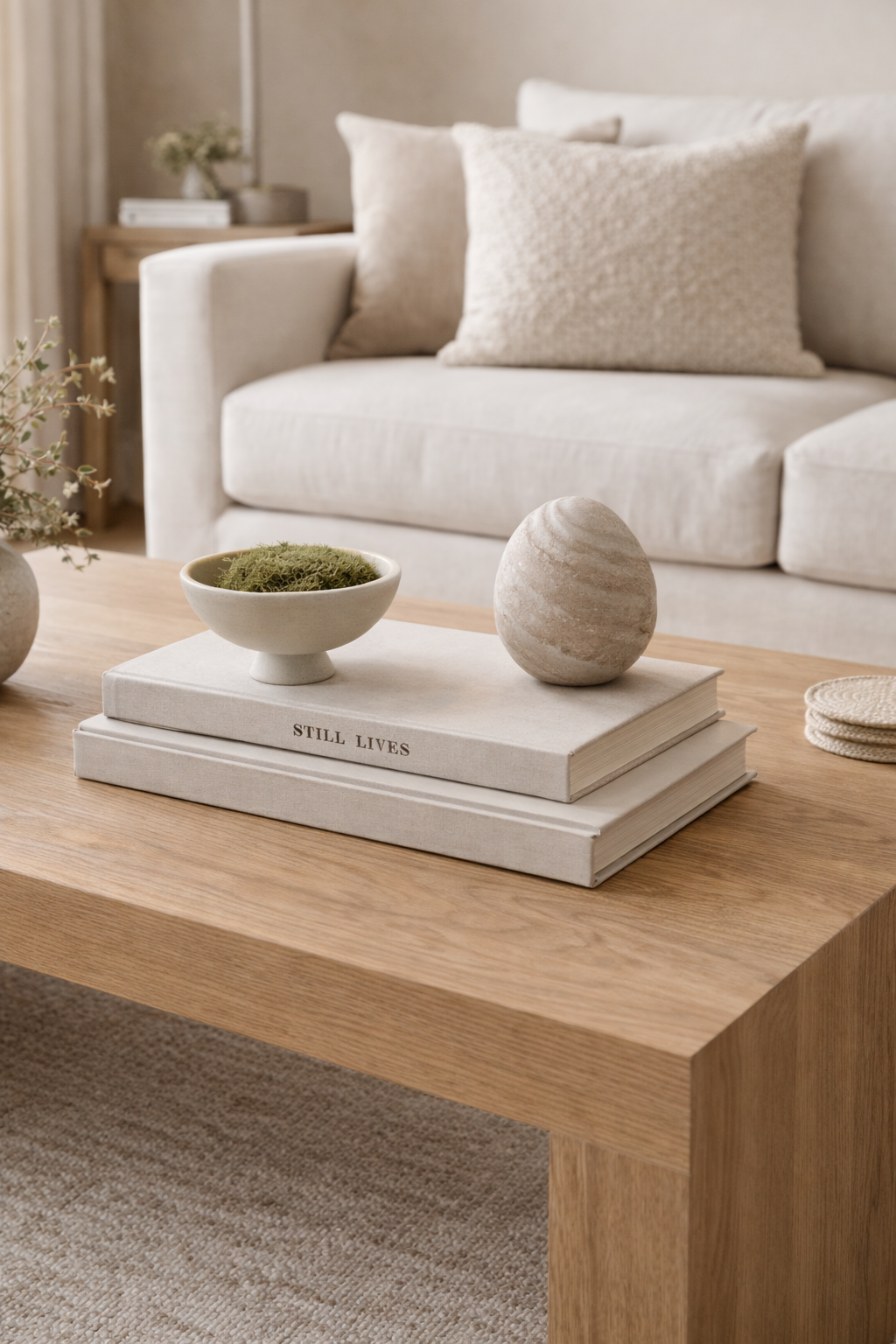
Start With Books
Books anchor the table and establish scale immediately.
Add One Sculptural Object
Choose form over theme—shape matters more than meaning.
Introduce Something Organic
Greenery, wood, or stone keeps the styling from feeling stiff.
Leave Space Unstyled
Negative space is what makes the table feel intentional.
Rule One: Books Are Non-Negotiable
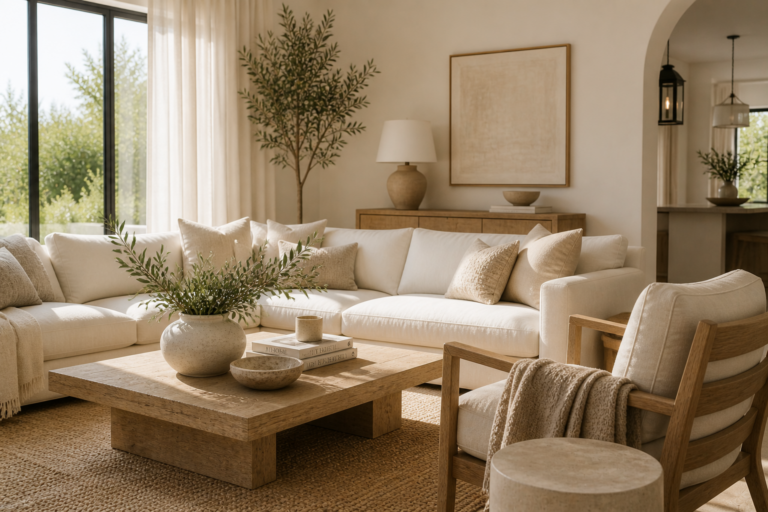
Books ground the coffee table visually. They create height, weight, and structure—giving everything else a place to land. One or two large-format books are usually enough.
Books do the heavy lifting so the rest can stay quiet.
Design principleRule Two: Choose Shape Over Sentiment
Sculptural objects should be chosen for their form, not their story. Rounded shapes soften rectangular tables. Angular objects add interest to softer rooms. One strong piece always reads better than several small ones.
Rule Three: Add Something Natural
A small branch, a wooden bowl, or a stone object introduces warmth and prevents the table from feeling overly styled. Keep it tonal and understated.
Rule Four: Protect Negative Space
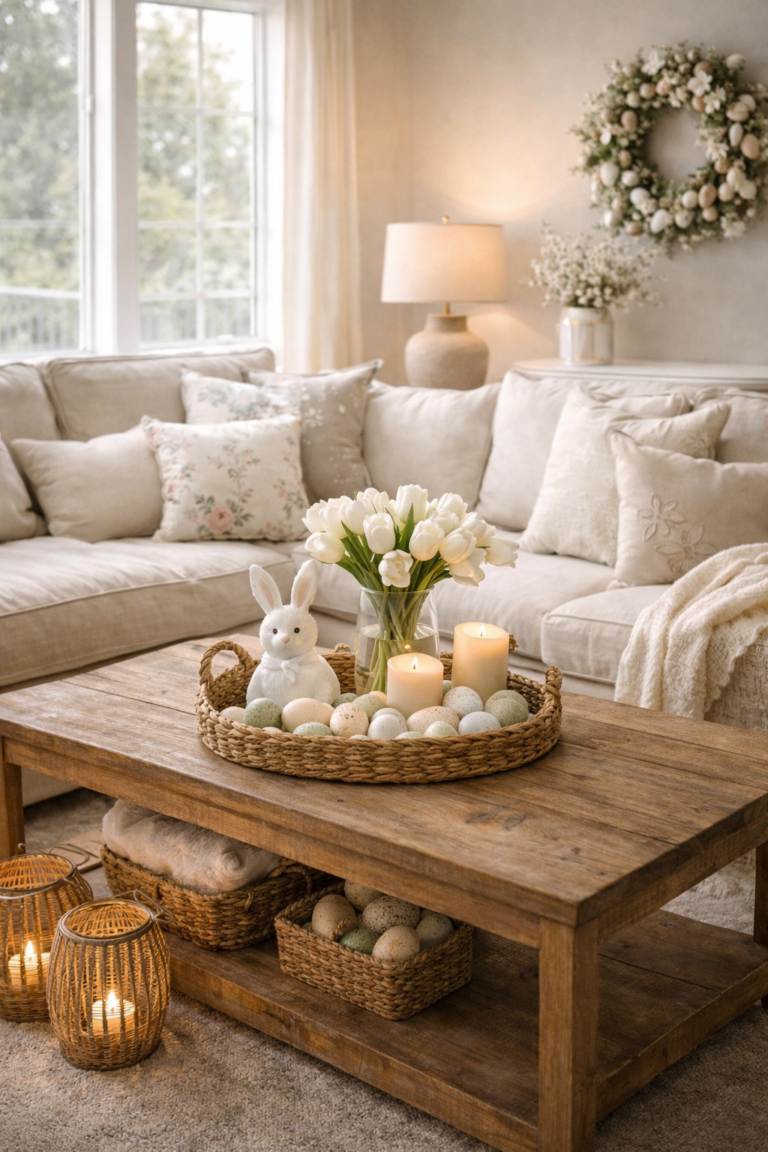
The most overlooked rule is also the most important: leave part of the table empty. This allows the eye to rest and keeps the room from feeling crowded.
Negative space is what separates styling from clutter.
Editor’s standardCommon Coffee Table Mistakes
- Too many small objects competing for attention.
- Themed decor that feels literal instead of sculptural.
- Styling that leaves no functional space.
Frequently Asked Questions
How many items should be on a coffee table?
Usually three to five total elements, grouped intentionally. Fewer almost always looks better than more.
Can a coffee table be completely empty?
Yes—especially in very minimal spaces. One book or tray is often enough to signal intention.
Should coffee tables be styled differently for daily use?
Yes. Prioritize flexibility. Choose objects that are easy to move and leave space for real life.
A well-styled coffee table doesn’t draw attention to itself. It quietly supports the room—adding weight, warmth, and intention without ever feeling overdone.