Organic Modern Entryway Formula
The Organic Modern Entryway Formula
A calm, repeatable framework that makes the first room in your home feel intentional, elevated, and quietly luxurious.
The entryway is a threshold—less a room than a feeling. When it’s designed with restraint, the rest of your home reads as calmer, cleaner, and more expensive. The best organic modern entryways don’t rely on “more.” They rely on clarity.
The Formula (Use This Every Time)
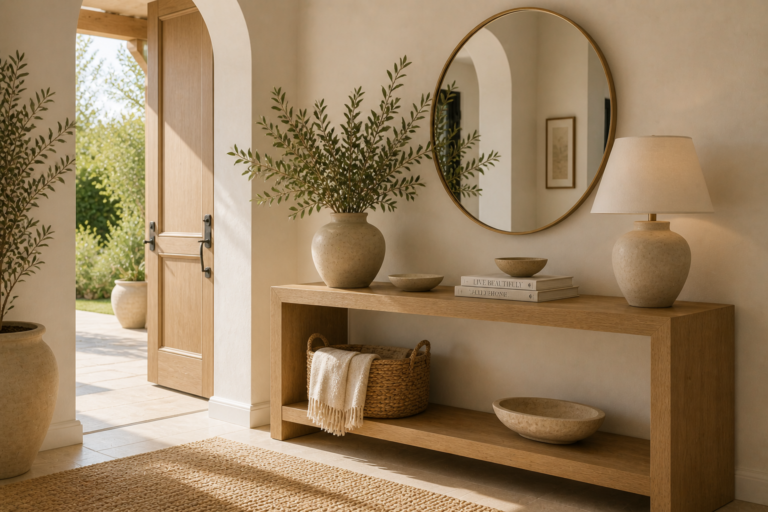
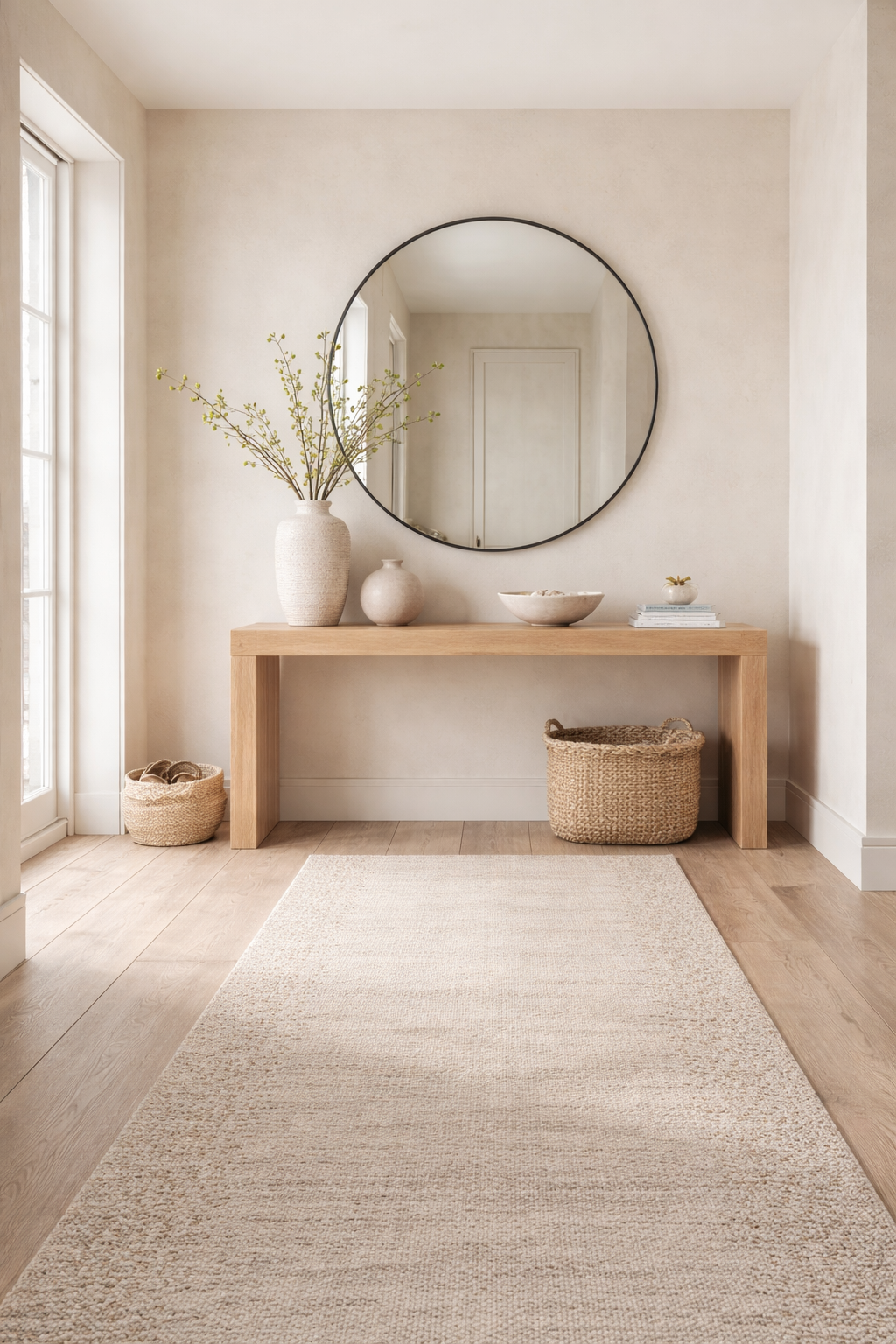
Anchor + Scale
Choose one piece that sets proportion: a console, bench, or slim cabinet.
Quiet Palette
Keep tones warm and narrow: plaster, linen, oak, stone—no sharp contrast.
One Strong Shape
Add softness with a curve: a round mirror, sculptural vessel, or bowl.
Negative Space
Leave room to breathe. Empty space is what makes the styling feel “designed.”
A Natural Element
Finish with life: a branch, muted greenery, or woven basket—subtle and tonal.
Step 1: Choose an Anchor That Reads Architectural
Start with one anchoring piece. In a narrow hall, a slim console is ideal. In a larger foyer, a bench can work beautifully. The key is restraint: clean lines, warm material, and a shape that feels calm from every angle.
“If the anchor is loud, the entire entryway will feel busy—no matter how pretty the decor is.”
Design principleThe Scale Check
- Keep the anchor proportional to the wall—too small reads temporary, too large reads heavy.
- Prefer visual “air”: thin legs, open bases, and simple silhouettes.
- Avoid overly ornate fronts or high-contrast finishes that compete with the rest of your home.
Step 2: Narrow the Palette Until It Feels Quiet
The fastest way to elevate an entryway is to reduce visual friction. Stick to warm whites, sandy beiges, soft taupes, and natural wood. Then repeat those tones in different textures.
Texture > Color
Organic modern rooms don’t feel rich because they’re colorful—they feel rich because they’re layered. Linen, wool, raw ceramic, stone, woven fibers. The palette stays quiet while the materials do the talking.
Step 3: Add One Curve (Not Five)
Curves are the antidote to hard architecture. One round mirror is often enough to soften an entire entryway. If you already have a curved mirror, choose angular decor. If your anchor is very rectangular, introduce a single sculptural vessel.
Step 4: Let Negative Space Be the Luxury
The most high-end rooms are rarely “filled.” They’re composed. Leave breathing room around objects. Keep the surface edited. A calm entryway should feel intentional from the doorway—without the viewer needing to scan and decode.
Negative space isn’t emptiness. It’s what makes the design feel confident.
Editor’s standardStep 5: Finish With Something Natural
A tonal branch arrangement, subtle greenery, or a woven basket grounds the space and keeps it from feeling sterile. Keep it soft and seasonal, not dramatic. The entryway should whisper, not shout.
Frequently Asked Questions
Can organic modern work in a very small entryway?
Yes—and it often works best there. Small spaces benefit from restraint. One strong anchor, one curve, and a quiet runner can make the area feel larger and more intentional immediately.
Do I need a console table to do this “right”?
No. A bench, a slim cabinet, or a wall-mounted shelf can work. What matters is having a single anchor that sets scale, plus a surface or storage point that supports real-life function.
How do I keep it functional without looking cluttered?
Use containment. A single tray for essentials, one woven basket for shoes, and a hook rail or closet for coats. Function can look beautiful when it’s organized into zones.
Should I style my entryway seasonally?
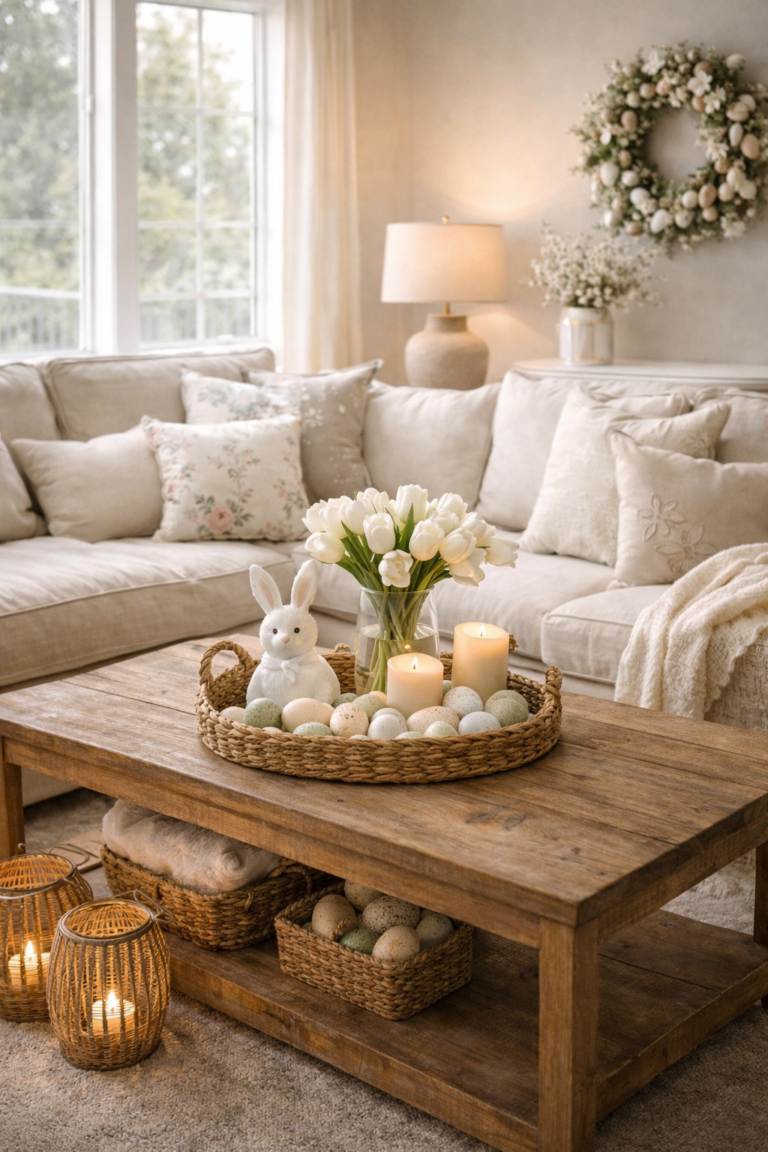
Light seasonal edits are perfect. Keep the foundation the same and swap only one element—branches, a subtle wreath, or a small tonal accent. The base should always feel timeless.
The goal of an organic modern entryway isn’t to impress. It’s to set the tone: quiet, warm, and intentional. When the first moment of your home feels composed, everything beyond it feels elevated.