Organic Modern Outdoor Dining: Effortless Summer Hosting That Feels Elevated
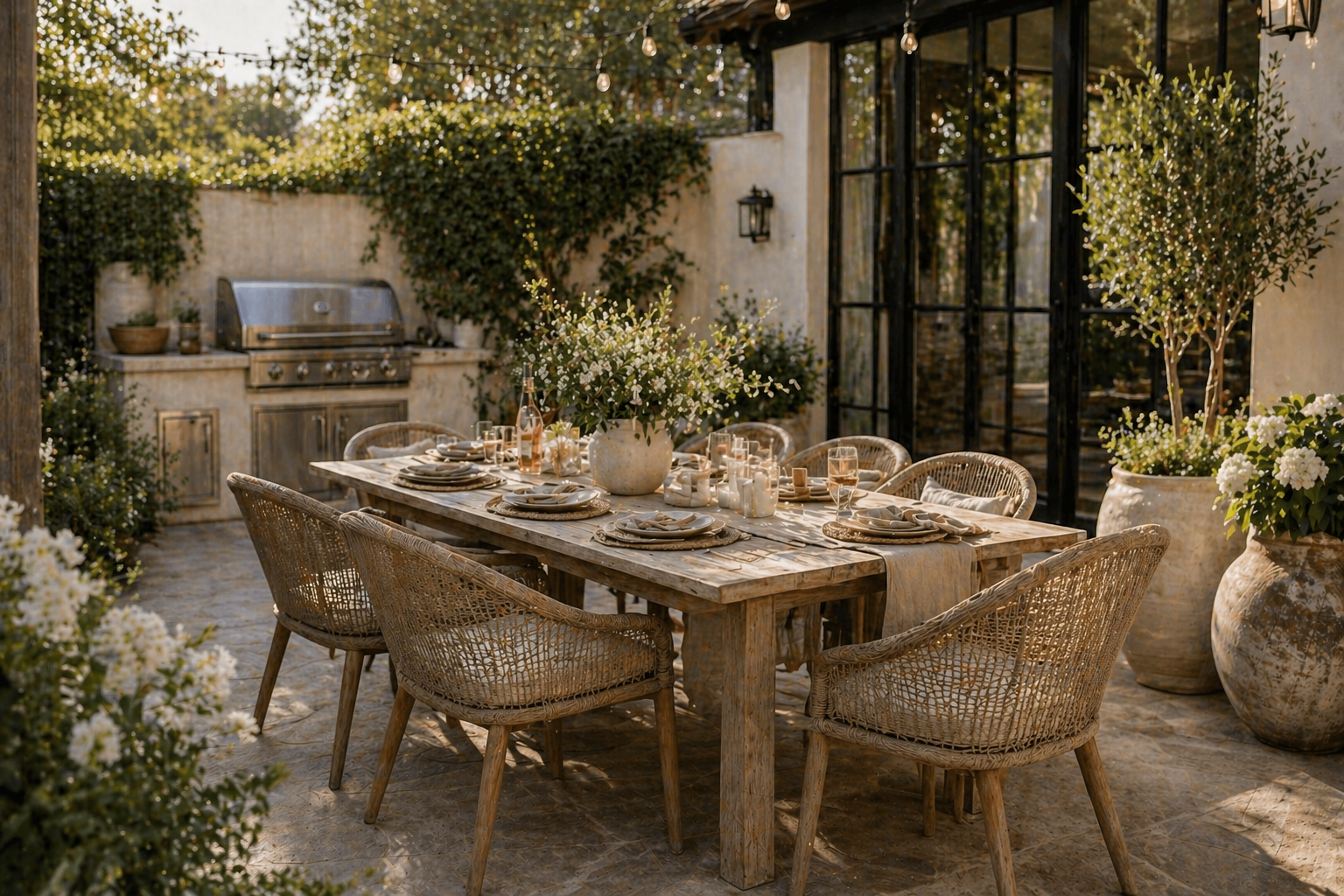
Organic Modern Outdoor Dining for Effortless Summer Hosting
A refined outdoor dining space should feel warm, intentional, and beautifully unforced — the kind of place where summer meals linger naturally.
Luxury outdoor dining starts with restraint.
The most elevated outdoor dining spaces are not defined by how much is placed on the table. They are defined by proportion, movement, material, and the quiet atmosphere created around the meal.
For an organic modern home, outdoor dining should feel like a natural extension of the interior: warm, composed, feminine, and deeply livable.
What makes an outdoor dining space feel high-end?
A high-end outdoor dining area begins with the relationship between scale and space. The table needs enough visual weight to anchor the setting, but the area around it must remain open enough to feel calm and generous.
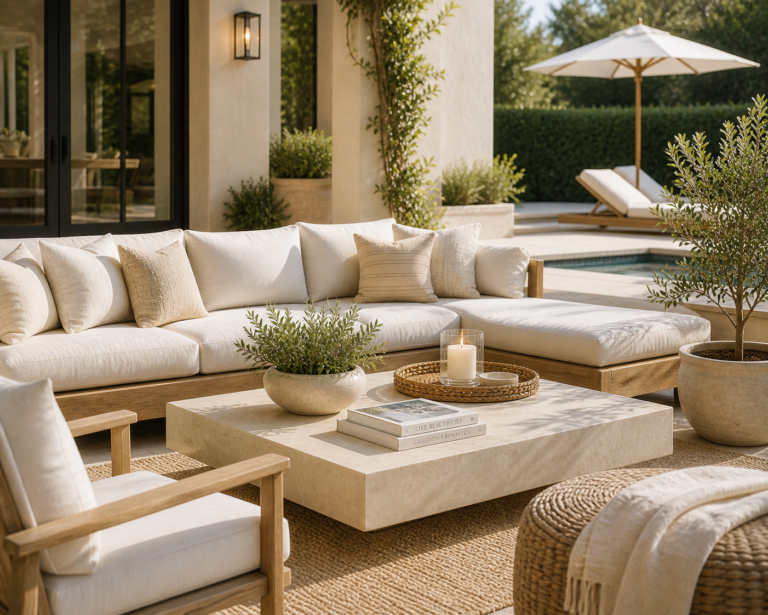
Instead of relying on bright seasonal decor, organic modern dining uses natural texture: warm wood, woven fibers, ceramic surfaces, linen, stone, greenery, and soft light.
Scale
Choose pieces that feel substantial enough to hold the space without overwhelming it.
Space
Leave room around the table. Negative space is what makes the layout feel luxurious.
Softness
Use neutral tones, natural textures, and gentle lighting to keep the space inviting.
Start with the table, then edit everything else.
The dining table is the architectural anchor of the outdoor room. It determines how the space feels, how people move, and how the eye reads the entire patio.
For a calm organic modern look, warm wood tones work especially well because they bring natural depth while staying timeless. Avoid overly glossy finishes, harsh black-and-white contrast, or materials that feel too cold for a summer setting.
Design the layout for movement.
Outdoor dining should never feel squeezed into a corner. Guests should be able to walk around the table easily, pull out chairs comfortably, and gather without the space feeling tight.
This is where luxury becomes visible. A beautiful setting loses its impact when the layout feels crowded.
Outdoor dining feels expensive when the materials are warm, the spacing is generous, and nothing is trying too hard.
Use texture instead of bold color.
Organic modern outdoor dining works best when the palette feels quiet and layered. Rather than adding strong color, build depth with wood grain, woven texture, creamy ceramics, linen napkins, matte finishes, and fresh greenery.
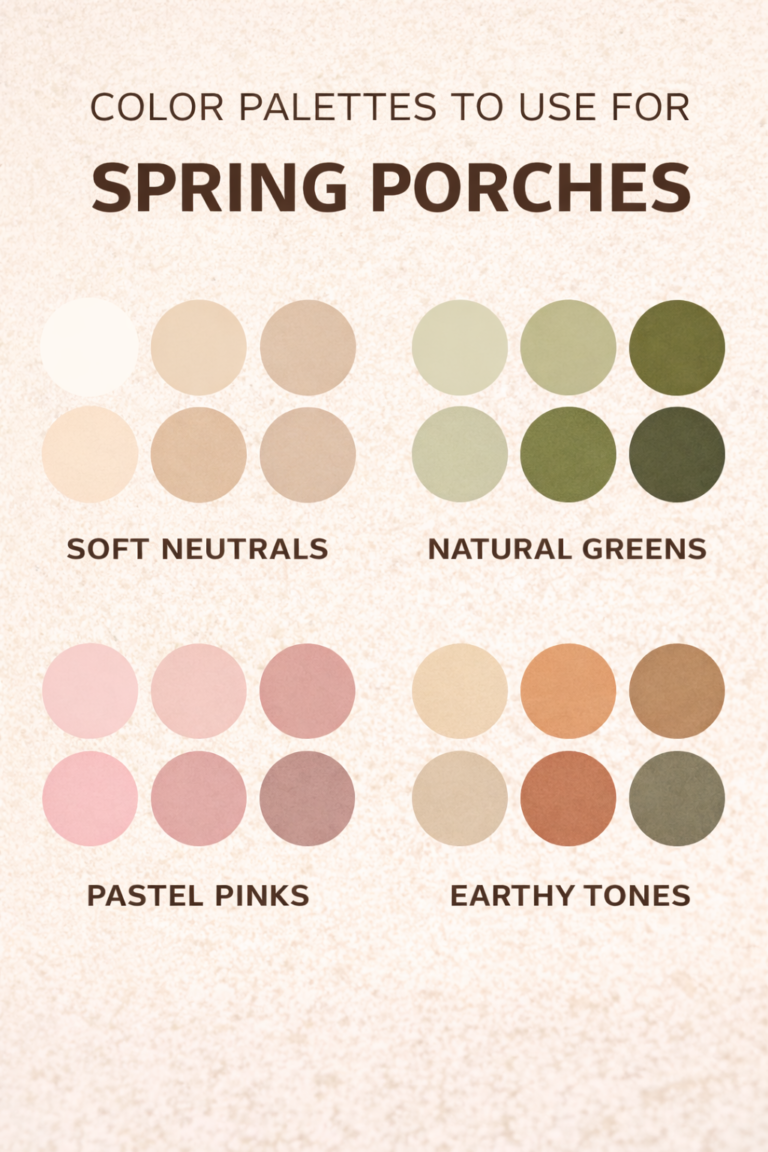
A feminine high-end palette might include ivory, sand, oatmeal, muted taupe, pale stone, soft clay, and natural wood. These tones reflect summer light beautifully and feel elegant from morning through evening.
Keep the tabletop minimal.
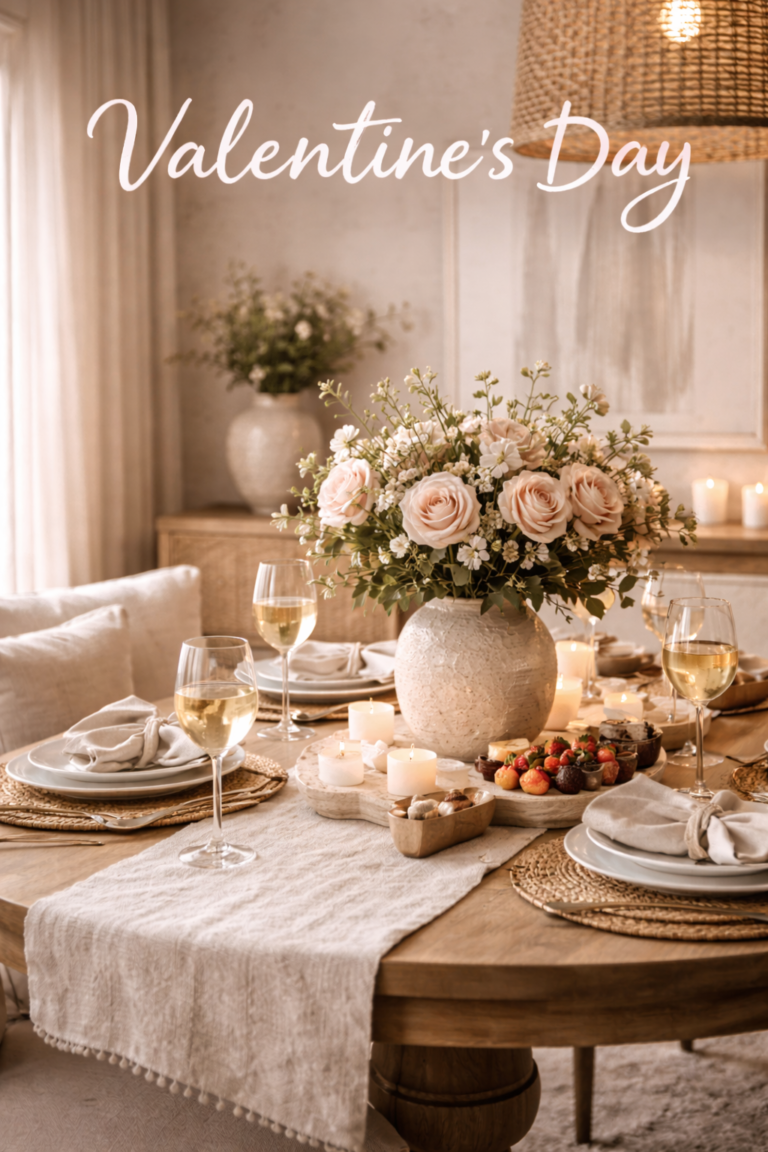
A high-end table setting does not need to be full. One ceramic vessel, a low bowl, a relaxed branch arrangement, or a simple line of candles can be enough.
Leaving space on the table allows the meal itself to become part of the design. That restraint makes the entire setting feel more refined.
The outdoor dining edit should feel composed, not decorated.
When styling an outdoor table, avoid thinking in terms of “decor.” Think instead in terms of atmosphere. The table should support conversation, movement, and ease.
A refined space usually needs fewer pieces than expected — but each choice should feel intentional.
Lighting is what makes the space last past sunset.
Outdoor dining often begins in daylight and ends after dark. Lighting should help the space transition naturally. Soft lanterns, candlelight, and warm ambient lighting make the table feel intimate without becoming dramatic.
Avoid harsh overhead lighting. A luxury dining space should glow, not glare.
What to avoid in outdoor dining design
Avoid crowded centerpieces, overly themed summer decor, too many competing materials, and furniture that feels too small for the space. The more refined approach is simple: scale up the key pieces, soften the palette, and leave room to breathe.
The best outdoor dining spaces balance beauty with ease.
They feel open enough for movement, warm enough for gathering, and simple enough to let the setting, food, and conversation become the focus.
Frequently Asked Questions
How do I make my outdoor dining area look expensive?
Focus on scale, spacing, and natural materials. A substantial table, neutral palette, and edited styling will look more elevated than lots of small decorations.
What colors work best for organic modern outdoor dining?
Ivory, beige, sand, taupe, soft clay, pale stone, warm wood, and muted greenery create a calm, high-end summer palette.
How should I style an outdoor dining table for summer?
Keep the styling minimal. Use one low centerpiece, a simple ceramic vessel, relaxed greenery, or candles, while leaving plenty of usable table space.
How do I make outdoor dining feel cozy at night?
Use warm lighting, candles, lanterns, and soft natural textures. Avoid harsh overhead light and keep the setting intimate.
What should I avoid when designing an outdoor dining space?
Avoid clutter, overly themed decor, tight layouts, harsh lighting, and too many different materials competing with each other.
Final Thoughts
A beautiful outdoor dining space is created through warmth, proportion, softness, and restraint. When the table feels grounded, the palette feels calm, and the layout has room to breathe, summer hosting becomes effortless.