The “Edit Your Home” Method: How to Style Every Room Like a Designer
The “Edit Your Home” Method: How to Style Every Room Like a Designer
The difference between a home that feels finished and a home that feels slightly off is often not what you add. It is what you remove, what you refine, and what you allow to breathe. This is the editing method that makes every room feel calmer, cleaner, and far more elevated.
This page is about visual restraint — the design move that makes rooms look more intentional, more expensive, and more editorial without a full shopping spree.
- the editing rules designers use instinctively
- how to spot what is weakening a room
- what to remove, what to keep, and what to group together
- how to make shelves, consoles, coffee tables, and corners feel composed
Editing is what gives a home confidence. It stops rooms from trying to say too many things at once and lets the best pieces speak clearly.
Why some homes feel finished and others feel visually noisy
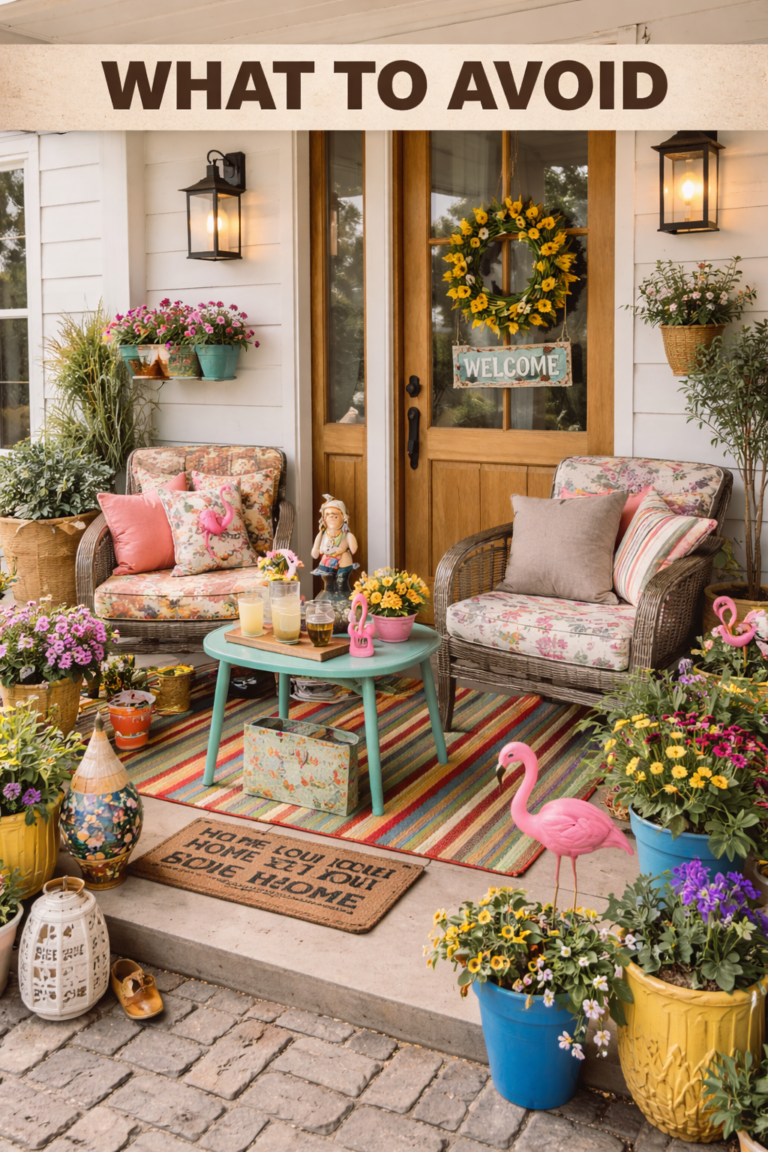
Most rooms do not feel off because they are missing something major. They feel off because there is too much competing for attention. A few extra accessories. A shelf that became storage. A coffee table with too many small objects. A console styled with good pieces, but no restraint. The room is not ugly — it is just visually over-explaining itself.
The edit your home method fixes that by shifting the focus from decorating to refining. Instead of asking “what else should go here?” you start asking “what is weakening this space?” That is the designer mindset. It is less about acquisition and more about clarity.
This article works especially well after 15 Things to Remove From Your Home This Spring or How to Reset Your Living Room for Spring, because once the obvious clutter is gone, you can finally see what the room actually wants.
The edit your home method
This is the core process for refining a room without flattening it.
Clear the surface fully first
You need to see the space without the noise before you can style it well. Editing starts with visual silence.
Choose the strongest pieces only
Keep what adds shape, texture, warmth, or intention. Remove filler, duplicates, and anything that feels vague.
Group with more purpose
Objects look better when they are part of a composed moment, not scattered individually across every inch of the room.
Leave negative space on purpose
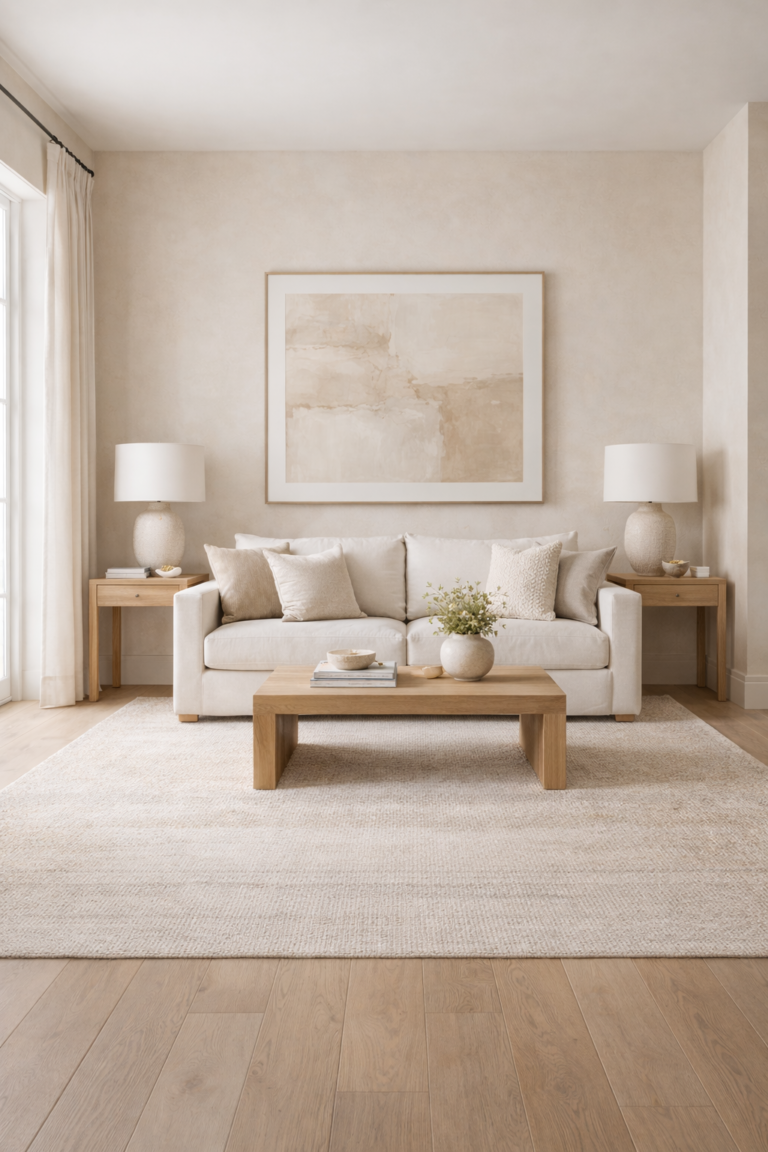
The empty areas are not unfinished. They are what make the styling feel expensive and breathable.
Repeat warmth subtly
Wood, linen, ivory, soft stone, warm metal, and organic stems help edited spaces still feel layered and alive.
Stop before the room starts explaining itself again
One more object is often the moment the styling tips from elevated to overdone. Learn to stop early.
How to edit the main surfaces of your home
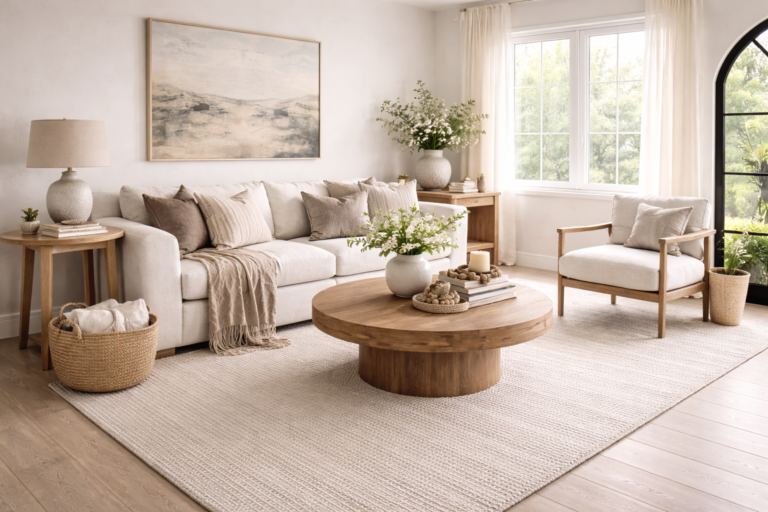
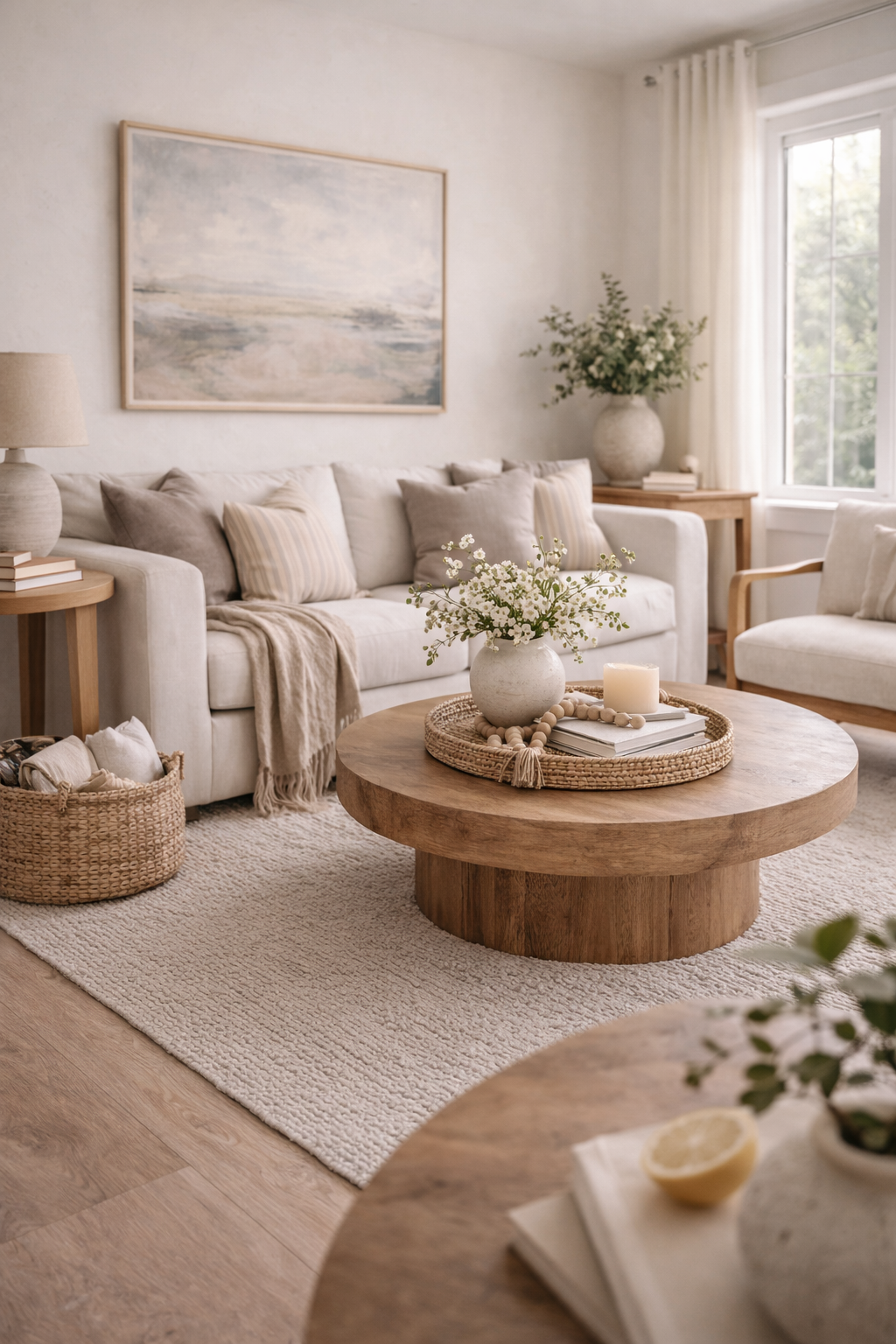
Coffee tables
- limit the styling to one composed cluster or one tray moment
- remove tiny scattered pieces that make the table feel busy
- leave enough open area for the table to still feel useful
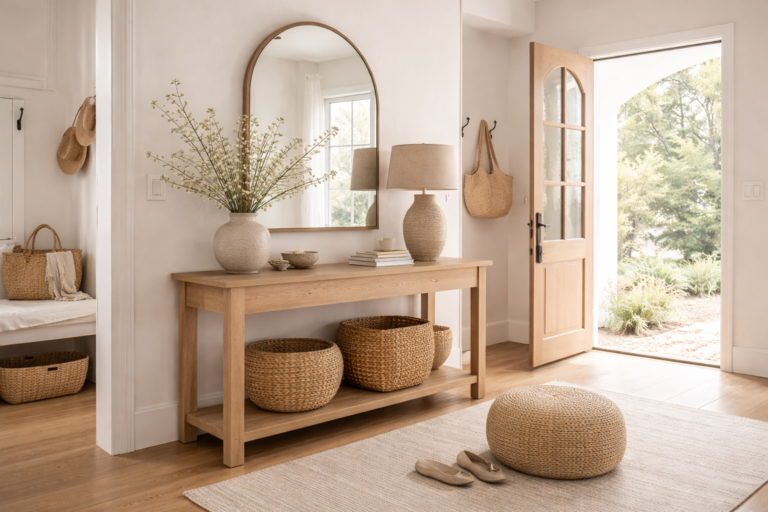
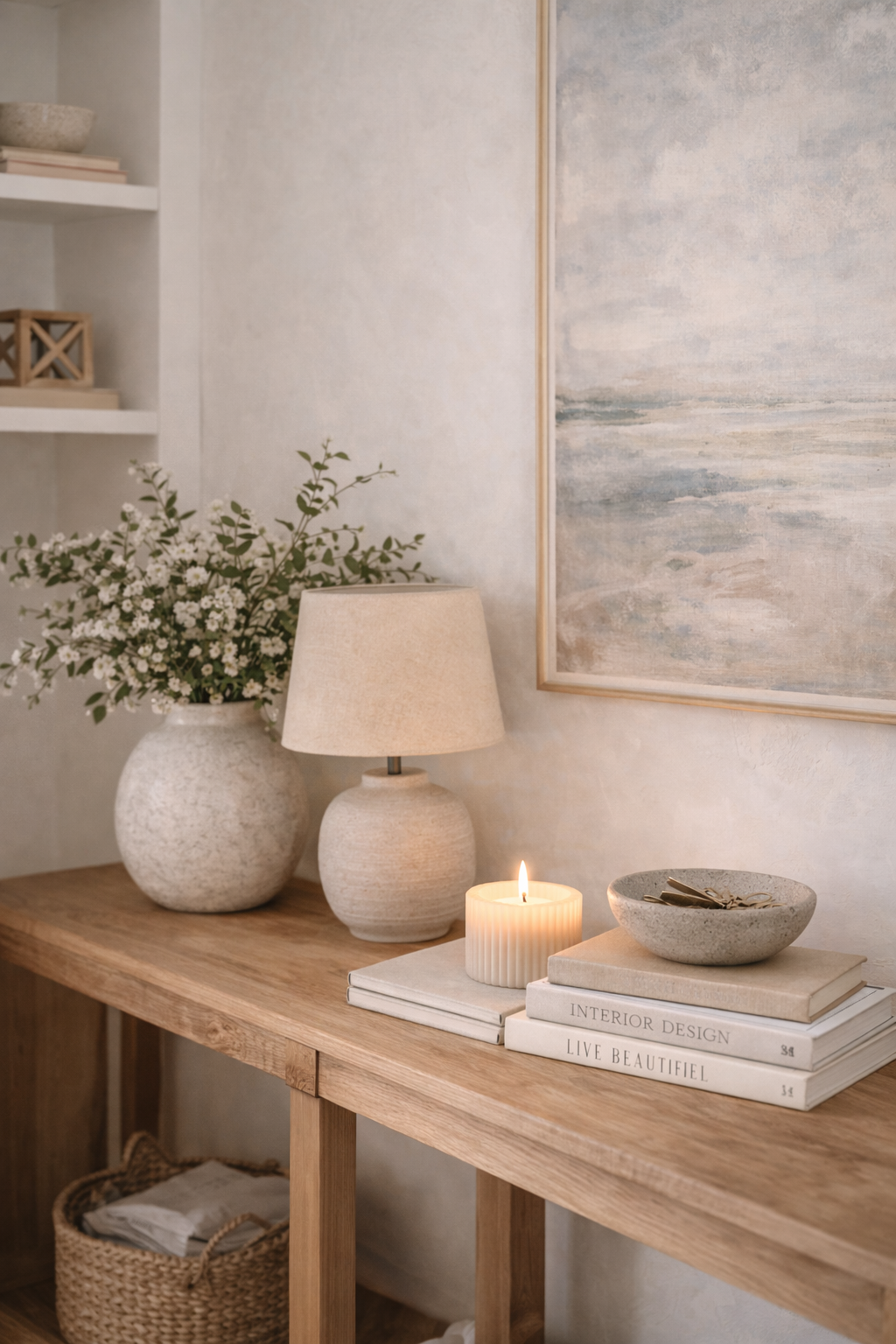
Consoles and entry tables
- choose one anchor object like a lamp, vase, or mirror relationship
- keep the tabletop from becoming a drop zone
- group books, trays, or accessories with more hierarchy
Open shelves
- mix books, objects, and negative space instead of filling every section evenly
- remove anything that feels like storage disguised as styling
- repeat tones, not clutter
Nightstands and dressers
- keep only what supports calm, function, or beauty
- avoid stacking too many personal items in view
- one candle, one book, one tray, or one vase is usually enough
Editor notes: what editing changes emotionally
The room stops feeling loud
Editing lowers the visual volume of a room, which is why it immediately feels calmer even before anything new is added.
Your best pieces become more visible
Good furniture, beautiful books, sculptural objects, and soft materials all show up more clearly when there is less competing around them.
The home feels more expensive
Luxury almost always includes restraint. Rooms read higher-end when they feel selective instead of overfilled.
How to tell when a room needs editing
- you keep moving objects around but it never feels finished
- the surfaces look “fine” but not calm
- you cannot immediately tell what the focal point is
- the room feels heavier than the season you want it to carry
- your eye lands on clutter before it lands on beauty
What editing is not
- it is not sterile minimalism
- it is not getting rid of everything with personality
- it is not making every room look empty or cold
- it is not styling less thoughtfully — it is styling more selectively
The fastest way to use this method today
Pick one surface
Choose a coffee table, console, shelf, or nightstand rather than trying to edit the whole house in one pass.
Remove everything but the best three to five elements
That alone will usually show you exactly what the room was asking for in the first place.
Live with the extra space
Do not rush to refill it. Let your eye adjust to the calm. That is often where the elevated feeling begins.
Read this next
15 Things to Remove From Your Home This Spring
The best companion article if you want a faster eye for what is visually dragging a room down.
How to Reset Your Living Room for Spring
Use this when you want to apply the editing method directly to the room that shapes your house most strongly.
10 Small Upgrades That Make Your Home Feel Instantly More Luxurious This Spring
Once the editing is done, this is where you refine the atmosphere with a few stronger finishing moves.
FAQ: the edit your home method
What does it mean to edit your home?
How do designers make rooms feel more expensive without buying everything new?
How do I know what to remove when editing a room?
Will editing make my home feel too empty?
What should I read after this article?
A well-edited home feels calmer because it is no longer competing with itself.
Use this method to refine every room with more restraint and confidence, then keep moving through the cluster for weekly maintenance, luxury upgrades, and a spring home that feels truly finished.