Designer Kitchen Styling Tricks That Instantly Make a Kitchen Look Expensive
Designer Tricks · Kitchen Styling · Expensive-Looking Interiors
Designer Kitchen Styling Tricks That Instantly Make a Kitchen Look Expensive
The kitchens that feel the most expensive are rarely the ones trying the hardest. They are the ones that feel calm, intentional, beautifully edited, and subtly layered in a way that makes the entire room look more refined. Designers know that a kitchen does not need more decor to feel high-end. It needs stronger visual choices. Better scale. Better materials. Better restraint. Better lighting. Better styling logic.
These are the kitchen styling tricks designers use again and again because they create an immediate difference. They make builder-grade kitchens feel more custom. They make neutral kitchens feel richer. They make organic modern kitchens feel even softer and more elevated. Most importantly, they help the room feel expensive without becoming cluttered or overly staged.
Quick Answer
The fastest designer kitchen styling tricks are to remove excess clutter, use fewer but more substantial decor pieces, upgrade visible everyday objects, warm up the palette, style the island as one focal arrangement, create only a few countertop zones, and let negative space remain part of the design.
In other words, expensive-looking kitchens are not full. They are edited. The materials are richer, the color story is more cohesive, the lighting is softer, and every visible object feels like it belongs.
Key Takeaways
- Designer kitchen styling is built on editing, scale, and cohesion.
- Warm natural materials instantly elevate a kitchen.
- One strong island arrangement usually works better than many decorative objects.
- Visible utility items matter more than people think.
- Lighting, palette, and surface restraint are some of the biggest luxury signals in the room.
Quick Navigation
- Why Designer Styling Tricks Work
- Trick 1: Use Fewer, Larger Pieces
- Trick 2: Upgrade the Utility Layer
- Trick 3: Style the Island as the Hero
- Trick 4: Create Clear Counter Zones
- Trick 5: Warm Up the Palette
- Trick 6: Use Better Texture
- Trick 7: Let Empty Space Look Intentional
- Mistakes That Undo the Designer Effect
- Designer Checklist
- Designer Kitchen Styling FAQs
Why Designer Kitchen Styling Tricks Make Such a Big Difference
Kitchens are rooms where a lot is already happening visually. You have cabinets, counters, backsplash, hardware, lighting, appliances, stools, faucets, and outlets all competing for attention before a single decorative object enters the space. That means the most effective styling is not about adding more things. It is about controlling what the eye notices first and reducing visual friction everywhere else.
That is exactly what designer tricks do. They improve hierarchy. They replace weak details with stronger ones. They create a more cohesive story so the room feels intentional. The result is that the same kitchen can look dramatically more expensive without needing a full renovation.
These tricks also work because they are rooted in the same logic behind the kitchen styling formula that makes any kitchen look expensive. Expensive kitchens feel cohesive, warm, and calm. The tricks below are simply the quickest ways to create that effect.
Trick 1: Use Fewer, Larger Pieces Instead of Many Small Ones
Designer Trick
Small decor often makes kitchens feel cheaper because it creates visual noise. Larger pieces with presence make surfaces feel calmer and more intentional.
One substantial wood board, a large ceramic bowl, a sculptural vase, or a tray with weight can do more for a kitchen than five or six tiny accessories. This is especially true on long countertops and large islands, where small items tend to look scattered rather than styled.
Designers often reduce the number of objects on a surface and increase the size of the few that remain. That shift alone makes the room feel more expensive because the styling stops looking busy and starts looking architectural.
Trick 2: Upgrade the Utility Layer First
Designer Trick
The items you use every day do more to shape the look of a kitchen than random decorative extras ever will.
Soap bottles, oil bottles, cutting boards, utensil holders, coffee canisters, trays, towels, and bowls all live out in the open. In a real kitchen, those objects are part of the decor. When they are cheap-looking, bright, mismatched, or left in packaging, the whole room looks less refined.
This is why one of the best styling tricks is to elevate the utility layer first. Replace bright soap bottles with a stone or glass dispenser. Use a ceramic crock for utensils. Let a rich wood cutting board lean near the range. Gather the sink area on a tray. Upgrade what is already visible before buying more decorative items.
This idea connects directly to kitchen counter styling ideas that look designer, because strong counters begin with beautiful function.
Trick 3: Style the Island as One Composed Focal Point
Designer Trick
If the island is the visual center of the kitchen, it should read as one intentional composition rather than several disconnected objects.
A stone bowl, a stack of books, greenery, a tray, or a single sculptural piece can all work beautifully — but the key is letting the island tell one story. Designers usually create one composed grouping with enough scale to hold the surface rather than lining the island with multiple accessories.
That approach is exactly what makes the kitchen island styling formula designers use so effective. It gives the room a clear focal point and instantly raises the level of polish.
Less Effective
Several random pieces
Small decor scattered down the island usually makes the surface feel cluttered and lower-end.
More Effective
One layered arrangement
A bowl, books, tray, or greenery moment with scale feels quieter, more intentional, and more expensive.
Trick 4: Create Clear Countertop Zones Instead of Styling Every Inch
Designer Trick
Expensive kitchens usually style only a few counter zones. The rest of the surface stays intentionally open.
This is one of the biggest differences between average kitchen styling and designer kitchen styling. In less refined kitchens, every available bit of counter becomes an opportunity for decor or storage. In better kitchens, the styling is contained to areas that make sense: near the sink, beside the range, or in a coffee station.
A wood board and ceramic bowl near the range. A tray with soap and linen at the sink. A small grouped coffee setup in one corner. Those small composed zones feel much more luxurious than a kitchen where all the counters are half-covered in random items.
Trick 5: Warm Up the Palette Even Slightly
Designer Trick
A warmer palette almost always reads richer and more expensive than a colder one.
This does not mean every kitchen needs to be beige. It means harsh whites, icy grays, and disconnected cool tones often make kitchens feel flatter and cheaper. Warm whites, oat, stone, taupe, mushroom, muted greens, oak, walnut, and brushed metal finishes usually bring more softness and visual depth.
Even small palette shifts can help: warmer bulbs, better textiles, richer wood, softer ceramics, or swapping gray accessories for stone and linen tones. These subtle changes create the kind of tonal layering explored in the most beautiful kitchen color palettes right now.
Trick 6: Use Better Texture to Make the Room Feel More Custom
Designer Trick
Texture is one of the easiest ways to create a more expensive kitchen without changing the layout.
Wood
Softens hard surfaces
Boards, stools, trays, and shelving in warm wood instantly make kitchens feel less builder-basic.
Stone
Adds quiet luxury
Travertine, marble, quartzite, and stone bowls create a sense of depth and permanence.
Ceramic + Linen
Add softness and soul
These materials make kitchens feel collected rather than mass-produced.
Kitchens often feel more expensive not because the finishes are dramatically changed, but because the visible textures are improved. That is why organic modern styling works so well. It layers materials in a way that feels tactile, warm, and calm. For more on that mood, organic modern kitchen ideas that feel warm and elevated expands on how natural texture transforms the room.
Trick 7: Let Empty Space Look Intentional
Designer Trick
Negative space is one of the strongest luxury signals in a kitchen, especially on counters and islands.
Many people assume an empty section of counter looks unfinished. Designers know it often looks expensive. Open space allows the stronger styling moments to stand out and keeps the room feeling calm. It also makes the kitchen feel easier to use, which is part of what makes it feel custom and elevated.
This is one of the biggest reasons kitchens improve so quickly when they are edited. The room needs breathing room. Once every surface is not fighting for attention, the best materials and compositions finally have enough visual space to matter.
Trick 8: Repeat Materials Softly Across the Room
One of the quietest designer moves is repetition. A wood tone appears in the stools, then again in a board on the counter, then again in a tray. A stone note appears in the countertop, then in a bowl. A brushed metal finish appears in the hardware and maybe in one small visible utility detail. This repetition helps the kitchen feel like one cohesive story.
The key is subtlety. You are not matching every piece exactly. You are creating echoes. Those echoes are part of what makes a kitchen feel styled rather than assembled.
Trick 9: Use Lighting to Flatter Every Styling Choice
Designer kitchens nearly always use light intentionally. Warm bulbs, better pendants, and under-cabinet lighting can transform the feeling of the room. Good lighting flatters counters, softens paint, deepens wood tones, and makes ceramics and stone look richer.
Poor lighting does the opposite. It flattens everything and can make even beautiful styling look less refined. If a kitchen feels colder or cheaper than it should, lighting is often a major part of the problem.
Trick 10: Make Functional Styling Part of the Beauty
One of the most advanced designer tricks is letting beautiful utility be part of the room’s appeal. A kitchen should feel lived in, but that does not mean it has to feel messy. A bowl of produce, a breakfast setup, a beautiful oil bottle, a set of mugs, or a baking-ready board can all make the room feel more human and more expensive when handled well.
This is why kitchens often feel their best when they borrow cues from real life rather than pure decoration. The styling looks believable because it is connected to how the room actually functions.
How These Designer Tricks Work in Builder Grade Kitchens
These styling tricks are especially powerful in builder grade kitchens because the base room usually needs more warmth, more hierarchy, and more visual character. Better visible objects, improved lighting, warmer palette choices, and a stronger island moment can change the whole impression of the space.
That is why these ideas pair naturally with how to make a builder grade kitchen look custom. Styling is often the fastest way to make a standard kitchen look far more refined.
How These Designer Tricks Work in Neutral and Luxury Kitchens
Neutral kitchens benefit because these tricks add depth and texture without disrupting the calm palette. Luxury kitchens benefit because these tricks keep the room from feeling overdone. In both cases, the goal is the same: better materials, fewer distractions, and stronger styling logic.
That is also why this article connects naturally with luxury kitchen decor ideas that feel like a designer home and neutral kitchen decor ideas that feel luxurious. Once the room is edited well, the palette and material choices become even more powerful.
Mistakes That Undo the Designer Effect Fast
Mistakes to Avoid
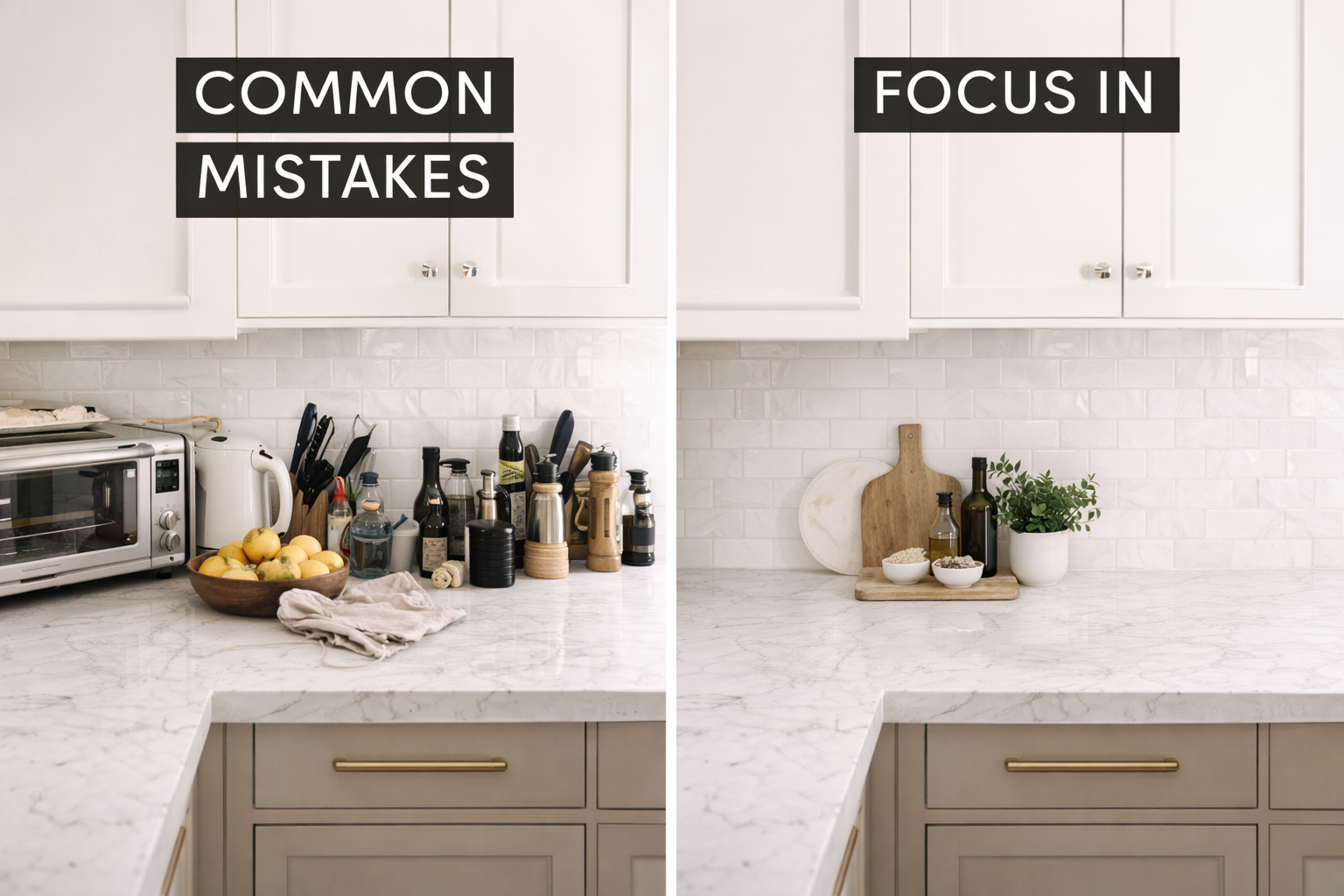
- Overdecorating the counters. Too many accessories immediately lower the sense of calm and luxury.
- Keeping everything small. Tiny decor tends to look like clutter rather than intentional styling.
- Leaving branded packaging visible. This breaks the palette and weakens the room’s visual quality.
- Using too many unrelated finishes. Cohesion is one of the biggest designer advantages.
- Going too cold with lighting or color. Harsh tones flatten the room fast.
- Trying to fill empty space. Negative space is part of what makes the kitchen look expensive.
- Ignoring how the kitchen is actually used. Styling should support daily life, not fight it.
Many of these are the same issues explored more fully in kitchen styling mistakes that make a kitchen look cheap. In most kitchens, the road to a more expensive look begins with removing what is weakening the room.
Designer Notes: Why These Tricks Feel So Effective So Fast
Designer Notes
The reason these kitchen styling tricks work so quickly is that they target the most visible design signals in the room. They improve what the eye reads first: scale, color warmth, material quality, surface calm, focal points, and visible daily-use objects. Because those cues influence the whole room, even a few changes can shift the kitchen dramatically.
Designer styling is rarely about showing off. It is about reducing friction. When the surfaces feel calmer, the palette feels warmer, the materials feel better, and the island feels more intentional, the kitchen stops asking the eye to work so hard. That ease is part of what reads as luxury.
Designer Kitchen Styling Checklist
Quick Designer Checklist
- Remove small decorative clutter from counters and islands.
- Use fewer pieces, but make them more substantial.
- Upgrade soap bottles, trays, bowls, boards, and visible utility items.
- Style the island as one layered focal arrangement.
- Create only one or two clear countertop zones.
- Warm up the palette through materials, finishes, and lighting.
- Repeat wood, stone, ceramic, linen, or metal notes softly around the room.
- Leave open space intentionally on major surfaces.
- Make sure the kitchen still functions beautifully in everyday life.
- Edit once more before calling it finished.
Related Kitchen Reads
Designer Kitchen Styling FAQs
How do designers make a kitchen look more expensive?
Designers usually make a kitchen look more expensive by editing clutter, using fewer but larger pieces, upgrading visible utility items, warming up the palette, styling the island as a focal point, and leaving enough negative space for the room to feel calm.
What is the fastest kitchen styling trick?
One of the fastest kitchen styling tricks is upgrading the visible utility layer — things like soap bottles, trays, utensil holders, bowls, and boards — because these objects affect the look of the room every single day.
How do I style a kitchen island like a designer?
Use one composed arrangement with enough scale, such as a bowl, tray, books, or greenery, and leave the rest of the island open enough to feel useful and expensive.
Why does my kitchen still look cheap after decorating?
A kitchen can still look cheap after decorating if the styling is too cluttered, the scale is too small, the palette feels disconnected, the lighting is harsh, or too many utility items remain in bright packaging.
What materials make a kitchen look more high-end?
Wood, stone, ceramic, linen, glass, and warm brushed or aged metal finishes tend to make kitchens look more high-end than plastic, overly shiny synthetics, or weak decorative fillers.
Can these styling tricks work in a builder grade kitchen?
Yes. These tricks often work especially well in builder grade kitchens because better styling, warmer palette choices, improved visible objects, and stronger lighting can dramatically change the feel of the space without a major remodel.
What is the biggest mistake that keeps a kitchen from looking designer?
The biggest mistake is often trying to fill every surface. Designer kitchens usually feel more elevated because they are edited, cohesive, and restrained rather than fully decorated everywhere.
Final Thoughts
The best designer kitchen styling tricks are not dramatic. They are smart. They warm up the palette, improve the quality of what stays visible, create a stronger focal point, and give the room enough breathing space to feel intentional. That is what makes a kitchen look more expensive so quickly. It is not about overdecorating. It is about styling with discipline.
If you want the fastest transformation, start by removing what weakens the room, then upgrade the visible utility layer, strengthen the island, and simplify the counters. Those small designer moves often do more than buying more decor ever could. Once the room feels cohesive, calm, and warm, the kitchen naturally starts to read as more custom and more beautiful.
For the strongest cluster flow, continue with The Kitchen Styling Formula That Makes Any Kitchen Look Expensive and Kitchen Styling Mistakes That Make a Kitchen Look Cheap.