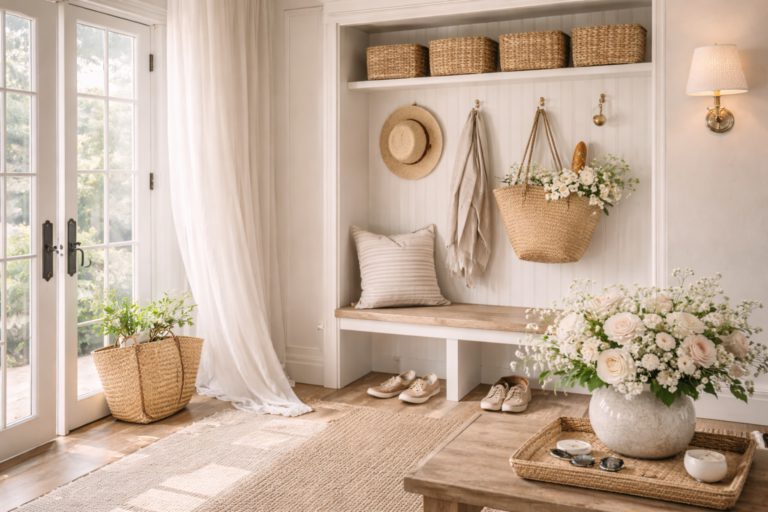
From Evergreen to Effortless: A Refined Spring Dining Room Edit
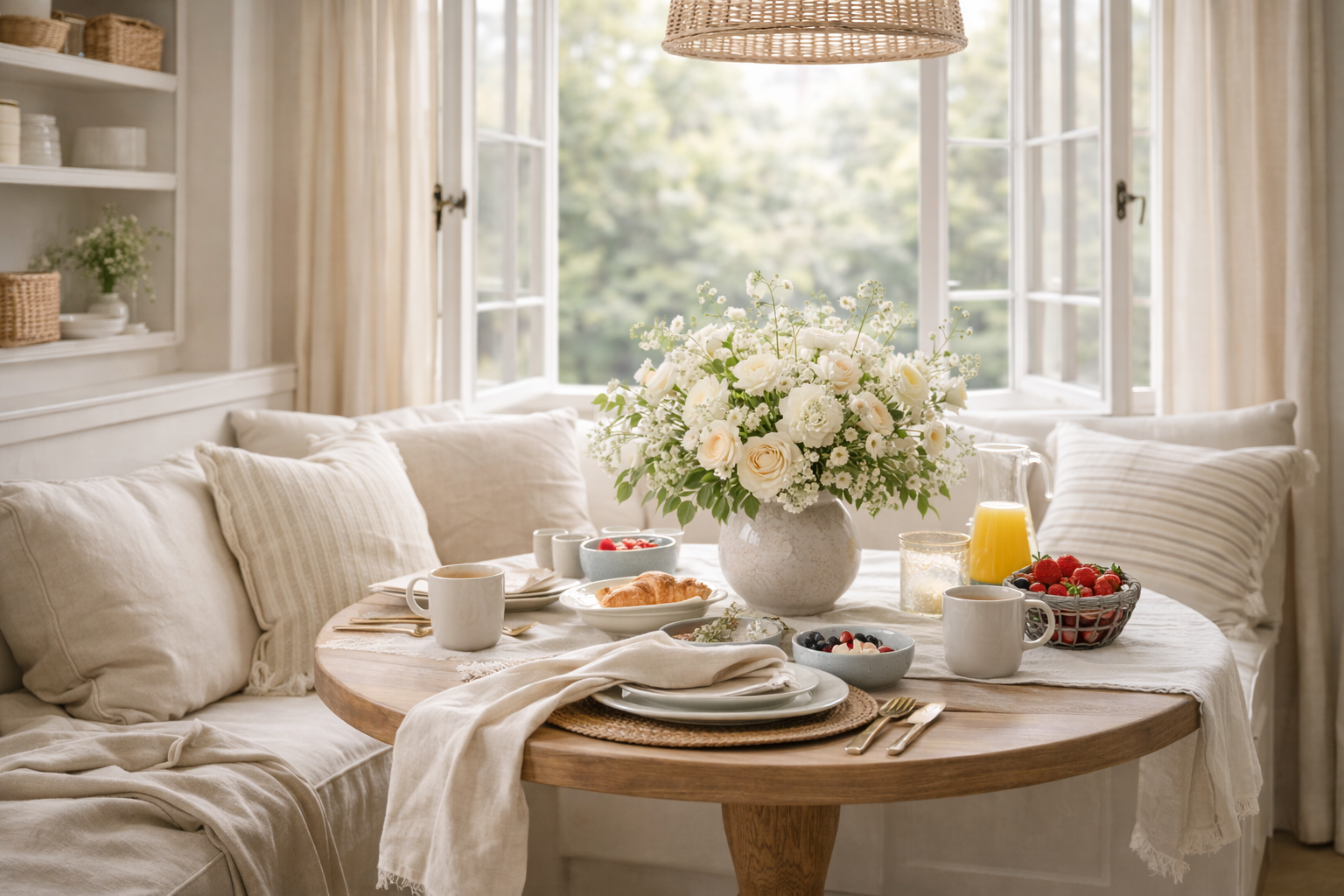
From Evergreen to Effortless: A Refined Spring Dining Room Edit
A spring refresh that feels elevated and calm—less winter weight, more light, texture, and “host-ready” ease.
The Spring “Edit”: Lighter, Calmer, Still Formal
If winter styling is about warmth and depth, spring styling is about clarity. The goal is not to replace everything—it’s to remove visual weight so the room feels effortless.
A refined spring dining room has three signatures: (1) breathable textiles, (2) soft contrast, and (3) one intentional focal point—usually the table center—surrounded by negative space.
Dense evergreens, heavy dark runners, and oversized candle clusters can make spring feel “late.” Edit them down.
Keep your chandelier, art, and core furniture. Maintain warmth with lighting—not heavy décor.
Shift from harsh black/white to charcoal/ivory and add matte stone or ceramic for softness.
Pale florals, light greens, or a sculptural branch—kept minimal so it feels effortless.
Swap Map: Winter Evergreen → Spring Ease
This is the cleanest way to transition: keep your styling “framework” but swap materials and density.
The most important shift is density: spring is lighter not because it’s less thoughtful, but because it’s more edited.
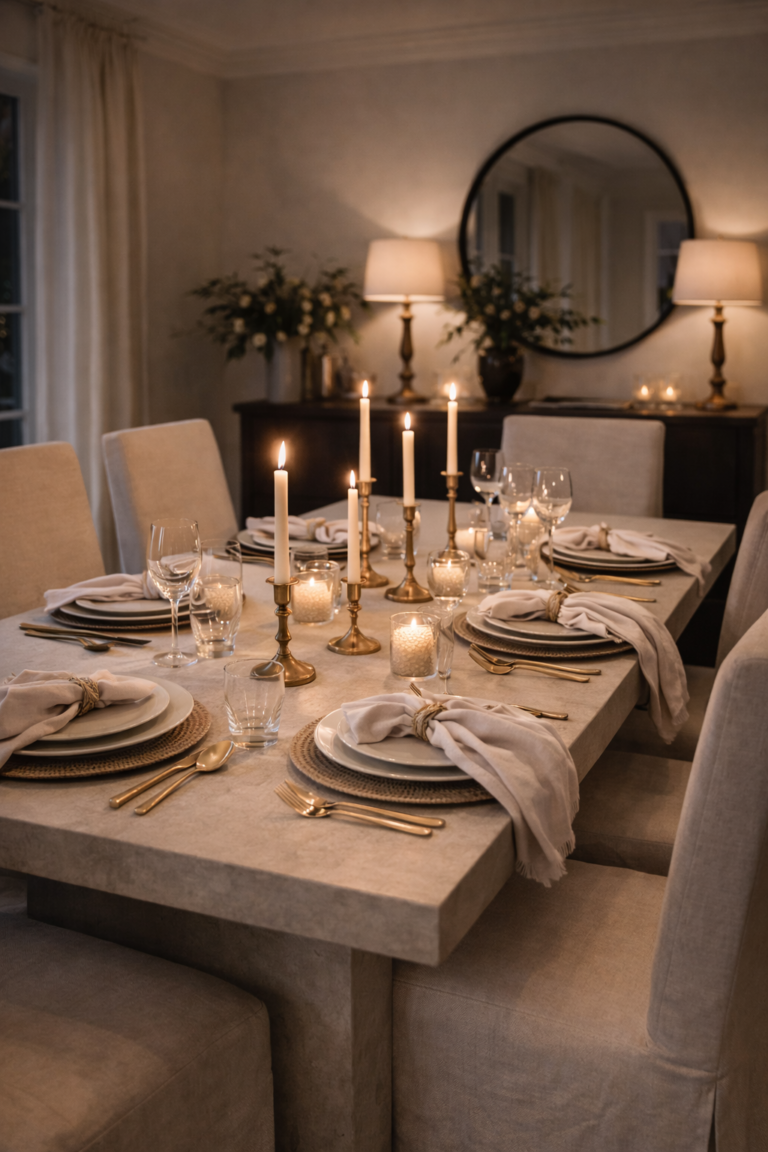
The Table Center Edit: A Minimal, High-End Formula
If your dining room feels “almost” right, it’s usually because the centerpiece is doing too much. The elevated move is to build one calm line—then stop.
Runner or soft tablecloth. Keep it tonal so it reads quiet and expensive.
Stone bowl, matte ceramic tray, or low vessel. This grounds the table visually.
One arrangement with movement greens. Avoid dense, tight bouquets.
One candle or a pair of slim holders. Warm light is the real luxury.
Styling rule: if you’re adding a fifth element, your centerpiece is probably too busy. Edit down until it feels calm.
Whole-Room Details That Make the Edit Feel Complete
A spring dining room is not just about the table. A few quiet “room level” tweaks make the transition feel intentional.
Clear clutter near glass, soften with sheers if needed, and keep the view the focal point.
Add subtle chair ties or a single draped throw on one end chair—quiet softness, not a full set.
If the room feels cold, layer in one warm-toned piece or swap frames to a softer finish.
Keep lighting warm in the evening. Spring looks best with a gentle golden glow.
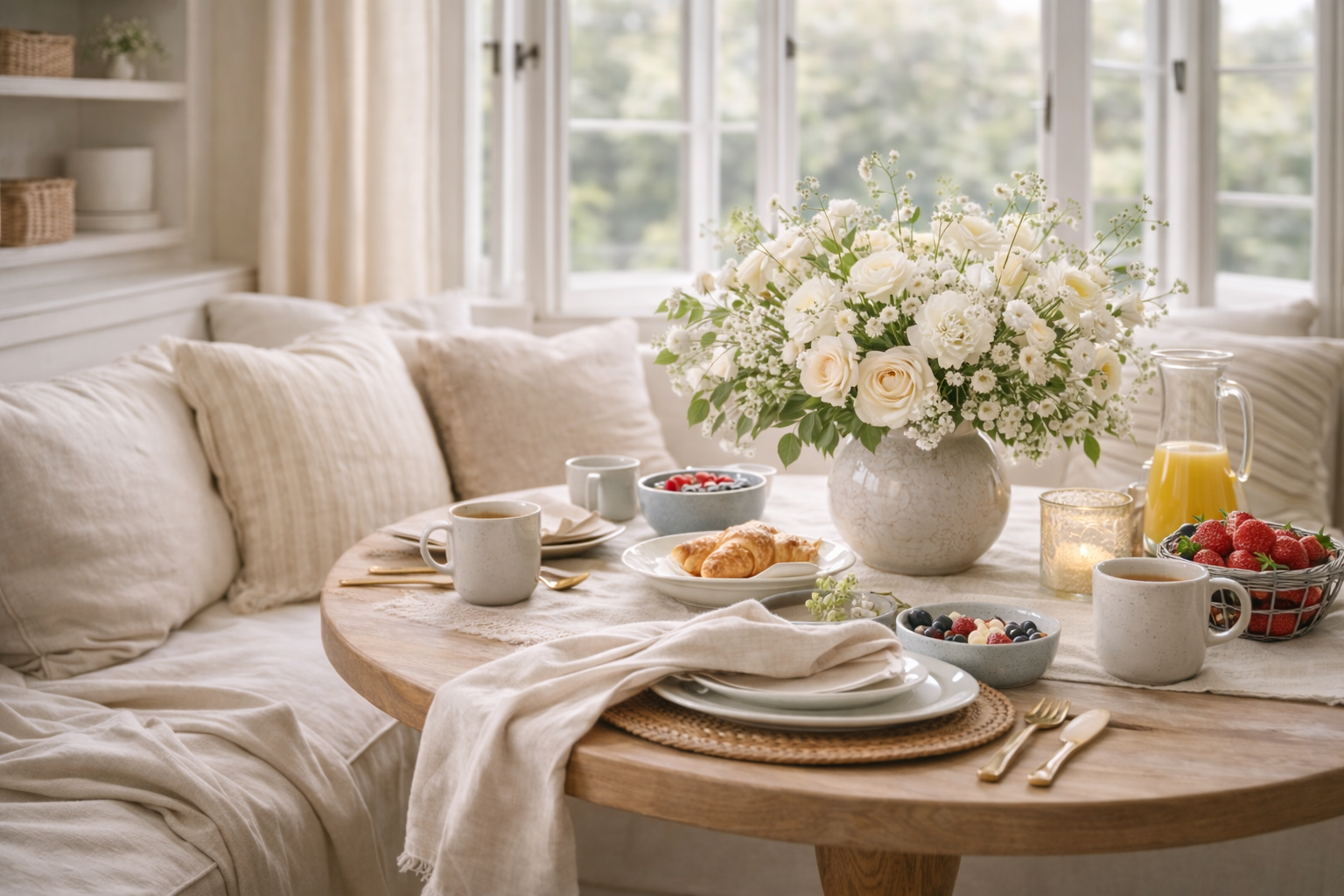
The “Looks Expensive” Rubric (A 60-Second Check)
Before guests—or before you take photos—use this quick check. If you can answer “yes” to most of these, the room will read elevated.
FAQ: Refined Spring Dining Room Styling
How do I transition my dining room from winter to spring without redecorating?
Do a spring “edit”: remove dense evergreen décor and heavy dark textiles, keep your main furniture and lighting, then add one airy floral moment and linen texture. The room should feel lighter through subtraction and softer materials.
What should I remove first when my dining room feels too wintery?
Start with the tabletop: remove dense greenery, oversized candle clusters, and dark runners. Then soften the palette with linen, matte ceramics, and a simpler centerpiece line so the table looks calm and elevated.
How do I make a formal dining room feel lighter but still formal?
Keep structure (chandelier, art, dining set) and shift the styling materials: linen textiles, matte ceramics or stone, soft contrast (charcoal + ivory), and warm lighting. Formal rooms feel refined when the details are edited, not busy.
What centerpiece looks best for spring in a formal dining room?
A low, sculptural centerpiece is most elevated: one linen base, one stone/ceramic anchor, one airy floral arrangement, and one candle moment. Avoid multiple small pieces spread across the table.
What colors are best for a refined spring dining room?
Warm ivory, oatmeal, muted blush, and soft sage are feminine and sophisticated. Pair with champagne brass or warm antique gold for a quiet-luxury finish.