The Essentials of a Luxury Organic Modern Spring Home
SPRING DESIGN • ORGANIC MODERN • LUXURY ESSENTIALS
The Essentials of a Luxury Organic Modern Spring Home
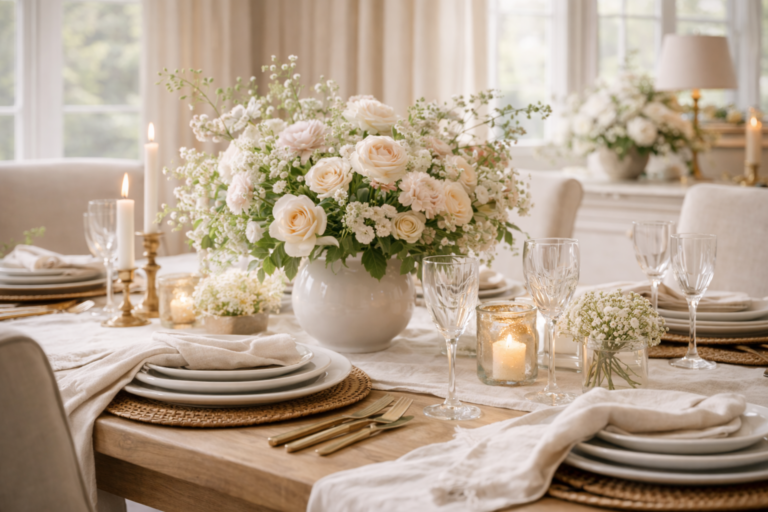
Spring doesn’t ask us to redecorate. It invites us to edit: to lighten what feels heavy, soften what feels sharp, and return the home to calm— with creamy neutrals, natural materials, and feminine restraint.
IN THIS GUIDE
What “Luxury Organic Modern” Means in Spring
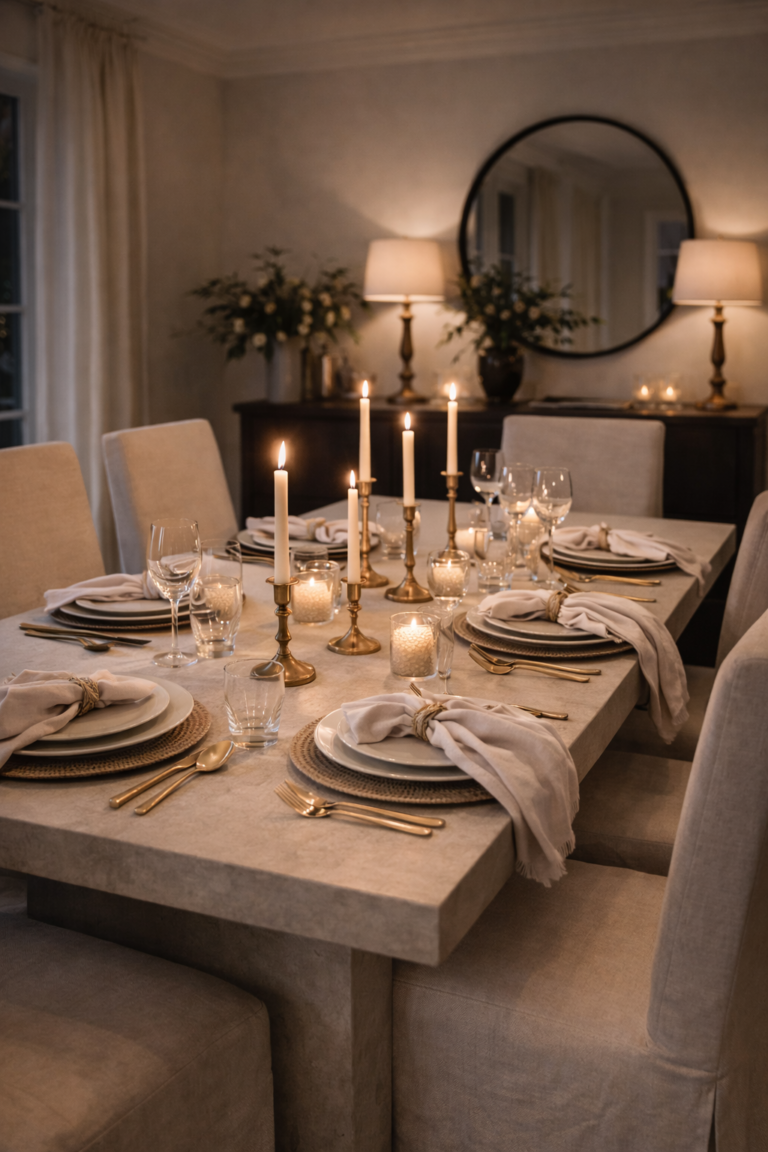
Luxury organic modern is not a style you buy—it’s a standard you keep. It’s where architecture and nature meet: curved forms, quiet surfaces, soft textiles, and materials that look better with daylight. In spring, the look becomes more luminous— not louder—because the season rewards air, softness, and negative space.
“Spring luxury is the confidence to own less—beautifully.”
The goal is not “new.” The goal is lighter: visually, emotionally, and practically.
The 9 Essentials That Instantly Elevate a Spring Home
These are the building blocks designers reach for when they want a home to feel calm, feminine, and elevated. Each essential has one job: to make the space feel cleaner, softer, and more intentional.
- 1) A warm-neutral base. Choose ivory, cream, mushroom, and soft stone over bright white. Warm neutrals read more expensive and flatter natural light.
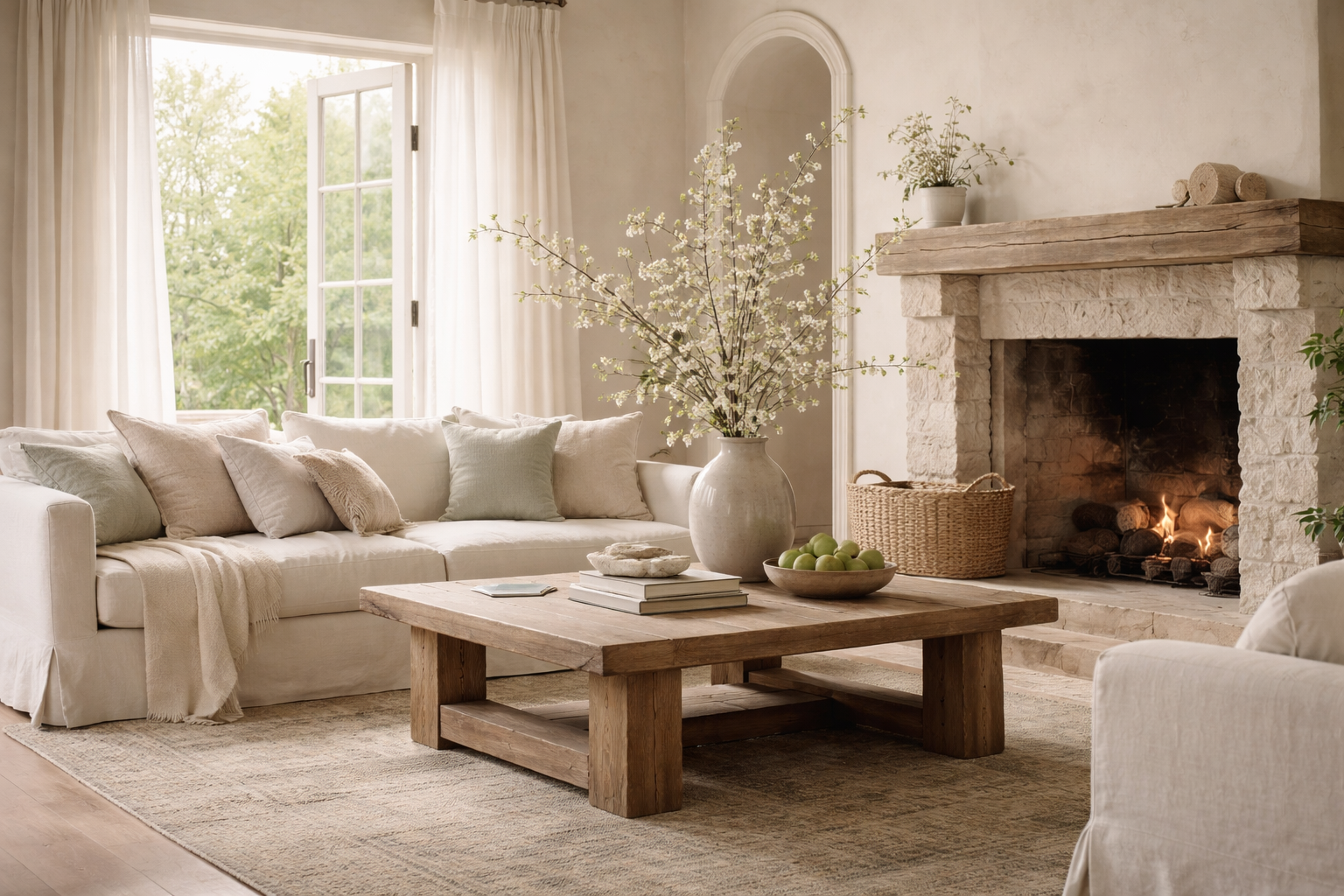
- 2) One quiet “spring signature.” A single gesture—sheer drapery, blossoming branches, a pale rug—signals the season without turning the home into décor.
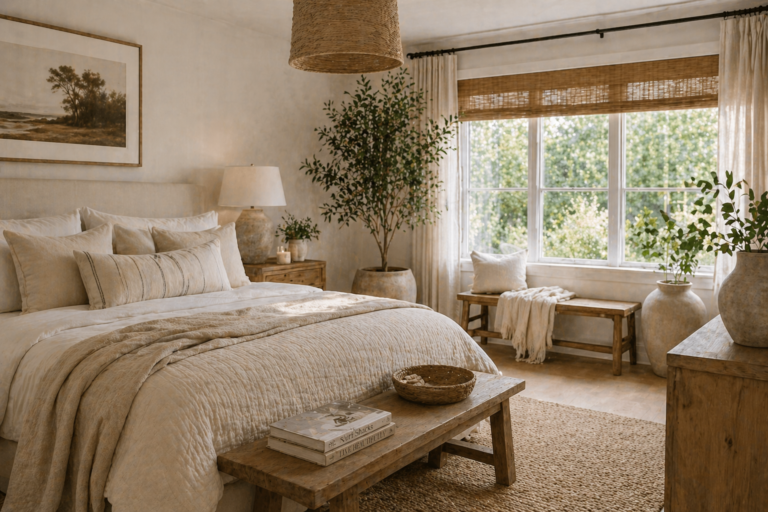
- 3) Linen in motion. Linen softens edges. Use it where it moves: curtains, throws, slipcovers, bedding. Movement = life.
- 4) Natural texture on repeat. Woven, boucle, raw oak, limestone, travertine—texture is what makes neutrals feel layered, not flat.
- 5) A grounded wood tone. Prefer light-to-medium oak, aged walnut, or reclaimed wood that looks honest—not orange, not gray.
- 6) Sculptural shapes. Curves (sofas, chairs, lamps) soften a room. Organic modern feels serene when shapes are rounded and balanced.
- 7) Stone as punctuation. Stone isn’t cold when paired with warm textile. It’s the “quiet luxury” material that adds permanence.
- 8) Feminine restraint in styling. Fewer objects, more meaning. A tray, a bowl, a vase. If it doesn’t elevate, it exits.
- 9) A consistent visual temperature. Keep metals warm (brass, aged bronze), woods warm, whites creamy, and greens muted for a cohesive calm.
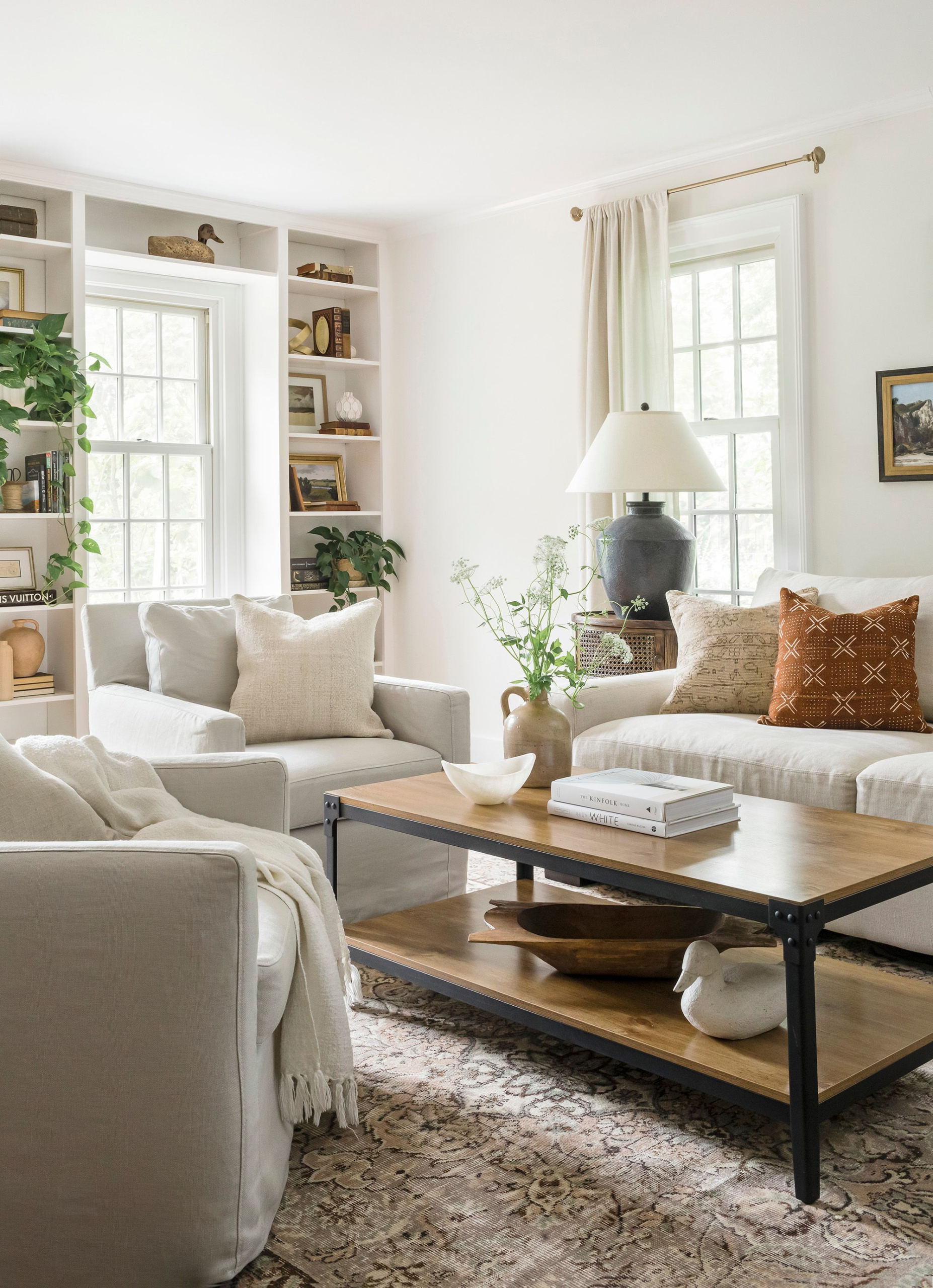
The signature of spring luxury is subtle: creamy neutrals, gentle greens, and textures that catch daylight—without visual noise.
The Spring Edit: What to Remove First
If you want a home to feel “expensive,” start with subtraction. Visual clutter steals light, and spring is a light-driven season. Remove in this order:
Seasonal décor should feel like a whisper, not a costume. Replace “spring items” with natural gestures: branches, linen, and air.
Black can stay—but soften it. Pair with warm neutrals, organic shapes, and texture so it reads tailored, not graphic.
Luxury is scale. Consolidate into one statement bowl or one large tray instead of many scattered minis.
Spring begs for matte: limewash, stone, woven, linen. Matte surfaces photograph better and feel calmer.
Layering Rules: Light, Texture, Restraint
Organic modern layering is about creating depth without clutter. Use this three-part formula: (1) light foundation, (2) texture in the middle, (3) a single focal moment.
Rule 1: Keep whites creamy
Creamy whites feel sunlit and feminine; bright whites can feel clinical. In spring, creamy whites make the home feel softer and more welcoming.
Rule 2: Repeat textures, not objects
Choose 3–4 textures and repeat them across the room: linen, woven, stone, wood. Repetition reads intentional and “designed.”
Rule 3: One focal moment per surface
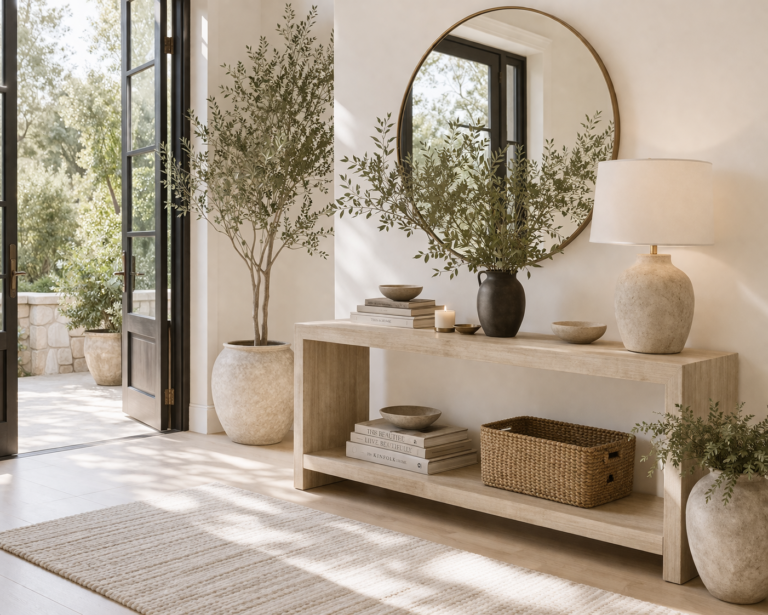
A console table needs one story: a lamp + a vase, or a mirror + a bowl. If it has three stories, it has none.
Room-by-Room: The Spring Essentials That Matter Most
Living Room: soften, then anchor
Start with softness (linen throws, pillows with quiet texture), then anchor with one substantial material moment (a wood or stone coffee table, a woven rug). Add a single spring element: branches in a ceramic vessel or a muted green bowl.
Kitchen: edit the counters, elevate the everyday
A spring kitchen feels calm because the surfaces are clear. Keep one tray with essentials (salt cellar, oil, linen towel) and a vessel with greenery. The luxury move is not more décor—it’s less clutter.
Bedroom: lighten the bed, deepen the texture
Spring bedding should look breathable. Choose layers that feel weightless: quilt, linen duvet, a soft throw. Add feminine calm through a gentle palette: warm ivory + blush clay + muted sage.
Entry: the “first exhale” of the home
The entry sets the emotional tone. Keep it simple: one mirror, one vessel, one surface for daily essentials. The goal is serenity at the threshold.
Common Mistakes (and the Elegant Fixes)
Fix: Warm it with creamy whites, oak tones, and linen. Spring wants warmth—even in neutrals.
Fix: Edit first. Upgrade texture and scale. Luxury is often a better version of what you already own.
Fix: Choose fewer pieces, larger scale, calmer shapes. Organic modern thrives on visual breathing room.
Fix: Sheers, lighter rugs, reflective stone, and matte walls that glow. Design for daylight, not nighttime.
FAQ
What’s the difference between modern and organic modern?
Modern can be sharp and minimal. Organic modern keeps the clean lines but softens them with curved forms, natural materials, and tactile texture—so the room feels calm, not cold.
How do I make my home feel “luxury” without buying new furniture?
Edit first (remove visual clutter), then elevate texture (linen, woven, stone), and correct scale (fewer, larger pieces). Finally, style with restraint: one focal moment per surface.
What are the fastest spring changes that look expensive?
Sheer linen drapery, lighter bedding layers, a large ceramic vessel with blossoming branches, and warm-neutral pillow covers with subtle texture.
Should I use bright spring colors?
If you love color, keep it muted and grounded. Luxury organic modern spring tends to favor feminine neutrals: blush clay, warm ivory, moss, and soft smoke—more “sun-washed” than saturated.