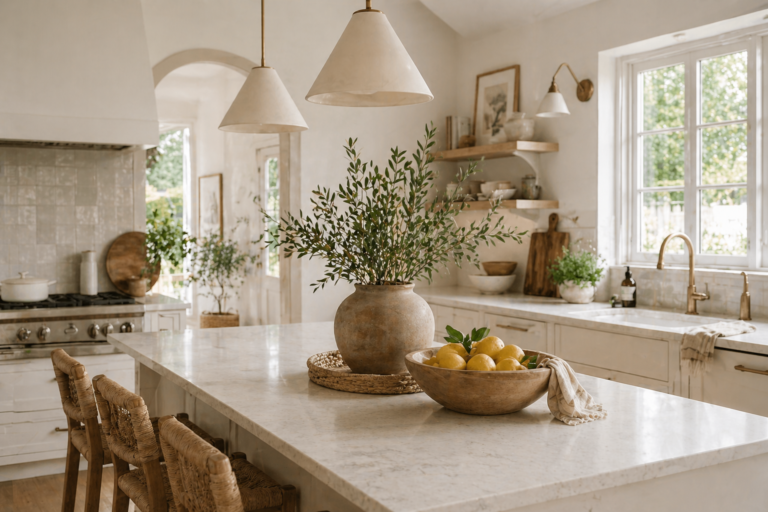
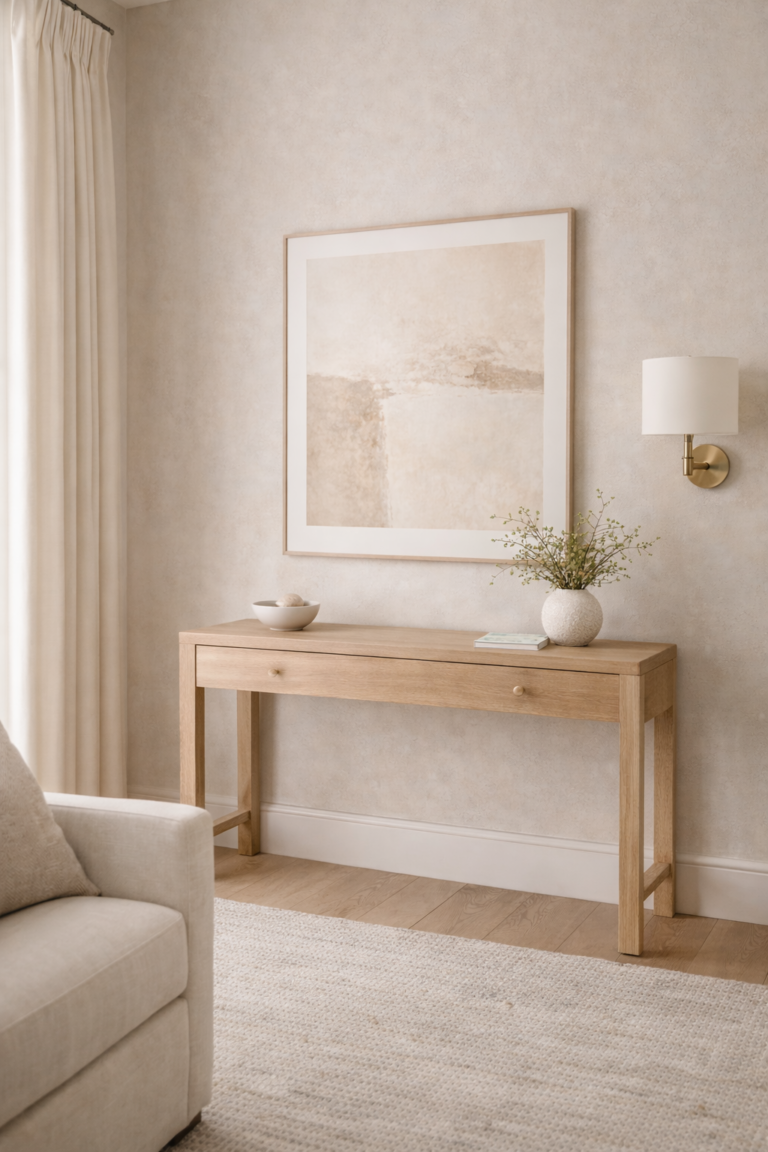
Designing With Light: The Most Overlooked Element of Spring Interiors
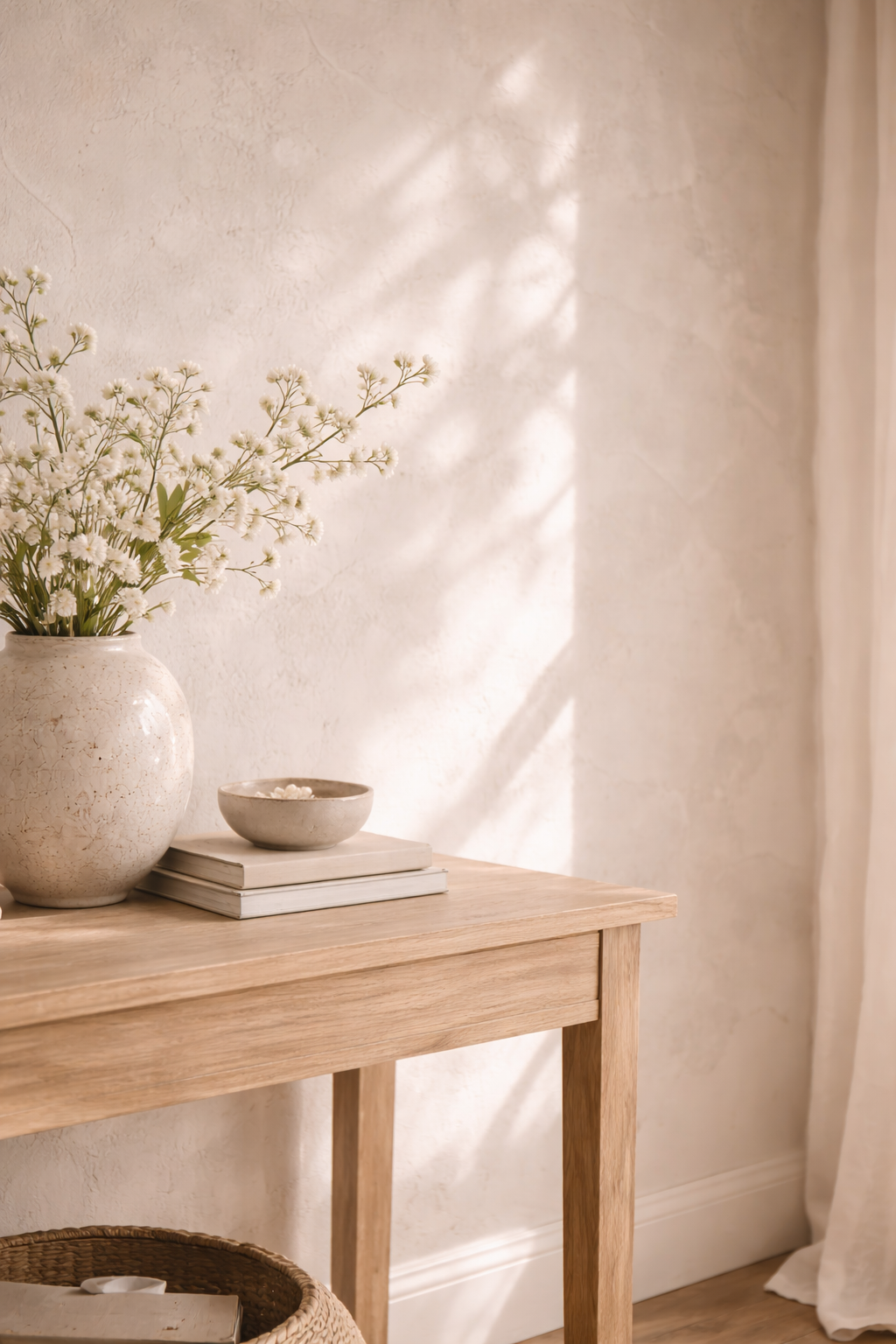
Designing With Light: The Most Overlooked Element of Spring Interiors
The fastest way to make a home feel like spring isn’t color — it’s light. Here’s how to shape daylight, layer evening glow, and use reflective finishes for that bright, feminine, “fresh air” feeling.
Spring interiors feel different because the light changes. Days are longer, sunlight is higher and brighter, and rooms look softer and more alive. If your space still feels winter-heavy, it’s often not the décor — it’s the lighting plan.
1) Start With Daylight: Make It Cleaner, Softer, and More Intentional
The goal is not “more light.” It’s better light: less visual obstruction, more diffusion, and brighter reflection across the room.
Remove what blocks the window
Heavy curtains, dark shades, cluttered sills, and furniture pushed too close can darken the whole room. Clear the perimeter around windows first.
Switch to soft diffusion
Light, sheer layers (or linen) keep privacy while letting daylight glow. This is one of the highest-impact spring upgrades.
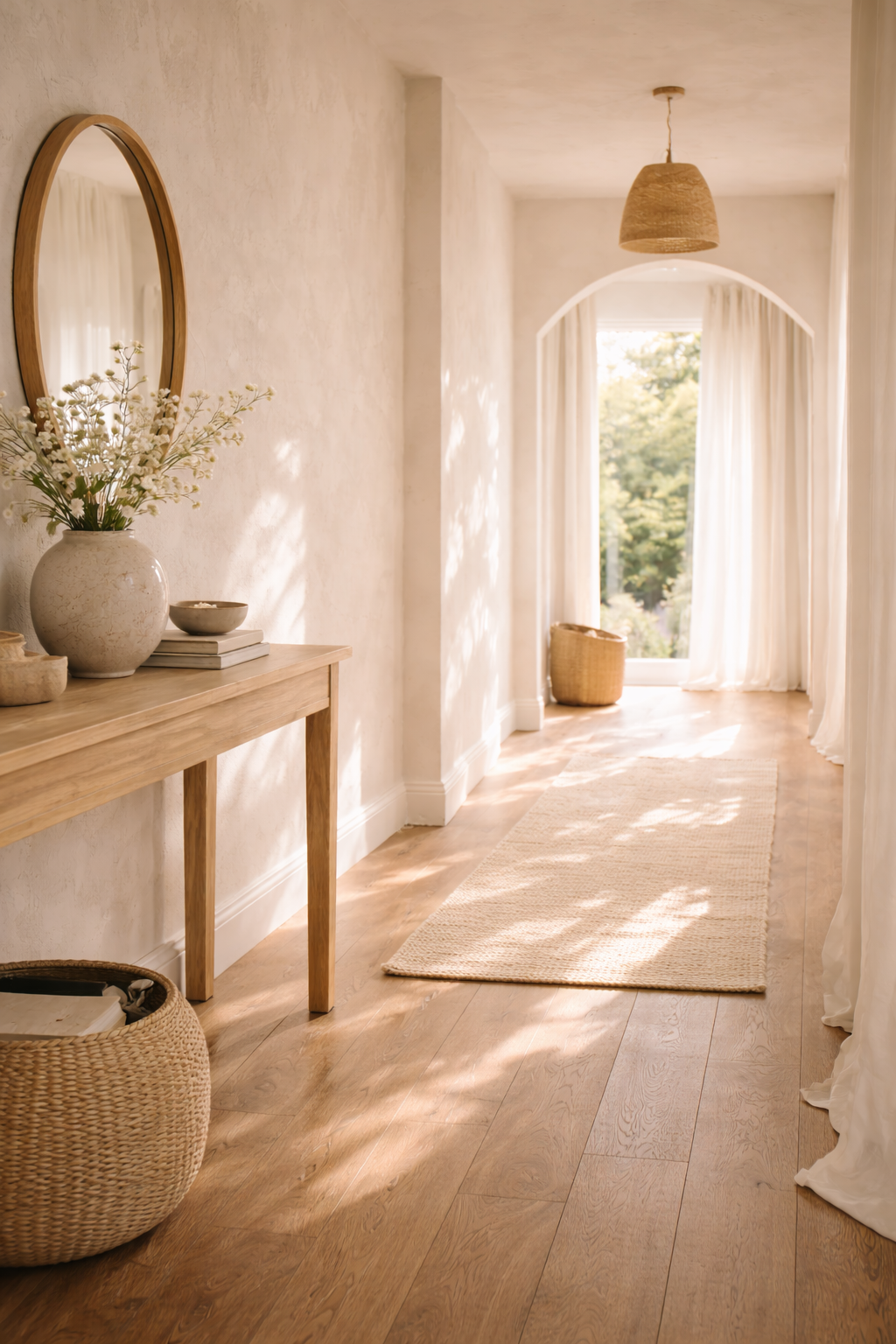
The rule: brighten the room without brightening the palette
Choose warm whites and reflective textures (matte ceramic, light wood, soft stone) so daylight bounces gently — not harshly.
2) The Spring Lighting Plan (That Makes a Home Look Expensive)
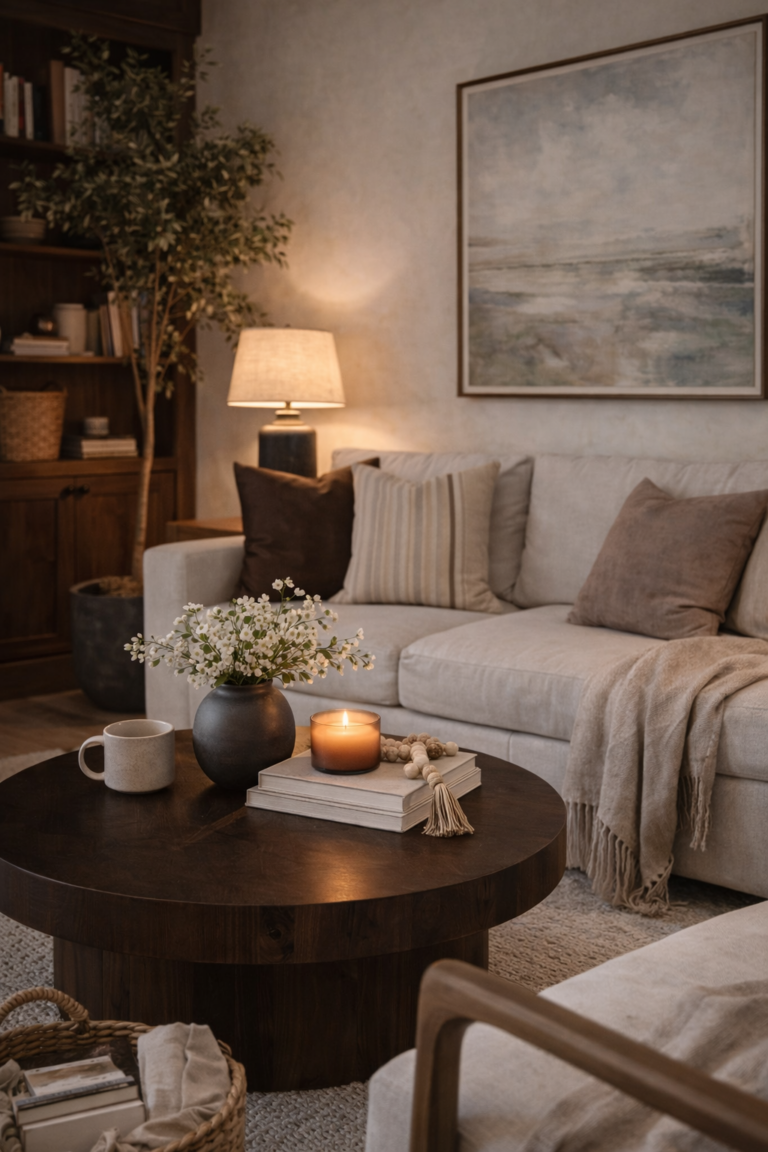
Luxury rooms never rely on one overhead light. They use layers. For spring, you want a bright daytime room and a soft evening glow.
Your overall room brightness.
- Overhead lighting (on dimmer)
- Warm bulbs (2700K)
- Soft diffusion (shades)
Light where you do things.
- Reading lamps by seating
- Kitchen work zones
- Bedside lamps
The “designer” layer.
- Picture light / art lighting
- Console lamp glow
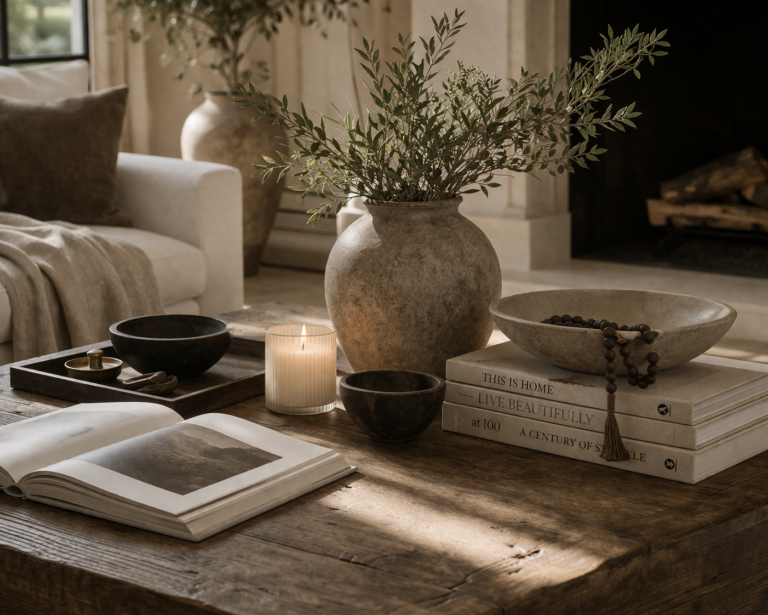
- Soft candlelight
3) The Bulb Upgrade That Changes Everything
Choose warm, not yellow (2700K is the sweet spot)
Cool bulbs can make spring palettes look flat and harsh. Warm bulbs keep feminine neutrals creamy and soft.
Match bulbs within a room
Mixing different temperatures creates visual chaos. Make every bulb in the room the same temperature for an instantly higher-end look.
Use dimmers where it matters
Dimmers are the easiest “luxury upgrade.” Spring evenings should feel like a soft glow — not a spotlight.
4) Use Reflection (Quietly) to Make Rooms Feel Brighter
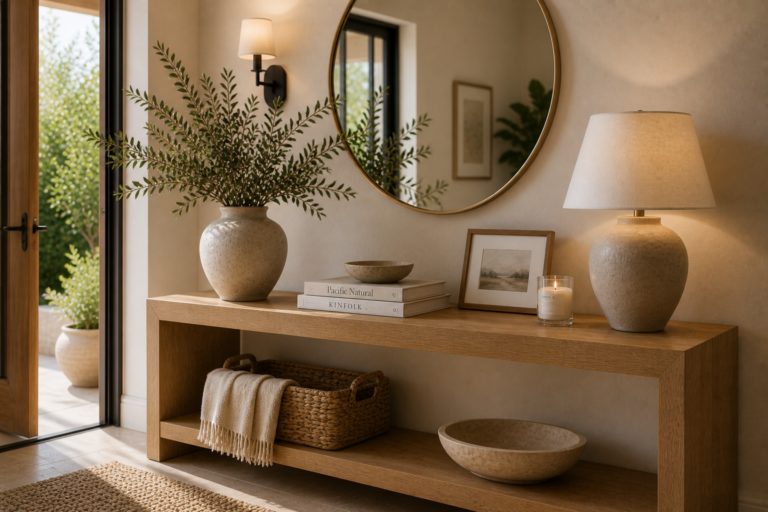
Reflection is spring’s secret weapon. It’s not about glossy shine — it’s about subtle bounce: mirrors, light wood, soft stone, and pale textiles.
Place mirrors where they capture light, not clutter
Position mirrors to reflect a window or a calm, styled area — never a busy corner. Reflection should feel intentional.
Choose light-reflective neutrals
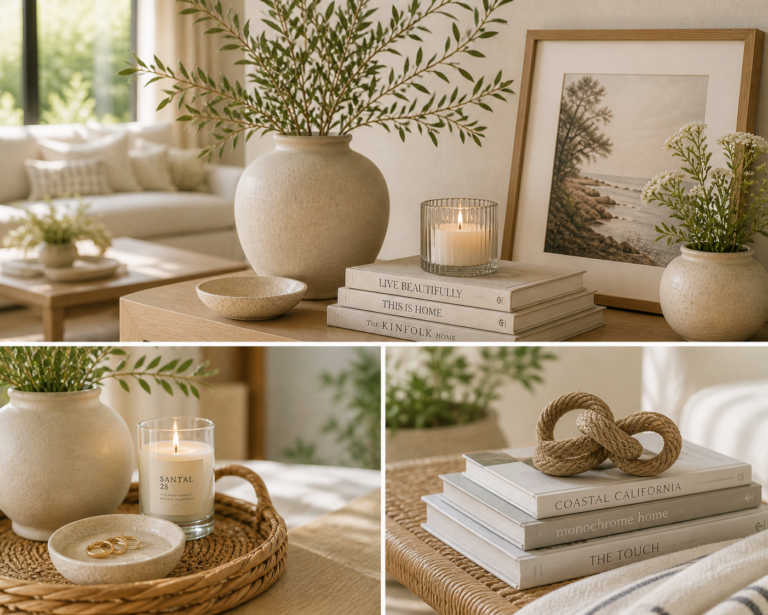
Warm ivory, pale mushroom, sand, and stone tones make daylight feel softer and brighter — a spring shift without “seasonal color.”
Common Lighting Mistakes (That Keep a Home Feeling Like Winter)
Relying on overhead lighting only
It flattens the room. Add at least two lamps in main living spaces for depth and softness.
Using cool bulbs
Cool light makes warm neutrals look gray. Keep bulbs warm and consistent.
Too many competing light sources
Choose a simple lighting plan: one overhead (dimmer), one task, one accent. Add more only if the room is large.
FAQ
What lighting makes a home feel like spring?
Clean daylight with soft diffusion (sheers/linen), warm bulbs (around 2700K), and layered lighting (ambient + task + accent) for a soft evening glow.
What bulb temperature is best for spring interiors?
2700K is the best all-around choice for warm, feminine neutrals. It keeps whites creamy (not blue) and makes evening light feel soft and expensive.
How do I make a dark room feel brighter without painting?
Clear window obstructions, add a mirror to reflect a window, switch to lighter textiles, and use layered lamps with warm bulbs to lift the room.
Do I need an overhead light if I have lamps?
Overhead is useful, but it should be on a dimmer and never the only light source. Lamps create depth, which is what makes a room look high-end.
Editor’s Note
If your home still feels “winter,” don’t start by buying décor. Start by fixing your light. A warm, layered glow makes every spring palette look more expensive.