How to Transition Your Home From Winter to Spring
How to Transition Your Home From Winter to Spring (Elegantly)
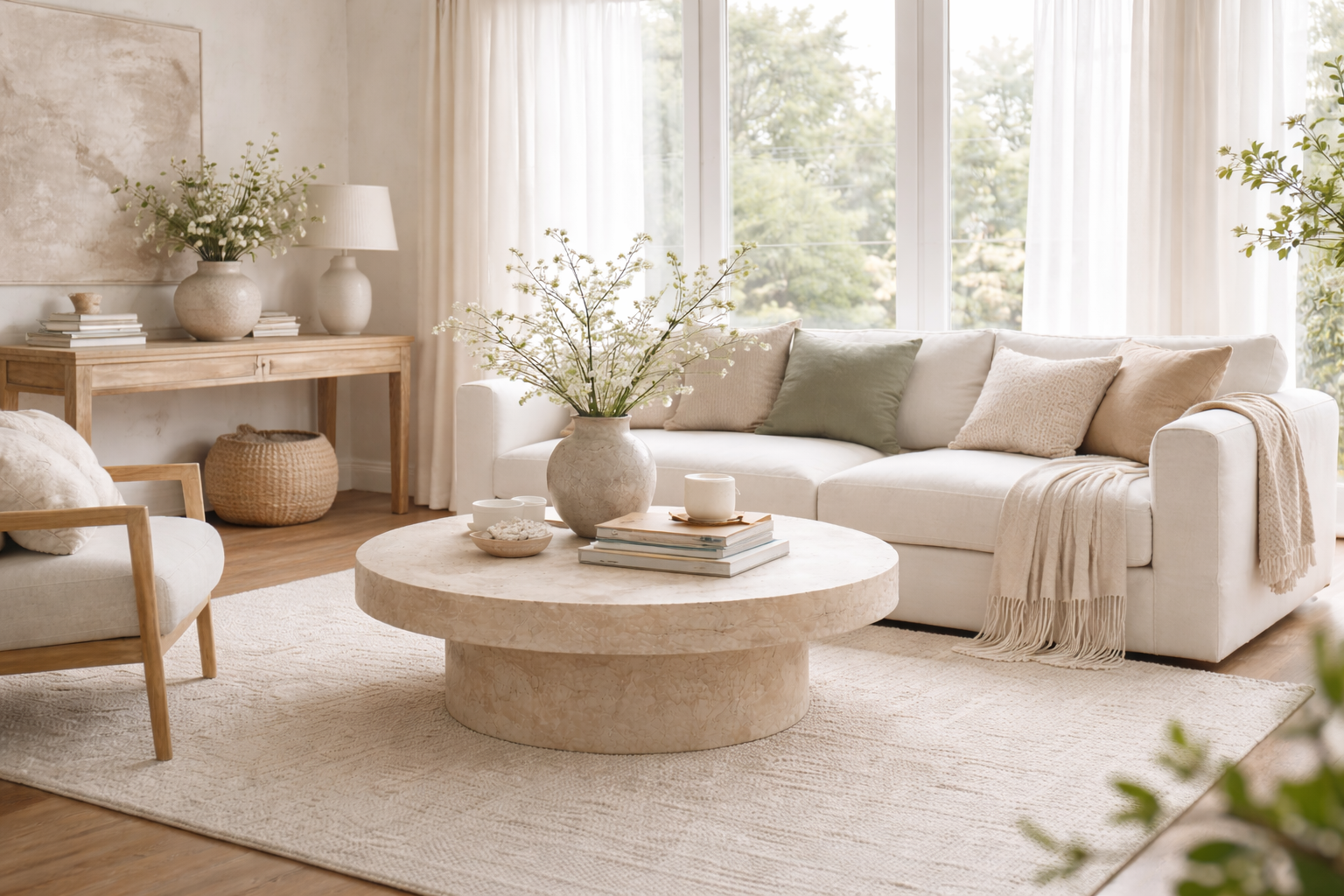
A designer-style spring refresh that feels seamless: lighter textures, warmer neutrals, edited surfaces, and one or two organic moments — never themed.
The most elevated seasonal transitions are almost invisible. Your home shouldn’t look like it “changed themes” — it should simply feel lighter, cleaner, and more breathable. This guide walks you through a spring shift that looks intentional and timeless.
When to Start the Transition
Start with subtle swaps in late winter: textiles, lighting warmth, and editing surfaces. Save any “fresh life” elements (stems/greenery) for the final step so it feels like a reveal — not clutter.
The ideal timeline
Week 1: remove heaviness • Week 2: refine palette + layers • Week 3: add organic life (stems/greenery)
The Elegant Winter-to-Spring Transition (5 Steps)
Remove the winter heaviness
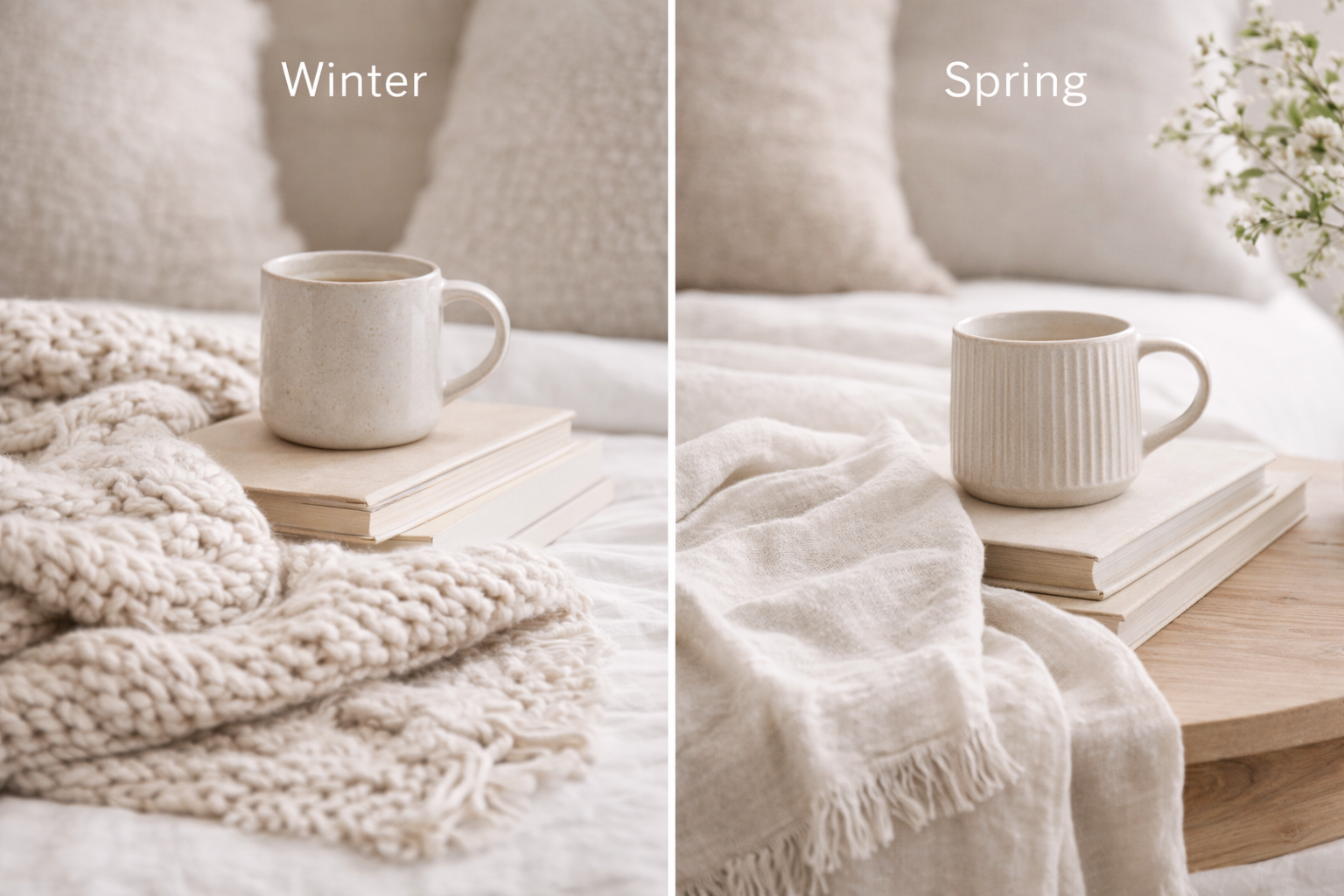
Pull anything that feels thick or dark: chunky knits, faux fur, deep jewel tones, heavy layered décor. Keep your foundation — just reduce weight.
Swap textiles that touch the eye
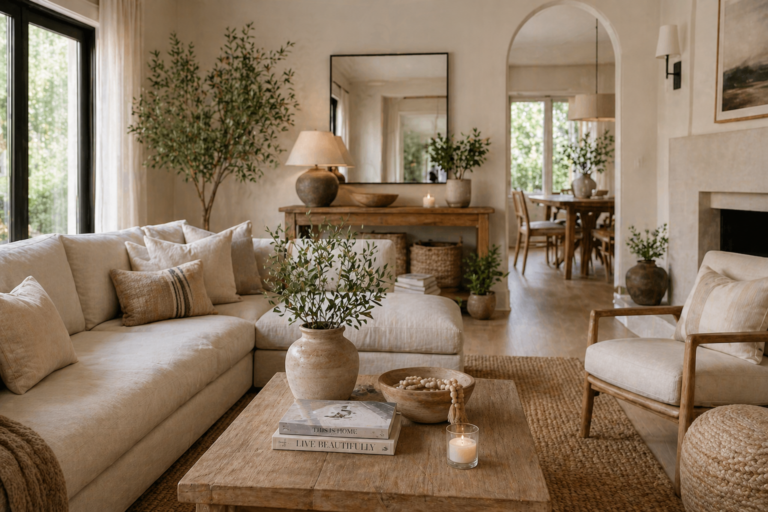
Update what you see first: pillow covers, one throw, a runner, bed linens. Linen and cotton instantly read “spring” in a high-end way.
Warm the neutrals (don’t brighten them)
Replace stark whites with warm ivory. Replace cool grays with mushroom and sand. Spring luxury is warm and light-reflective.
Edit surfaces like a stylist
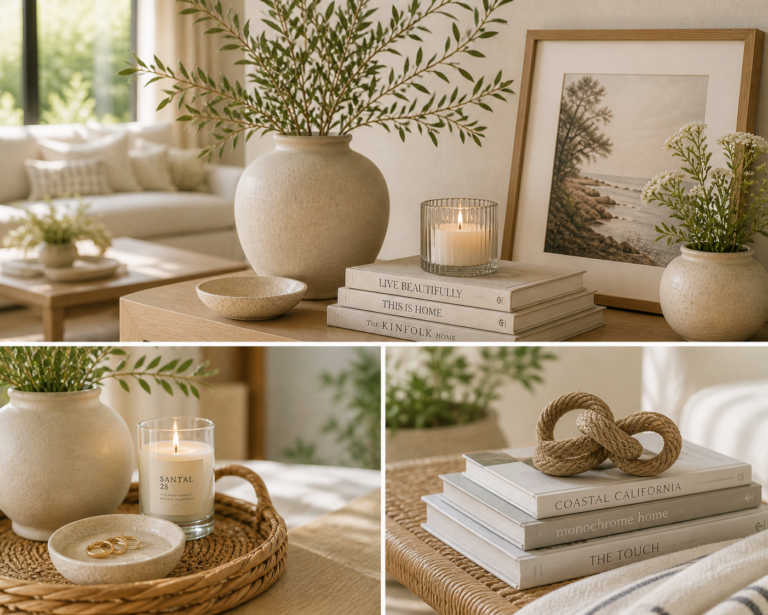
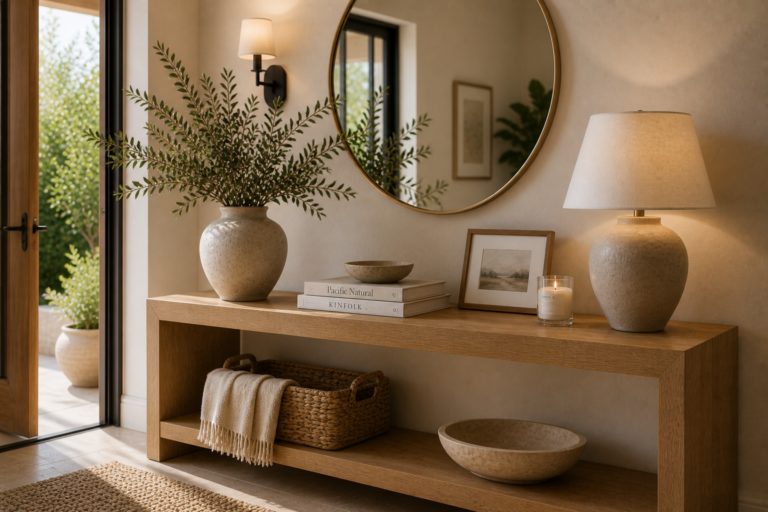
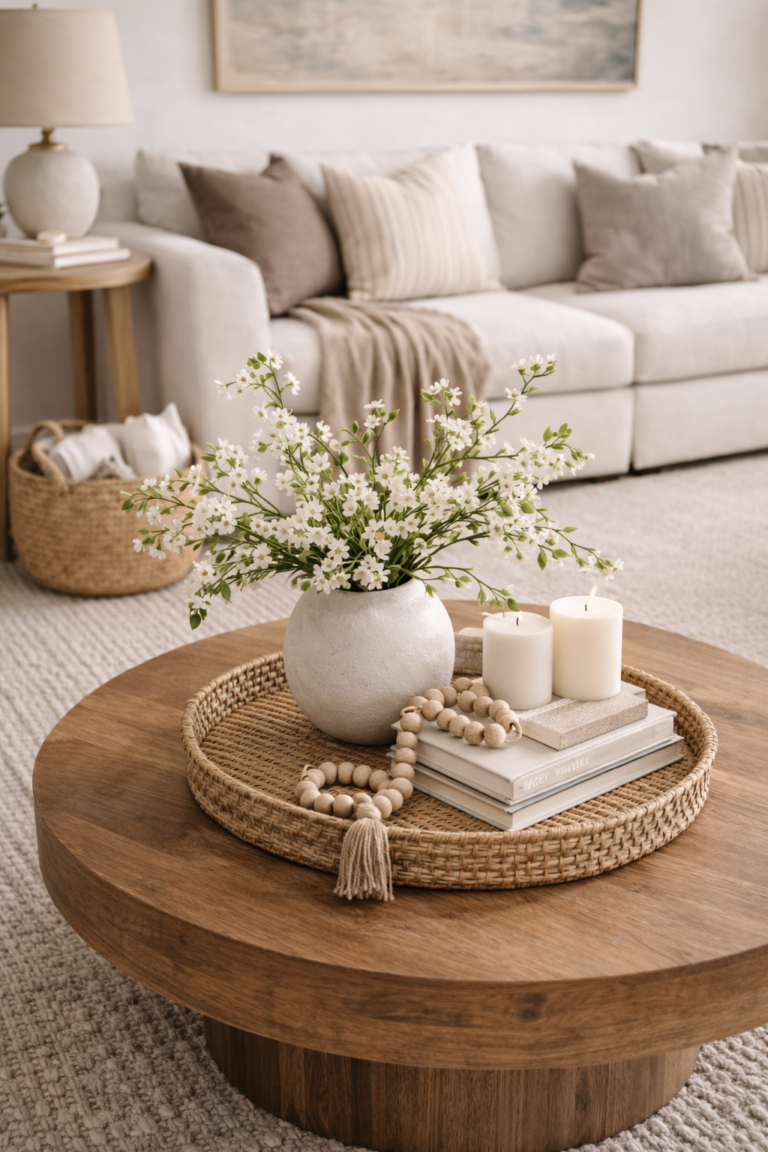
Clear one surface completely. Then style with three pieces max: a tray or book stack, a sculptural object, and a vessel (empty or stems).
Add one organic “life” moment
Finish with a single stem/greenery moment. Keep it sculptural and minimal — no bright bouquets, no seasonal motifs.
Room-by-Room: What to Change (and What to Keep)
- Swap: heavy throw → lightweight linen/cotton
- Swap: dark pillows → warm ivory + mushroom
- Keep: your main rug and furniture (foundation stays)
- Finish: one sculptural vessel with stems
- Swap: dark tray → lighter stone or woven texture
- Edit: remove extra objects (leave breathing room)
- Add: one curved vase + minimal stems
- Goal: “calm welcome,” not “seasonal display”
- Swap: heavy centerpiece → minimal vessel + greenery
- Use: warm ivory napkins or runner (if any)
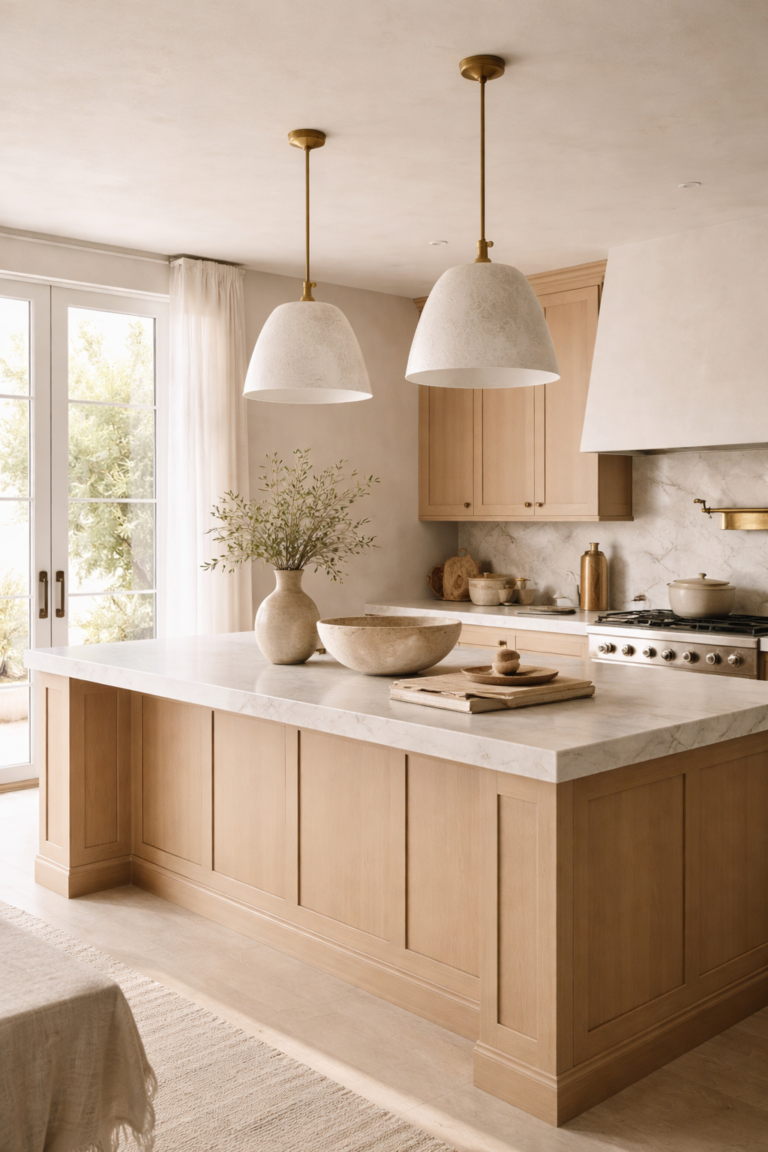
- Edit: counters (spring reads as clean space)
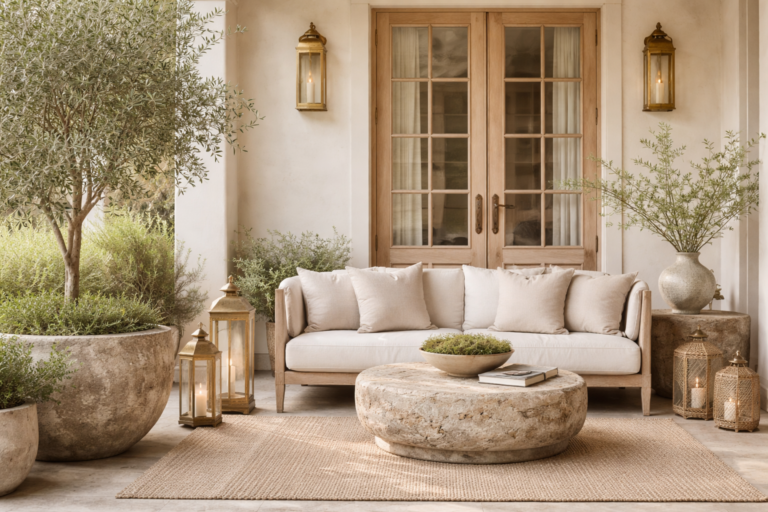
- Keep: wood + stone — they already feel spring-like
- Swap: flannel → cotton percale or linen
- Swap: dark duvet → warm ivory cover
- Add: one soft accent (dusty rose or mushroom)
- Finish: warm bulb glow (2700K)
What Makes the Transition Look Cheap (and How to Avoid It)
- Choose one accent (sage or dusty rose) and repeat it 2–3 times
- Keep everything else neutral + textural
- Avoid literal décor (eggs, rabbits, novelty florals)
- Use sculptural stems and timeless ceramics instead
FAQ
When should I start transitioning my home to spring?
Start with subtle edits in late winter: swap heavy textiles, warm your neutrals, and declutter surfaces. Add stems/greenery last for the final “spring” moment.
What’s the easiest spring update that looks high-end?
Replace heavy throws and pillow covers with linen/cotton in warm ivory and mushroom tones, then style one surface with three refined objects max.
Do I need to buy new decor for spring?
Not usually. Most of the effect comes from editing, rotating textiles, and adding one organic element (stems/greenery). One refined change beats a full seasonal haul.
How do I keep spring decor from looking “seasonal”?
Avoid motifs and bright bouquets. Use sculptural stems, matte ceramics, warm neutrals, and negative space. The room should feel lighter — not themed.
Editor’s Note
The most elegant transitions are quiet. If your home feels brighter and calmer — and no one can pinpoint why — you’ve done it perfectly.