
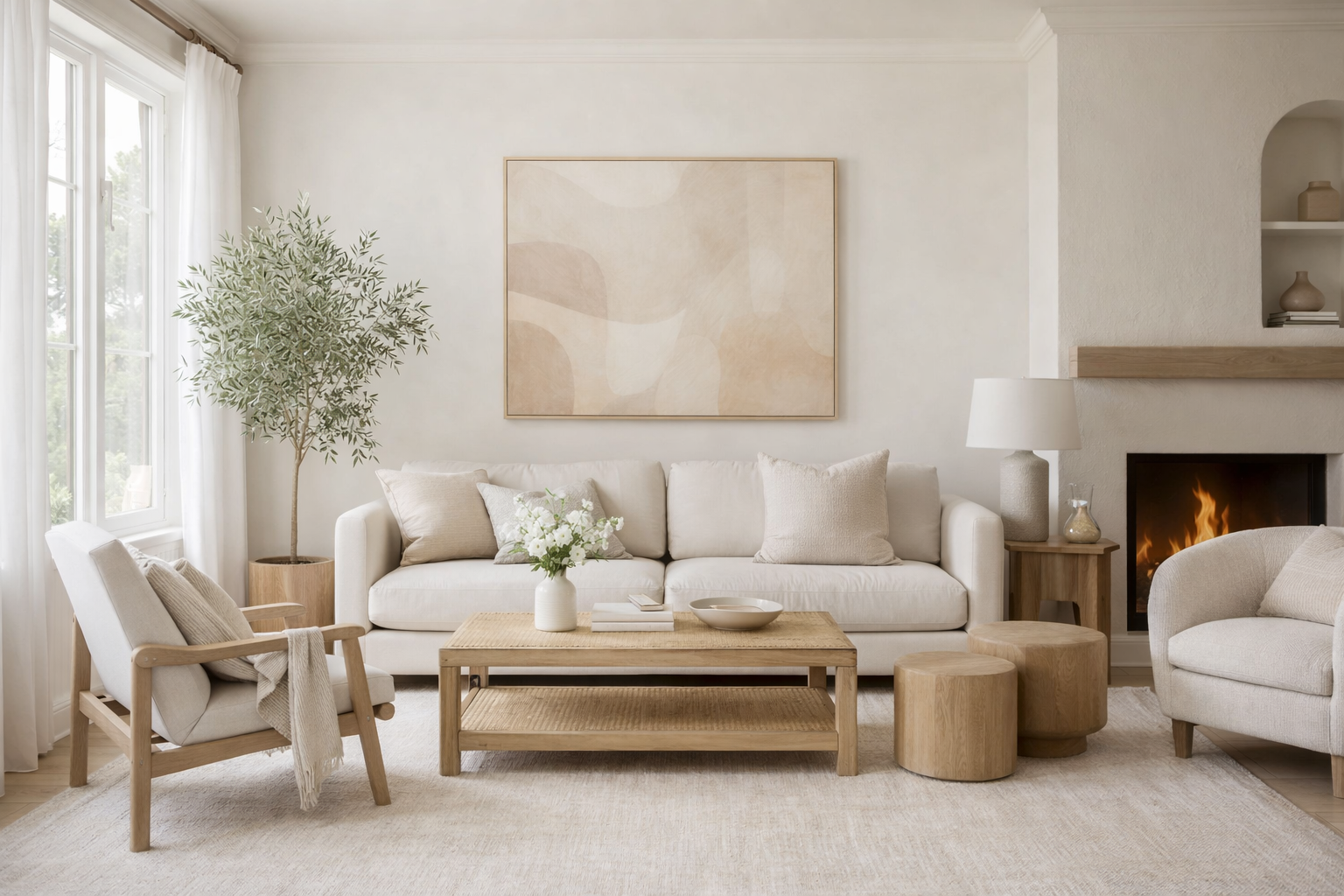
The Art of Harmonious Spaces
A Proper House does not feel timeless because of what it contains — it feels timeless because of how it is shaped.
Form and proportion are the quiet rules that make a room feel calm, balanced, and resolved. They are why some spaces instantly feel expensive even when the materials are simple… and why other spaces feel “off” no matter how much is purchased.
This guide is about the architecture of beauty: scale, balance, negative space, symmetry, rhythm — and the art of letting a room breathe.
Return to the Design Hub → https://myproperhouse.com/design/
Start with the Room, Not the Objects
Most decorating mistakes happen when we begin with individual items — a sofa, a rug, a table — without first considering the room as a whole.
Before you choose anything, ask:
- Where is the visual center of the room?
- What is the strongest architectural line (windows, fireplace, ceiling height)?
- What is the natural “axis” of the space?
- Where should the eye rest?
When form is correct, your choices feel effortless. When form is wrong, everything becomes a fight.
“A beautiful room is not filled. It is composed.”
The Relationship Between Scale and Calm
Scale is the first sign of sophistication.
A Proper House favors pieces that feel grounded — not small, scattered, or overly delicate. Undersized furniture creates visual noise because it forces the eye to keep searching for stability.
Use these quiet rules:
- Choose fewer, larger pieces instead of many small ones.
- Anchor seating with a rug that fully supports the arrangement.
- Let major furniture feel intentional — not floating.
A room should feel settled, as though it has always belonged.
Balance: Symmetry, Asymmetry, and the Middle Line
Balance is not the same as symmetry — but symmetry is one of the easiest ways to achieve a sense of order.
Symmetry (the classic approach)
Symmetry creates calm because the eye understands it instantly:
- Matching lamps
- Twin chairs
- Even spacing on a mantle
- A centered arrangement
Asymmetry (the collected approach)
Asymmetry can feel just as timeless when it still carries weight:
- A tall lamp balanced by layered art
- A large chair balanced by a side table + stack of books
- A heavy texture balanced by lighter tones
Whether you choose symmetry or asymmetry, the goal is the same:
The room must feel visually stable.
Negative Space is a Sign of Taste
Luxury is rarely about “more.”
It’s about restraint.
Negative space is what allows:
- statement pieces to feel special
- architecture to be noticed
- the room to feel breathable
If you feel like a room is “missing something,” very often it’s not missing an object — it’s missing clarity.
Do not rush to fill every surface.
A Proper House leaves space on purpose.
Proportion in Layers: Height, Width, and Depth
A room feels rich when it has dimension.
That comes from layering proportion intentionally:
Height
- Tall curtains draw the eye upward.
- Oversized artwork creates impact.
- Floor lamps and mirrors add vertical structure.
Width
- Wide rugs calm the space.
- A longer sofa often looks more refined than a short one.
- Two chairs can create width without clutter.
Depth
- Layer lighting (table + floor + overhead).
- Combine soft textures with structured pieces.
- Create foreground and background (not everything on the same plane).
When a room has height, width, and depth, it feels designed — not decorated.
A Simple Proportion Formula for Styling
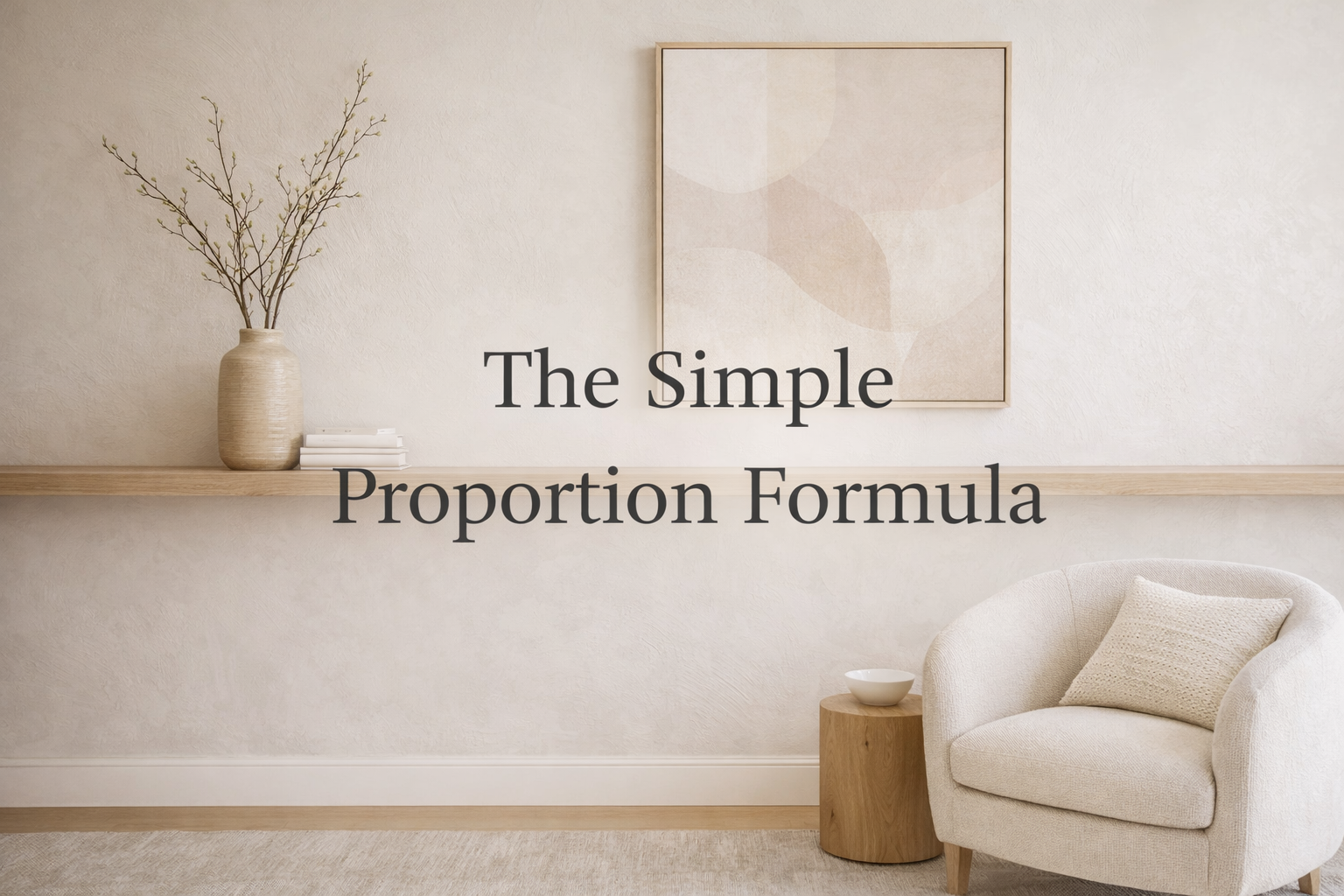
When you’re arranging shelves, consoles, or coffee tables, use this:
The 60/30/10 rule (for visual balance)
- 60% calm foundation (books, bowls, neutral objects)
- 30% texture and variation (woven, ceramic, wood, glass)
- 10% contrast (black, brass, something sculptural)
This prevents the “random clutter” look and creates a composed finish.
The Proper House Standard
Form and proportion are not about perfection.
They are about harmony.
When scale is right, balance is intentional, and space is respected, a room becomes timeless — even with simple, lived-in pieces.
This is the difference between a house that looks decorated… and a house that feels designed.
Continue the Design Series